






A group of farmers has collaborated with federal food and agriculture officials to develop a creative proposal to support American agriculture while improving soil health and food quality. The tentatively named Regenerative Agriculture Incentive Loan Program aims to provide low-interest, variable-rate loans to farmers that incentivize regenerative agricultural practices. The plan would be a win-win-win for farmers, consumers, and the environment. It would also a political and policy win for the Trump administration.
America’s farmers are suffering economic decimation from a convergence of high input costs, soaring property taxes and land prices, and rising interest rates that increase debt service. For the nation’s crop farmers, these pressures are being aggravated on the sales end as many commodity prices have plummeted.
It is a perfect storm for a continued crisis.
A recent AGDAILY article covering the latest State of the American Farmer report lists the numerous pressures converging on American farmers, citing price declines of up to 58 percent in some key crops since 2022 and a 60 percent increase in farmer bankruptcies between 2024 and 2025. Also referenced are survey results suggesting many crop farmers face regulatory uncertainty over “modern crop protection tools,” including the weed killer glyphosate.

The battle over glyphosate and other agricultural pesticides has heated up in response to the Make America Healthy Again political movement, in which MAHA acolytes largely seek a prohibition of many or all synthetic chemical products long used by crop farmers to protect crops. Glyphosate has been the subject of tens of thousands of lawsuits, yet just last week, President Donald Trump signed an executive order to boost production of glyphosate, calling it a national security priority. The head of the MAHA movement, Robert F. Kennedy Jr., said he supported Trump’s order.
A sliding-scale interest rate loan program offers a middle ground to the all-or-nothing approach with these kinds of products that will bolster farm profits while voluntarily reducing chemical use. This is a sweet spot for viable policy for reasons that may not be immediately clear to non-farmers.
Within agriculture, there is often tension over the use of chemical inputs between organic farming operations and conventional farms, as well as how to utilize the technologies to apply them. Organic farms also raise concerns over contamination by genetically engineered crop DNA and by pesticides that drift onto them.
This tension spills over to the American consumer. Many Americans want cheap food at any environmental cost; the MAHA moms want clean food, no matter the economic cost. The answer is seeking comity on a middle road.
Only 1 percent of domestic food production is certified as organic. Detractors of this method cite this fact to argue that organic farming is unrealistic and cannot produce the required products at scale to feed or fuel the nation. Opponents assert that this imbalance has been created by industry hegemony that extends to captured regulatory agencies, including the USDA and EPA. Robert F. Kennedy Jr.’s MAHA movement has brought this long-standing dispute to public attention.
Dividing farmers and consumers into two camps over food supplies undermines efforts to resolve these competing sides, creates confusion, and ignores the middle ground — regenerative farming.
Finding a consistent definition of regenerative farming is elusive, but it can best be understood as employing methods that reduce environmental harm, but fall short of organic certification. Not all regenerative farms are organic, but I would argue that most organic farms employ at least some regenerative practices, while I believe that a much smaller percentage of conventional operations do so.
There is a movement underfoot, in the nation’s soils as well as its grocery stores. Many consumers want clean food, including many young people who also want meats that are antibiotic- and hormone-free and that were harvested from well-treated animals. And they are willing to pay more for these goods, increasing profit margins for organic producers. Meanwhile, many commodity crop farmers are in an economic death spiral, remaining viable with significant aid from federal crop insurance and other subsidies, without which they would already be in the bankruptcy queue.
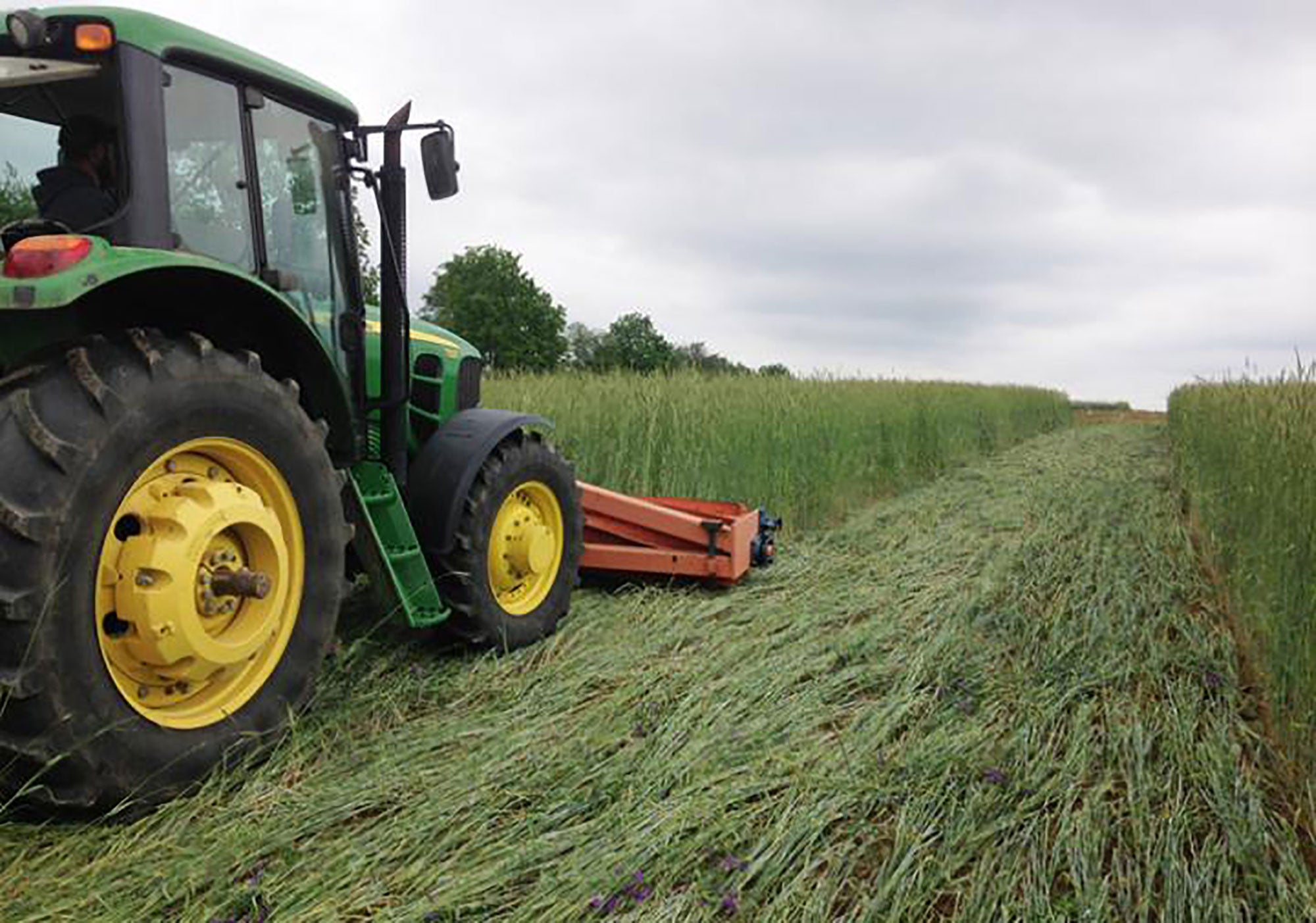
But what about a middle road? More and more crop farmers are discovering that they can implement regenerative practices — such as cover crops, minimal or no-till, and strategic crop rotations — to augment their traditional systems, and achieve sustainable benefits on the back end. Others are experimenting with a toe dipped in organic waters by allocating a portion of their operations to organic crops, grass-fed beef, or pastured swine or poultry.
Farmers are an independent lot, but also very focused on investment returns. The initiative to issue farm loans that incentivize regenerative practices employs carrots rather than sticks to achieve environmental and market improvements while rewarding farmers economically. Conventional crop farmers are invited to transition by choice, for profit.
The regenerative farming loan program proposes issuing loans at a base rate of 4 percent to qualifying small- and mid-sized farms (currently proposed at an adjusted gross income of less than $5 million). Farmers who employ regenerative practices can qualify to have the rate reduced incrementally down to 1 percent.
One needn’t be a farmer to contemplate the many benefits of this proposal. Farmers would not be required to drastically transform their existing practices to see economic and soil gains.
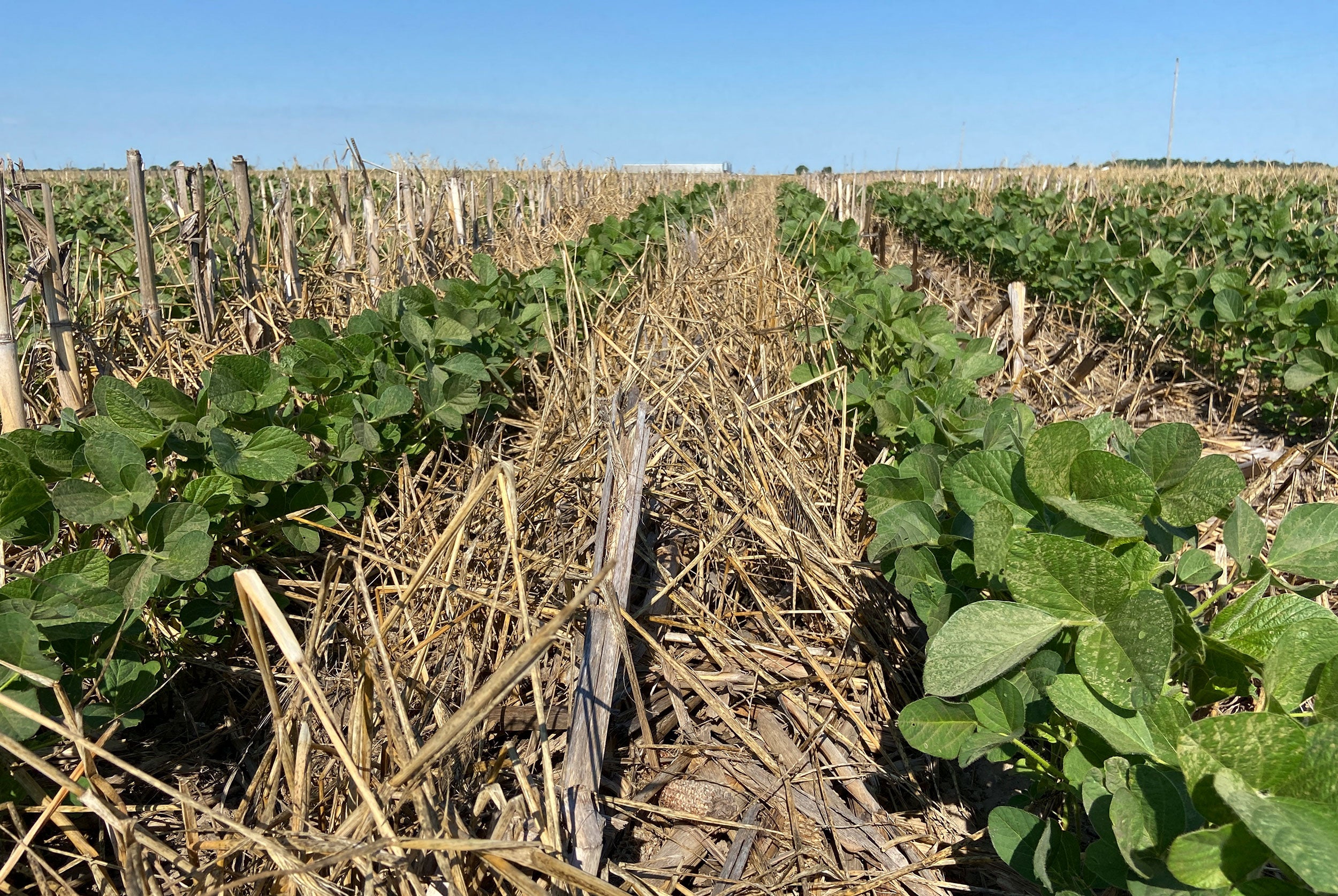
Cover cropping draws plant-feeding nitrogen from the air without spreading as much synthetic nitrogen fertilizer. Low-till or no-till practices reduce soil erosion, nutrient and pesticide runoff, and irrigation needs. Eliminating beta-agonists and other growth hormones in cattle can be offset by lower interest payments and higher market prices. Crop or livestock rotation will enrich soils while reducing debt service overheads. These and other methods offer conventional farmers a menu of regenerative selections best suited to their land, management systems, and geographical challenges. The more they use, the less they pay!
For decades, the United States has paid farmers to employ a narrow style of production practices. It is time to pay them to shift course in ways that deliver measurable environmental and food-quality benefits for all.
Kennedy recently announced a revised food pyramid that recommends nutrient-dense whole foods, including dairy, meat, and fresh fruits and vegetables. The nation’s farmers are essential to supply those products, but they are floundering in devastating economic pressures, and many will not endure without sensible support. Interest rate savings on farm loans ultimately pass through farmers to consumers in lower grocery store prices.
Kennedy and U.S. Department of Agriculture Secretary Brooke Rollins can deliver credible relief to the nation’s farmers through interest-rate-incentivized regenerative loans. These are not mandates or handouts, merely sensible incentives. This will deliver on the MAHA mission for the nation’s farmers and grocery stores alike, to make America (and its soils and water supplies) healthier.
Contact the author at [email protected] to help support this effort.
John Klar is an attorney, writer, and grass-fed beef farmer in Vermont.