





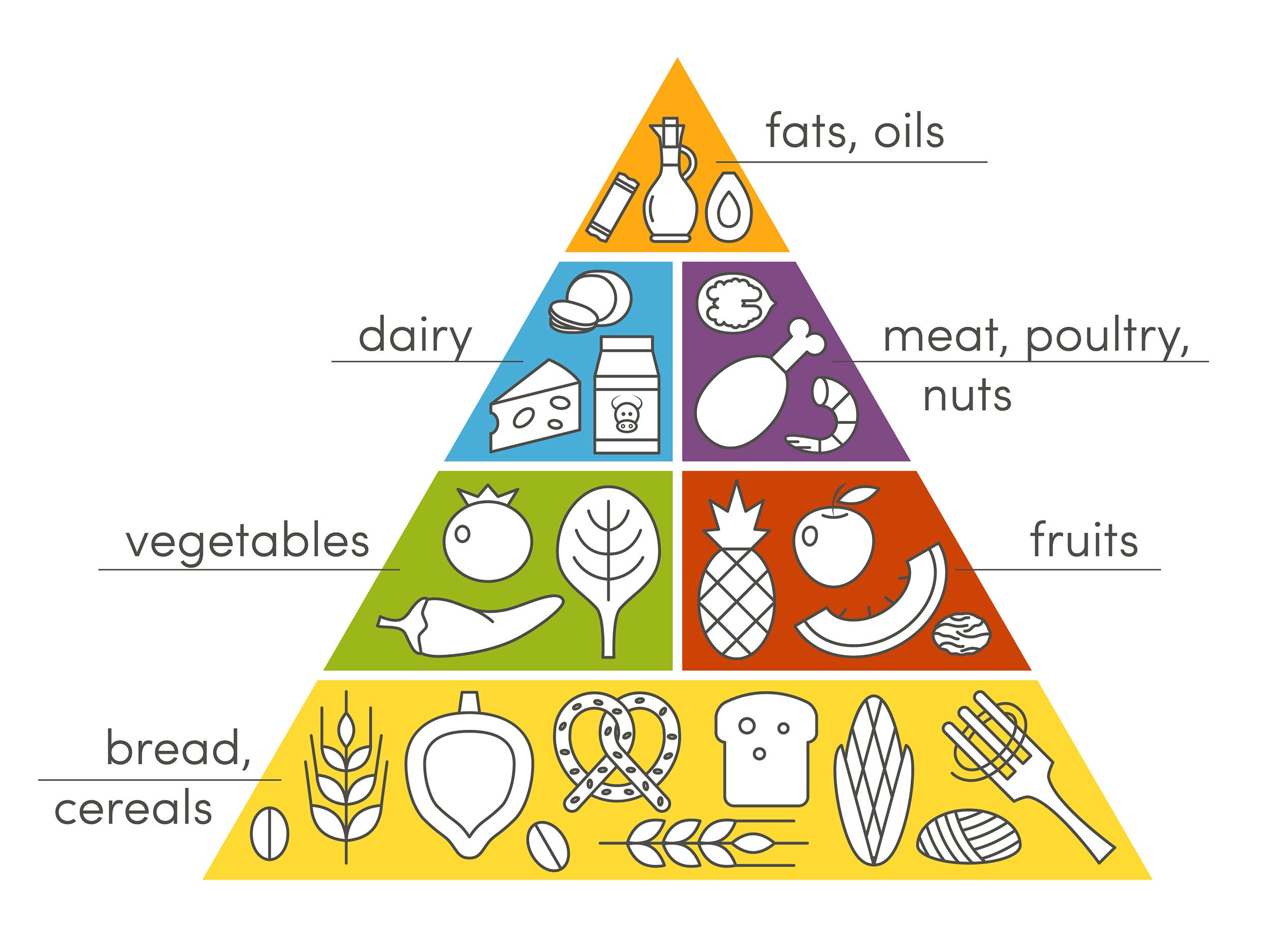
I keenly remember learning the about the U.S. Department of Agriculture’s Food Pyramid — which was released here in the early ’90s — during my elementary and middle school years. Even as a child, it was easy to comprehend the widest part of the food pyramid contained the foods I should eat the most of, followed by smaller amounts of the upper levels.
As you can see from the 1992 diagram below, fats and oils were the smallest level and therefore, meant to be consumed the least. This was in the days of ostracizing all fat, including the cholesterol in eggs and real butter, and was the heyday of margarine. Conversely, the basis of the pyramid was bread, cereal, rice and pasta — 6 to 11 servings, in fact!
In hindsight, this may be why I still can’t pass up breadsticks, biscuits, or rolls on the table of any restaurant. It’s all in the name of whole grains and carbohydrates, much needed for daily energy. Bring on the Red Lobster cheese biscuits!
Yet during my adulthood, in 2011, the original USDA food pyramid was officially retired, and MyPlate was introduced. This was was, in my opinion, a really good tool for teaching all consumers how they should build their diets in terms of food-group proportions.
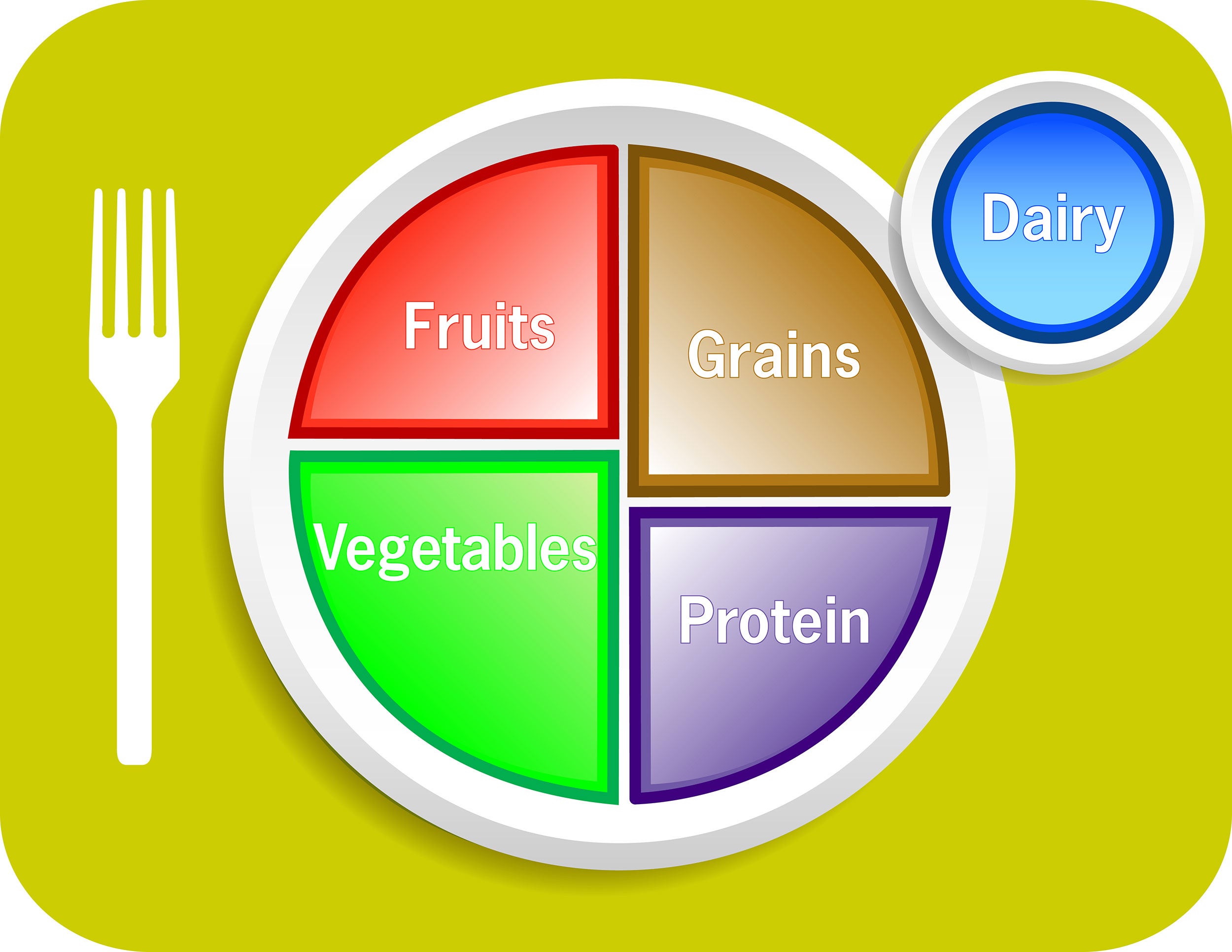
Instead of seeing the servings laid out per day, as the pyramid depicted, the MyPlate standards provided an easy-to-comprehend goal at each meal.
Did I always reach that goal? No. But it was another meaningful guide imprinted in my brain, serving my family and me well for nearly 15 years. That is, until last week, when the 2025-2030 Dietary Guidelines for Americans was released.
In a previous chapter of my life, I was very tuned into the work of the Dietary Guidelines Advisory Committee (DGAC) — the committee that determines these DGAs — as I worked in issues and crisis management in the beef industry. Obviously, the outcomes of the DGAC’s work were high on my radar at that time. But I must say, this iteration of the DGA really caught me off guard. Rather than a revised plate, we were handed an inverted pyramid and a list of rules. (We could also call it a nabla for the math, physics, and engineering gurus in the readership).
Before we delve any further, I feel inclined to make it clear I am not a dietitian or nutrition professional, and none of this commentary is intended as advice. This is strictly my opinion. You should consult a registered dietitian or medical professional for discussion of your personal diet.
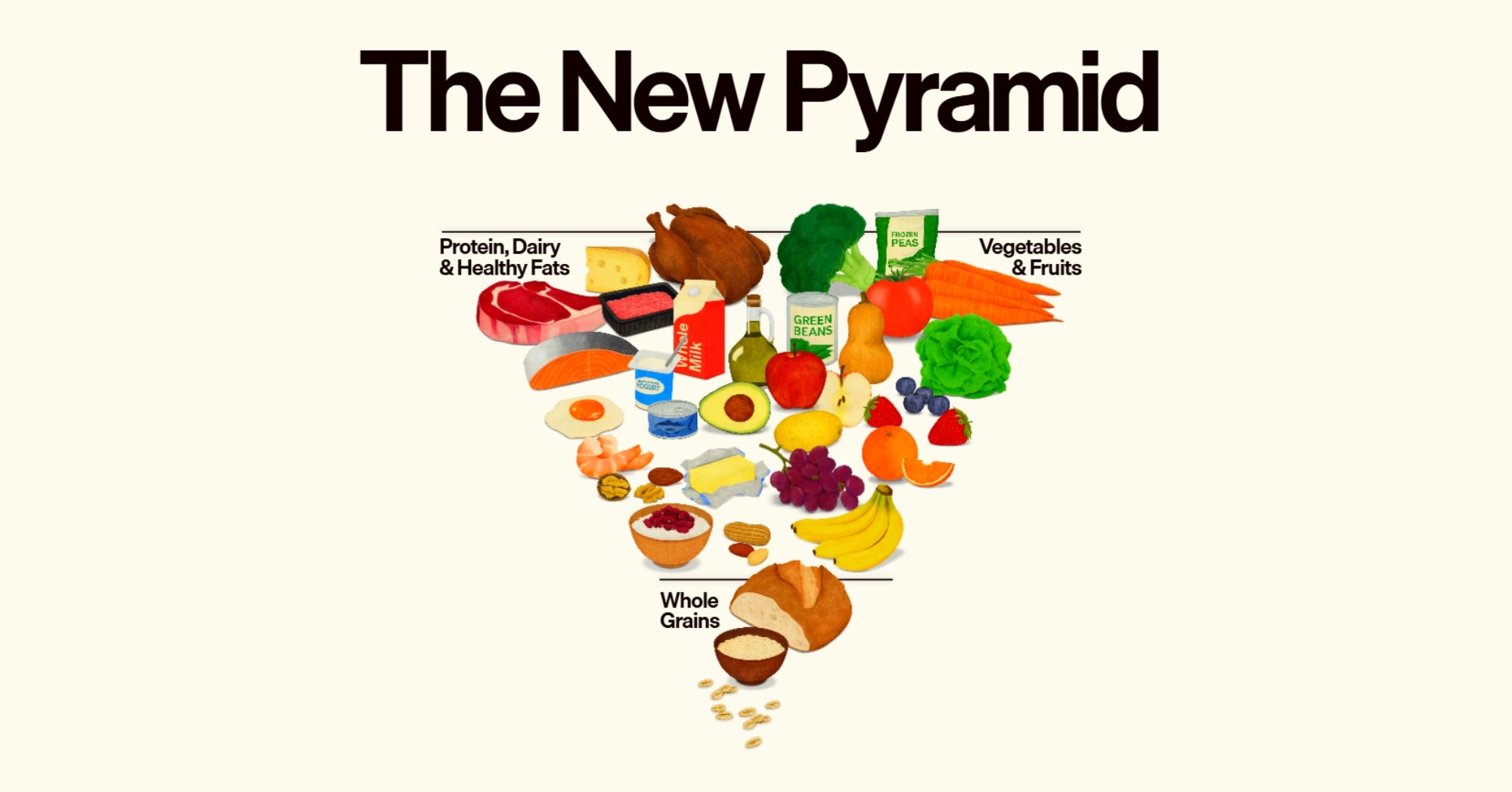
The first thing I noticed, besides the odd shape, was the prominence of meat and dairy at the top, alongside fruits and vegetables. As a rancher and meat lover, I was happy to see this as ample research exists to support protein in the diet to fuel active lifestyles, promote satiety, and, for beef specifically, provide a powerhouse of a nutrients.
Sadly, I also noticed the de-emphasis of my beloved breads and pasta, which feels counterintuitive since whole grains and fiber are fundamentally necessary for heart and digestive health.
In the rollout, the official White House social accounts shared this:

While loads of commenters took issue with the words “war on protein,” I do agree there has been a battle of sorts against meat and dairy over the last decade or so. Animal-rights extremist organizations such as PETA and Humane World for Animals (the organization formerly known as HSUS) have long made it their mission not to save puppies and kittens but to phase out animal agriculture completely.
Additionally, climate extremists have been using livestock, primarily cows, as a scapegoat for climate change for a very long time. To be fair, I believe that humans have had a significant effect on our climate (hello, consumerism, air travel, and nearly 2 billion cars!) and that we should be finding ways to mitigate our climate impact. However, blaming animal agriculture for more than its fair share, while ignoring transportation, industry, and manufacturing (which account for a much larger percentage of greenhouse gas emissions, according to several years of previously collected Environmental Protection Agency data), is not something I can simply shake off.
So yes, there has been a war of sorts against animal protein and, again, I felt relief to see meat and dairy with a significant share of the new inverted pyramid. That is where my relief ended, however. Try as I might, I couldn’t look past the demonization of one food group specifically: processed and ultra-processed foods.
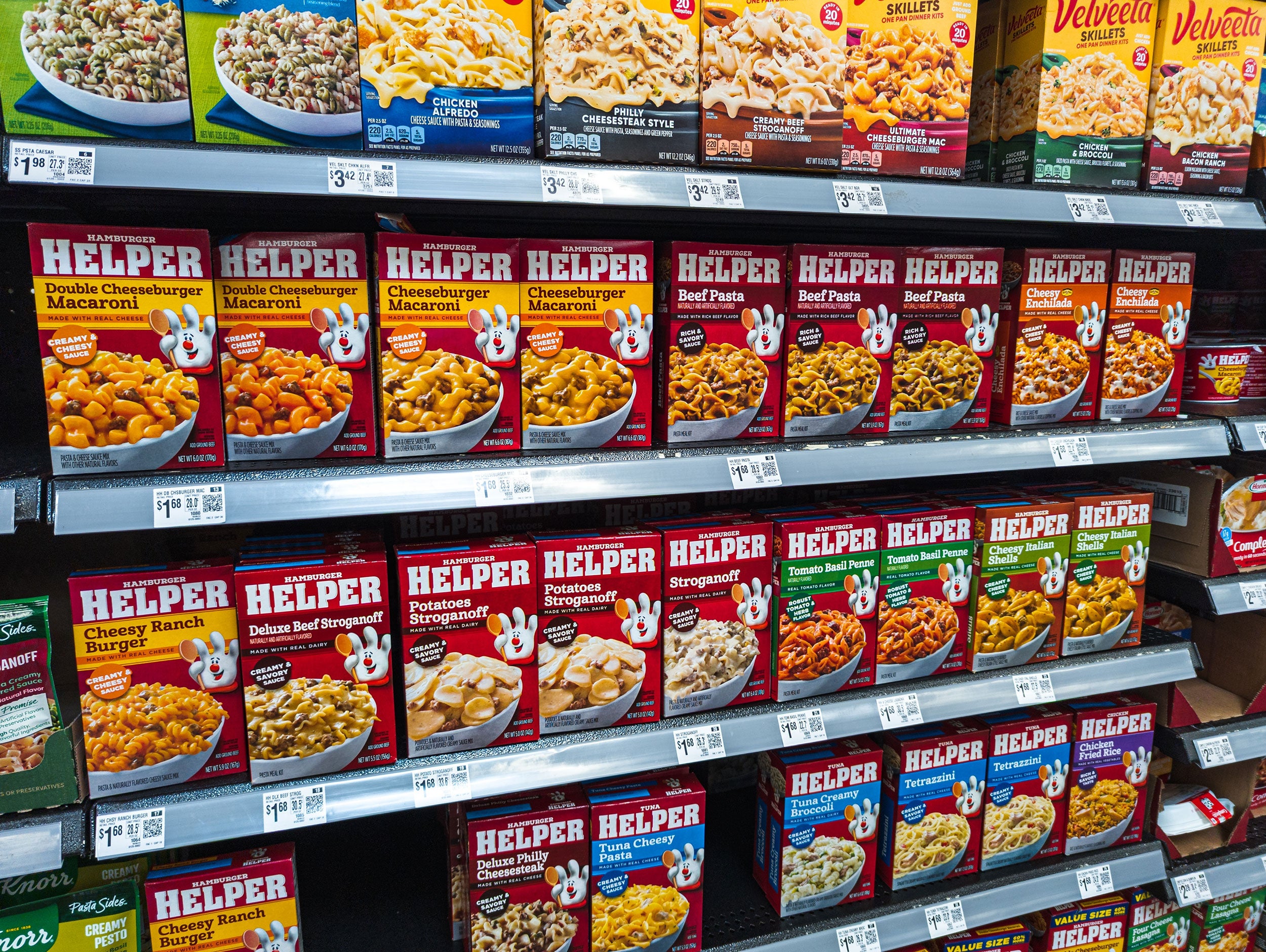
You may not see or realize it, but food elitism surrounding processed food is a real thing. The judgement thrown at people who utilize processed foods to feed their families is unfounded and unfair. I personally receive innumerable insults of the “you’re a lazy, bad mom” ilk anytime I mention my family eats Hamburger Helper, fruit snacks, Pasta Roni, or premade pasta sauce. The disdain and hate don’t bother me (I’m a damn good mama) but are absolutely real.
News flash: Processed foods feed hungry families. Processed foods feed people in food deserts. Processed foods feed low-income families. Processed foods feed busy families, single-parent families and families going through stressful situations. In a subtle way, the new guidelines take a dig at families who can’t afford, or don’t have consistent access to, whole, fresh foods.
A follower of my Facebook page shared this wisdom:
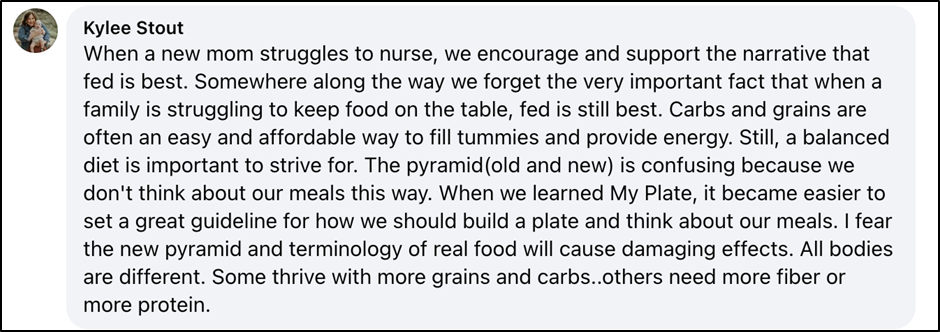
10/10 — no notes.
Nearly all food is processed, and at its most basic definition, processed food could be something as simple as chopping and packing vegetables. On a more complex level, breakfast sausage, canned soup, and meal solutions like Hamburger Helper qualify as ultra-processed, all of which provide nutrition in a diet, even if they aren’t straight from the garden or cow.
Should a low-income family stretch their grocery budget by utilizing processed food to get them to next week’s payday or, to appease the food elite and ease their guilt, conform to the current DGAs and spend their last dollars on fresh veg and meat that will only provide a few meals? With the intensified promotion of whole and fresh foods, and criticism of processed foods, will anything be done to assist people who are low-income or living in food deserts? We can hope, but only time will tell.
Far too many people refer to the DGAs for these guidelines to be confusing and divisive. In my opinion, this iteration of the DGA needs fewer politically charged directives such as “war on protein” and “the old food pyramid was really corrupted” and more clarity and structure to truly help Americans eat healthier.
Brandi Buzzard is a rancher, speaker and pioneer for modern and sustainable agriculture who blends authenticity and wit to spark ideas and innovation. She can most often be found horseback in southeast Kansas or on Facebook, Instagram or AcresTV.