




In a December column on AGDAILY, Perspective: USDA ‘regenerative’ program capitalizes on a buzzword, Amanda Zaluckyj voiced her frustration with the hollowness of the U.S. Department of Agriculture’s use of “regenerative” in the agency’s new $700 million Regenerative Pilot Program. Ms. Zaluckyj has rightly asserted that “Regenerative has turned into more of a trendy buzzword than an actual, scientific approach to agriculture.”
Instead of using buzzwords to deploy funding, what would truly benefit producers is if USDA actually helped them learn how to regenerate their soil. Since there is no mention of any means to facilitate farmer and rancher education in the new Regenerative Pilot Program, it is unlikely to accomplish any real change for the better.
Going by the dictionary definition, regeneration is the “renewal or restoration of a body, bodily part, or biological system … after injury or as a normal process.” Bypassing the fact that more than 200 individual definitions of “regenerative agriculture” have been documented, simply put, I want to emphasize that regenerative agriculture should be accepted by everyone as the restoration of a biological system (the soil) after injury.
That’s vital because we, as humans, have spent thousands of years “injuring” the soil out of ignorance for how the soil was designed to function as a biological system.
Let me pause here to focus on some key words that should be included in a meaningful discussion of regenerative agriculture. They are “ignorance,” “understanding,” and “biological.” Ignorance is a lack of knowledge, education, or awareness that can be remedied through education to achieve understanding. Now that we have an understanding of how the soil functions as a biological system, we must educate ourselves regarding this new knowledge.
To make a positive difference, producers must understand what functions the soil has lost — and then learn how to restore them.
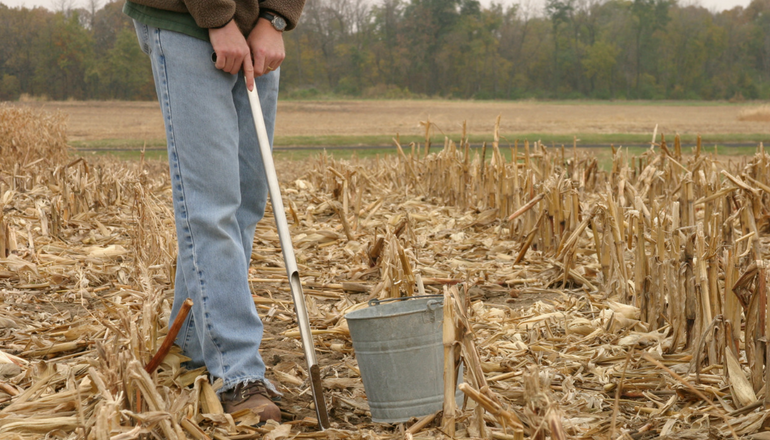
A fully functioning soil captures, cycles, and supplies water and nutrients to plants efficiently and effectively. The majority of our agricultural soils are not currently doing this. But, by gaining an understanding of how the soil functions biologically, the soil can be regenerated by the same biology that created the soil in the first place.
And please do not read into my use of the word “biological” to mean “organic.” I have witnessed substantial soil degradation and resulting loss of function on conventional as well as organic farms that have been managed without an understanding of how the soil is designed to operate biologically.
As long as we’re defining things, the definition of conservation is “planned management of a natural resource to prevent exploitation, destruction, or neglect.” No part of that definition addresses restoration or regeneration.
There are a number of soil health indicators recognized by NRCS and others. See the list here.
In one part of the information regarding the Regenerative Pilot Program, the USDA states that: “Emphasizing regenerative agriculture builds upon NRCS’ 90 years of existing conservation work by restoring land health, improving long-term productivity, and ensuring American grown production for the future.” To be clear, the USDA has only been successful at slowing the degradation of the soil (i.e. erosion control), not restoring what has been already lost.
I have little doubt that $700 million will flow to farmers and ranchers to apply conservation practices, but a significant increase in understanding and a real paradigm shift that would be necessary for producers to achieve a long-lasting restoration of their soil is improbable.
As a retired USDA-NRCS (Natural Resources Conservation Service) employee with 31 years of experience implementing conservation programs directly with producers, allow me to speculate how the Regenerative Pilot Program will play out:
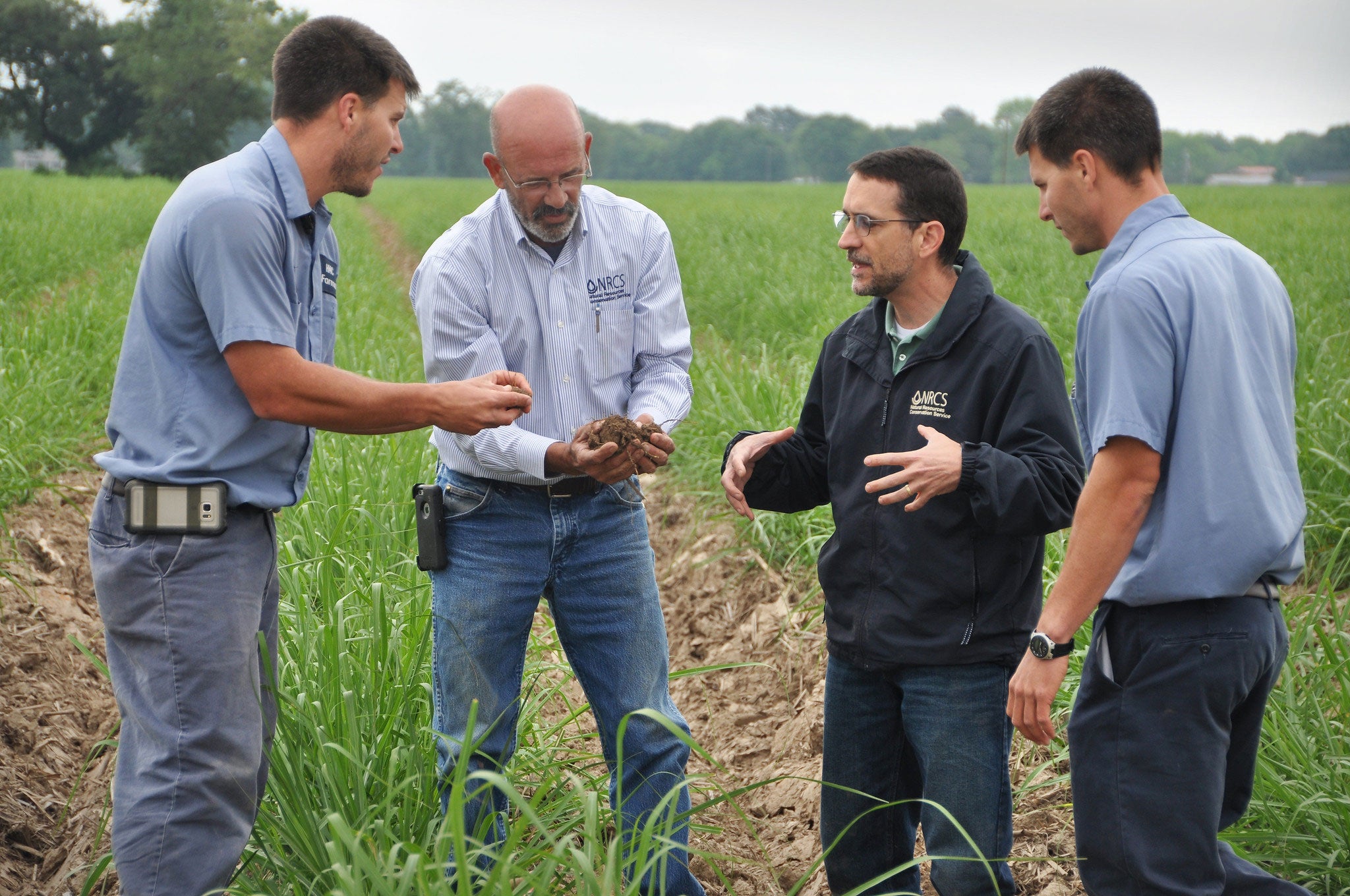
- First, the NRCS has very few employees that possess an understanding of soil health (how the soil functions) that can directly interact with producers to help them understand how to restore soil health on their land. There are a number of NRCS field office employees that have been trained to perform some soil health assessments to document changes in soil health, which is good, but that is not the same as understanding soil health and being able to help producers understand it also.
- Secondly, the NRCS has lost many employees recently that had the ability to educate producers about soil health. The diminished number of NRCS employees with soil health field experience really won’t matter because they are going to be preoccupied by the process of developing and administering new contracts for the new program. Dealing with a lot of new contracts will take the majority of the NRCS’ time and simply won’t allow them to educate producers on restoring soil health to achieve any lasting progress on their farms. There will be some program requirements that the money be spent on certain conservation practices designated as promoting soil health, but simply documenting that a producer applied a given conservation practice does not guarantee that soil health will be improved or maintained. In the long run, if the producer does not understand the principles of how the soil functions from their experience with the Regenerative Pilot Program, most of the effort (and money) will be for naught.
There is also nothing new about spending money through the existing Environmental Quality Incentives Program and Conservation Stewardship Program. In regard to the new pilot program, the USDA is touting that: “For too long, divided and highly specific funding pools have unintentionally encouraged isolated, practice-by-practice conservation, rather than holistic management. By integrating bundled regenerative practices into single applications, closing program loopholes, and recognizing outcomes, NRCS will deliver lasting benefits for farmers, natural resources, and the American consumer.”
In fact both EQIP and CSP have focused on whole farm or ranch plans for decades. The ranking system used to determine order of funding for EQIP and CSP applications in fact favors plans with multiple practices across multiple land uses. What is missing from the new pilot program is any mention of producer education that will help them develop an understanding to guide their management decisions into the future. Only such an understanding would produce a change in thinking that would assure that soil health is truly improved and maintained.
Simply paying producers to apply practices without understanding the principles that build and maintain soil health is a waste of time and money and the reason why we continue to have dysfunctional agricultural soils today, despite decades of conservation programs.
The essential understanding about soil health and changes in land management that I speak of would take thoughtful planning and cooperation between the government, conservation groups, lenders, landowners, ag suppliers, and producers. Based on my experience, any significant changes to restore and maintain soil health will occur from the bottom up, and not from the top down.
I encourage producers to educate themselves about soil health and continue to support each in that effort in order to regenerate their soils. Regenerating the capacity of the soil is what will keep farmers and ranchers on the land by making them more profitable. The current paradigm of mainstream agriculture that spends increasing amounts of money to prop up increasingly dysfunctional soil is not sustainable. Restoring soil health will make crop production much more economically efficient as producers leverage the water and sunlight they get for free, instead of simply maintaining crop yields with expensive man-made inputs.
Jon Stika is a retired Natural Resources Conservation Service soil health instructor and current regenerative agriculture consultant. He is also the author of A Soil Owner’s Manual: How to Restore and Maintain Soil Health.