




DAILY Bites
-
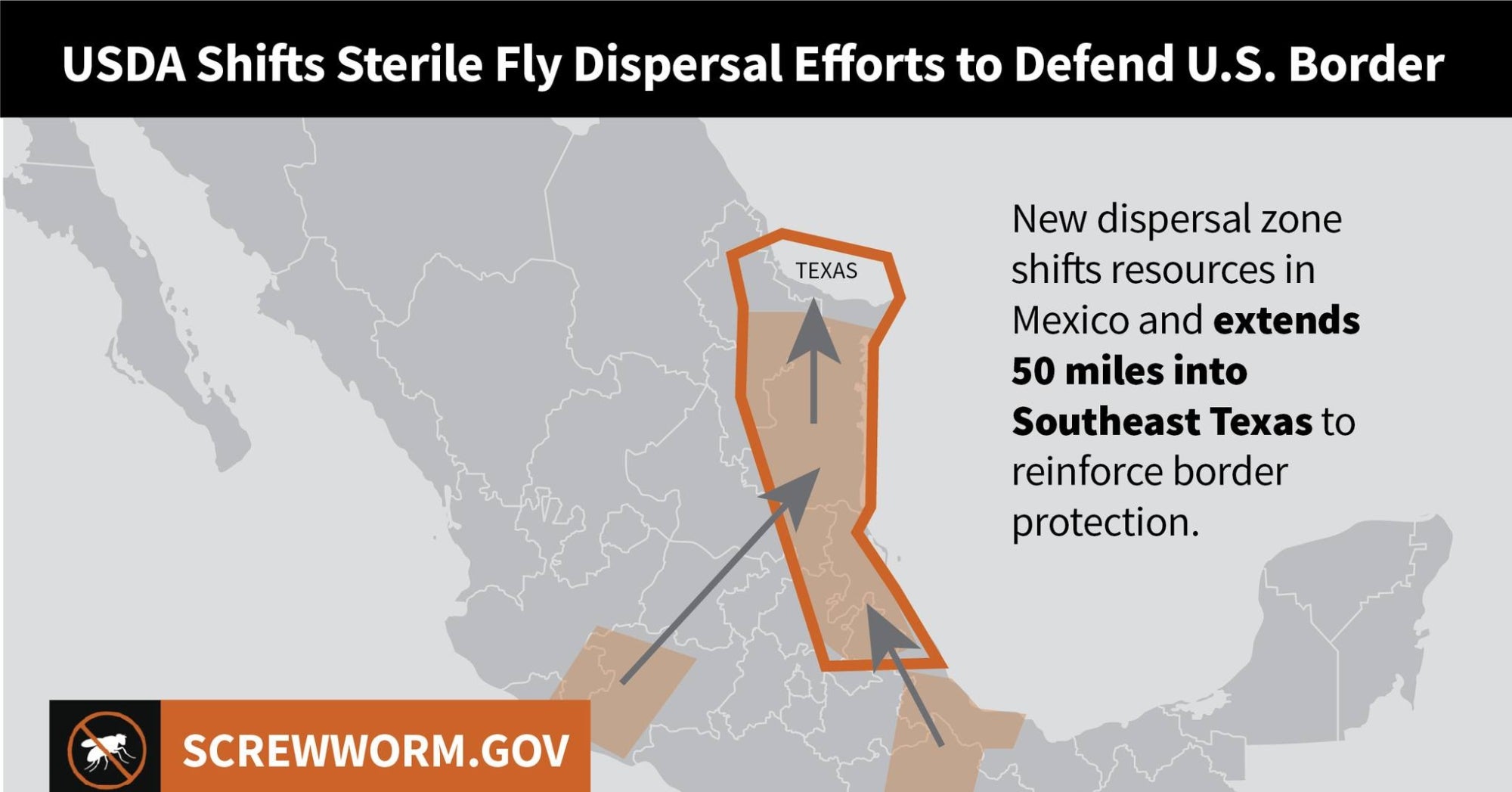
The United States Department of Agriculture’s Animal and Plant Health Inspection Service is shifting its sterile fly releases (about 100 million per week) to stop New World screwworm from moving north.
-
Aircraft and sterile insects will be reallocated to concentrate coverage along the United States–Mexico border, including a new dispersal area that extends about 50 miles into Texas near Tamaulipas, Mexico.
-
The strategy pairs sterile fly releases with import requirements and ongoing surveillance and trapping, including dye-marking sterile flies to distinguish them from wild flies and continued monitoring that has found no New World screwworm detections in the United States so far.
DAILY Discussion
The U.S. Department of Agriculture’s Animal and Plant Health Inspection Service is shifting its 100 million per week sterile fly dispersal efforts to stop the northern spread of New World screwworm.
The USDA said it will reallocate aircraft and sterile insects to reinforce coverage along the U.S.-Mexico border. The new dispersal area, or polygon, will include operations about 50 miles into Texas, along the U.S. border with the state of Tamaulipas, Mexico. At the latest count, this area has been the site of 16 reported detections, with 13 cases currently active.
Mass production and targeted dispersal of sterile insects are critical components of an effective strategy to fight NWS. Other tools including import protocols and surveillance continue to support these robust efforts to keep NWS out of the United States.
“At Secretary [Brooke] Rollins’ direction, our highest priority is protecting the United States from screwworm,” said Dudley Hoskins, Under Secretary of Marketing and Regulatory Programs for the USDA. “The northernmost active case of NWS in Mexico is still about 200 miles away from the border, but we’ve seen cases continue to spread in Tamaulipas and further south in Mexico, so we are proactively shifting our polygon as we make every effort to prevent NWS from reaching our border.”
Sterile insect technique, when paired with surveillance, movement restrictions, and education and outreach, is an effective tool for controlling and eradicating New World screwworm. Female New World screwworm flies only mate once in their lives, so if they mate with a sterile male, they lay unfertilized eggs that don’t hatch.
Releasing sterile flies just outside of affected areas helps ensure flies traveling to new areas will only encounter sterile mates and will not be able to reproduce. In this instance, the USDA will release sterile flies north of the current active NWS cases in Mexico in an effort to create a sterile reproduction buffer zone if the fly moves north from Mexico.
“The Texas Department of Agriculture, working alongside our state and federal partners, is fully engaged in enhanced surveillance, coordination, and response planning,” said state Ag Commissioner Sid Miller. “But protecting Texas agriculture starts on the ranch, and we need producers to be our first line of defense. I urge all ranchers and owners of warm-blooded animals, from cattle to exotic game, to strengthen biosecurity practices now, even out of an abundance of caution. That means closely inspecting animals for wounds, watching for unusual behavior or signs of infestation, promptly treating injuries, and immediately reporting any suspected screwworm infestation.”
Early detection is our strongest weapon
Because it is important to continue ongoing surveillance efforts while releasing sterile insects, it is possible that sterile NWS flies could be caught and/or reported within Texas. To ensure officials can tell the difference between sterile and wild NWS flies, the USDA will dye the sterile pupae, and the dye will transfer to the sterile flies when they hatch. The fluorescent dye will glow under UV light and may also be visible to the naked eye. If a sterile fly is captured in a trap, this dye will allow animal health officials to quickly rule the fly out as a threat.
The USDA said it will continue to deploy its intensive NWS response efforts including implementing import protocols, ongoing surveillance and trapping efforts along the border, investing in NWS innovation, and supporting robust response activities in Mexico and Central America.
Import requirements and protocol
Sterile insects are an important tool, but the USDA’s import requirements and protocols add another line of defense for NWS and other foreign animal diseases that threaten U.S. livestock. Earlier this week, the importance of those protocols was highlighted when a horse from Argentina was presented for routine importation at an equine import quarantine facility in Florida.
Upon examination, APHIS identified an open wound with larvae on the animal and promptly collected and shipped samples to the National Veterinary Services Laboratories in Iowa. The horse was immediately treated with medication to kill any larvae in accordance with standard, long-standing import protocols. This morning, NVSL confirmed that the larvae were New World screwworm larvae. Accordingly, the animal will remain in quarantine until it has been reexamined and determined to be free of NWS.
This is an example of these long-standing import protocols working as designed. While this situation does not appear to be associated with the NWS outbreak in Mexico that the USDA is currently fighting, it underscores the need for vigilance in all of the USDA’s coordinated efforts to fight NWS.
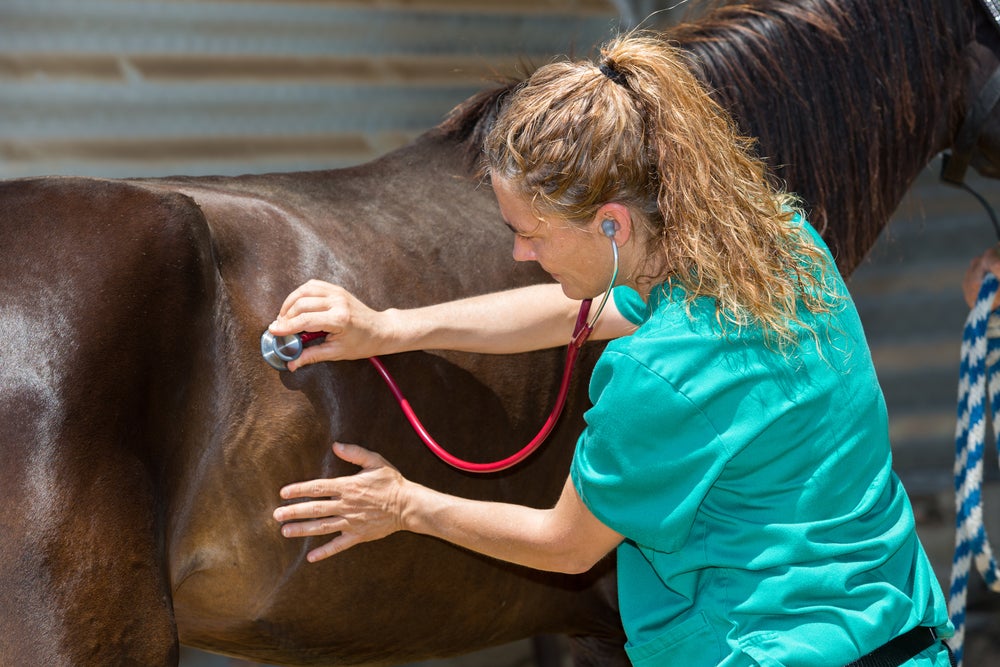
The USDA continues to lead intensive surveillance and monitoring systems along the U.S. border. Teams continue to check 121 NWS-specific traps across high-risk areas of border states and leverage thousands of fruit fly/insect traps aligned all along the Southern border.
To date, more than 42,000 flies from traps in all locations have been submitted to APHIS NVSL for identification, with no NWS detections to date. APHIS Wildlife Services is also leading a coordinated effort to inspect wildlife for signs of NWS infestation. To date, they’ve inspected more than 9,300 wild animals across 39 different species and 131 U.S. counties and found no signs of NWS infestations.
Even though there has been no detection of NWS inside the U.S. and the northernmost active case of NWS is still about 200 miles away from the border, USDA is asking U.S. animal owners to continue to remain vigilant by checking their pets and livestock for signs of NWS and immediately reporting anything suspicious to their state animal health officials or USDA area veterinarian in charge. Signs of NWS infestation include draining or enlarging wounds and signs of discomfort. Also look for screwworm larvae (maggots) and eggs in or around body openings, such as the nose, ears, and genitalia or the navel of newborn animals.
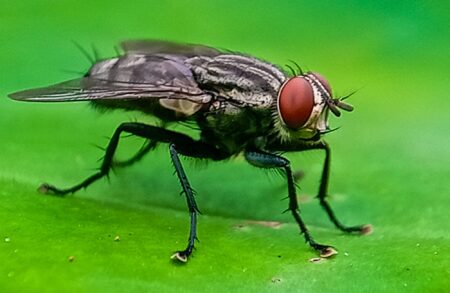
Adult screwworm flies are about the size of a common housefly or slightly larger, with a metallic green or blue body, orange eyes, and three dark stripes down its back. NWS maggots can infest livestock and other warm-blooded animals, including people. They most often enter an animal through an open wound and feed on the animal’s living flesh.
While NWS is not common in people, if you notice a suspicious lesion on your body or suspect you may have contracted screwworm, seek immediate medical attention.