





The person occupying the USDA’s Chief Economist position isn’t usually a household name, but you’ve likely heard farmers grumble about the effect his or her office can have across fields and elevators nationwide.
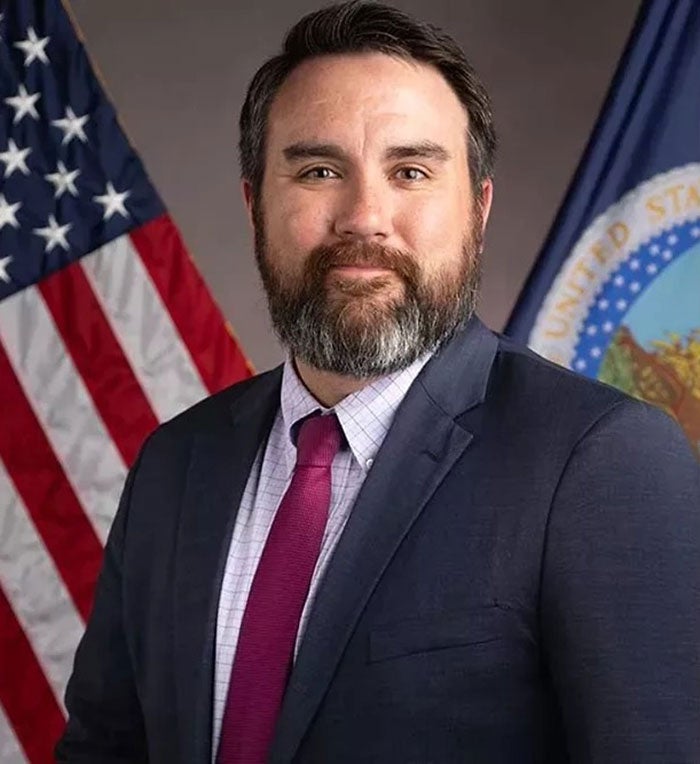
In early January, Dr. Justin Benavidez was appointed to this post, a move that matters to producers not because of flashy headlines, but because of how USDA economic forecasts and analyses can move markets and influence farmers’ livelihoods.
If you’re scratching your head about what this role actually does, you’re not alone. It’s a position we rarely talk about (in fact, this is the first time I’ve written about it), but the Office of the Chief Economist can have real consequences, including some frustrating outcomes, for grain prices, risk management, and even planting decisions.
Although some farmers would probably be content if the office was abolished completely.
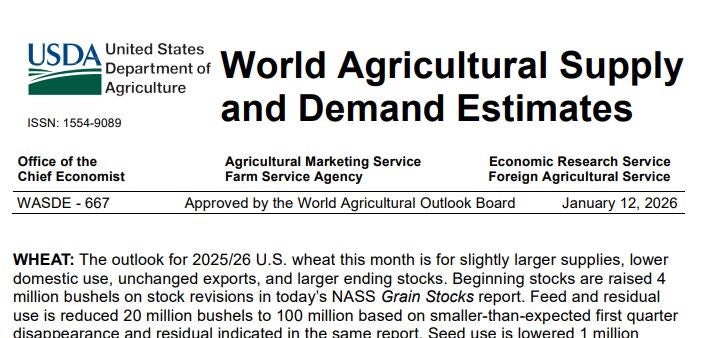
Benavidez steps into the job at a time when producers are under pressure from input costs, shifting global demand, and uncertainty about trade and policy. He replaces Dr. Seth Meyer, who had led the office since 2021 and was known for overseeing influential reports like the World Agricultural Supply and Demand Estimates (WASDE), a monthly release that many farmers and traders watch like a hawk, because its supply and demand balance sheets often shift futures prices and influence cash markets — in other words, what farmers get paid. In fact, the report is considered the most influential source of supply and demand data for commodities worldwide.
Benavidez brings a blend of policy experience and agricultural economics to USDA. Before joining the department, he served as Chief Economist for the majority staff of the U.S. House Agriculture Committee, working on farm bill policy, commodity markets, and economic legislation. Prior to Washington, he was an agricultural economist with Texas A&M AgriLife Extension, focusing on farm and ranch economics. He holds a bachelor’s, master’s, and doctoral degree in agricultural economics from Texas A&M.
The Chief Economist’s work is rooted in data, numbers, and forecasting. OCE produces research and analysis that USDA leadership uses to shape policies, evaluate programs, and explain market conditions to the public and to policymakers. The office also coordinates with the World Agricultural Outlook Board (WAOB), which manages WASDE and other key outlook tools producers follow.
“The USDA chief economist plays a key role in overseeing the analysis behind the WASDE report, helping ensure its supply and demand estimates are consistent, data driven, and credible,” said Emily Evers, County Extension Director for Purdue Extension of St. Joseph County in Indiana. “Because WASDE is a major benchmark for global commodity markets, this work directly influences price expectations, marketing, and risk management decisions made by farmers.”
That’s where the skepticism comes in. These releases are supposed to be objective and data-driven, but in an industry as price-sensitive as agriculture, even the perception of a bearish or bullish signal can impact commodity prices.
Farmers love good data when it validates higher prices. But they don’t always like USDA numbers when they send the market crashing. A bearish WASDE revision on ending stocks or yield expectations, for instance, can drag cash bids lower and leave producers feeling frustrated, especially when they’re trying to market bins full of grain. Even traders, brokers, and analysts sometimes grumble that government data lags or doesn’t match what the market feels on the ground. So while the Chief Economist’s job is to provide neutral analysis, its output is inseparable from how markets react.
Still, the job isn’t just about numbers that move markets. USDA economic forecasts help inform debates over the farm bill, disaster assistance, and trade policy, and they influence how programs are structured or adjusted. When costs of production shift or global demand trends change, producers look to USDA data — for better or worse — as one of the national reference points.
Industry groups, including cattle producer associations, have already issued statements congratulating Benavidez and expressing confidence that producers will continue to get the quality data they need. But it’s fair to say that most farmers won’t know his name unless a particular report lands with a thud in their local elevator or futures screen.
That’s the paradox of this under-the-radar position: It’s not one most producers watch daily, yet it influences the economic backdrop against which planting decisions, marketing plans, and risk strategies are made. Whether economic forecasts provide clarity or stir frustration, the Chief Economist sits at a unique intersection of data, policy, and real-world agriculture.
Farmers will no doubt be watching to see how Benavidez balances those forces in the months ahead, even if they don’t know his name.
Amanda Zaluckyj blogs under the name The Farmer’s Daughter USA. Her goal is to promote farmers and tackle the misinformation swirling around the U.S. food industry.