



Texas Animal Health Commission officials have confirmed anthrax in a steer on a premises in Briscoe County. The agency received confirmation on December 31, 2025, and announced the case in a January 6, 2026, release.
The affected premises, located about 5 miles north of Silverton, Texas, has been quarantined. Under Texas Animal Health Commission rules, quarantine will remain in place until affected carcasses are properly disposed of on-site.
Anthrax is a bacterial disease caused by Bacillus anthracis, a naturally occurring organism found in soil across the world, including certain regions of Texas. Because anthrax is zoonotic, it poses a risk to both livestock and people.
Although most Texas anthrax cases historically occur in the “anthrax triangle” bounded by Uvalde, Ozona, and Eagle Pass, cases have also been confirmed in the Texas Panhandle. Briscoe County saw confirmed anthrax cases in 2020 and 2023, and state animal health officials note that other Panhandle locations have been identified in recent years.
“Zoonotic diseases like anthrax pose a risk to both animal and human health,” said Dr. Bud Dinges, Texas Animal Health Commission State Veterinarian and Executive Director. “This case serves as a reminder to monitor and vaccinate susceptible animals, reduce human exposure, and consult a veterinary practitioner if you suspect your animals are exposed.”
Weather patterns often precede outbreaks
Officials say increases in anthrax cases commonly follow periods of wet, cool conditions followed by hot, dry weather. In those cycles, animals may be exposed to spores while grazing contaminated forage, consuming hay, or inhaling dust containing the bacteria.
After exposure, anthrax typically takes three to seven days for animals to show clinical signs. Once symptoms begin, death often occurs within 48 hours.
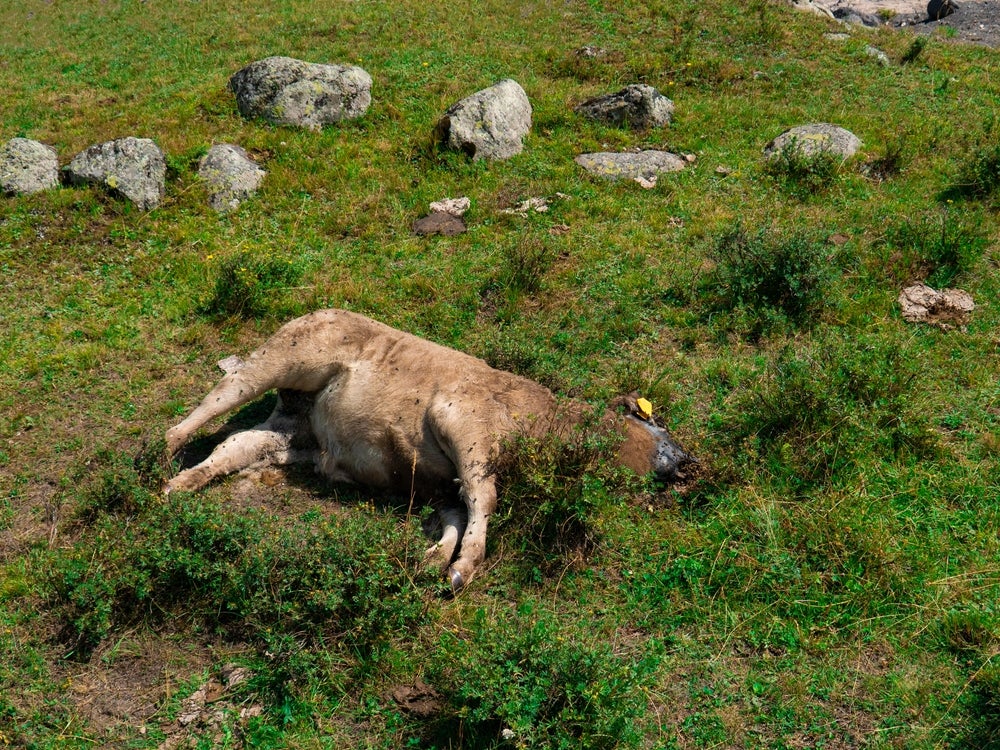
Anthrax can move quickly and often appears as sudden death in livestock, with common signs including an acute fever followed by rapid death, bloody discharge from body openings, and multiple sudden deaths occurring within a short time period.
Officials also advise producers to pay attention to unusual wildlife deaths. If deer or exotic wildlife carcasses show bleeding consistent with anthrax, producers should remove livestock from the area immediately to prevent contact and exposure.
What to do if you suspect anthrax
Texas Animal Health Commission officials are urging livestock owners experiencing sudden death losses or observing symptoms consistent with anthrax to contact a private veterinary practitioner or Texas Animal Health Commission personnel immediately.
Because anthrax can spread to humans through contact with infected animals or carcasses, producers are encouraged to follow basic sanitation precautions when handling affected livestock. Recommendations include wearing protective gloves and long sleeves and washing thoroughly afterward to reduce the risk of exposure and accidental spread.
»Related: 10 weird livestock diseases, syndromes, and what to look for