



By Jeff Beach
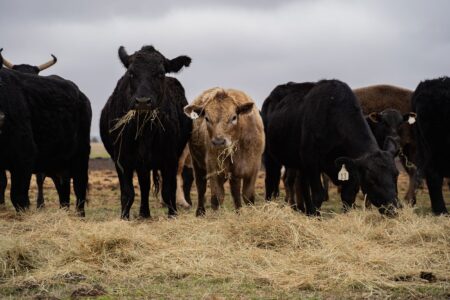
North Dakota rancher August Heupel has yet to sell any of the beef calves he has raised this year, so far avoiding the recent drop in prices that was fueled in part by comments from President Donald Trump on importing beef.
Heupel is hopeful that prices will stabilize and the industry can continue to grow.
“Fundamentally, things have not changed one bit,” Heupel said. “There’s still strong demand, and there’s still low cattle numbers.”
Cattle prices had been at record highs in October when Trump signaled he was in favor of beef imports from Argentina to lower beef prices for consumers. That sent cattle futures markets tumbling, in turn taking down live cattle prices at sale barns in North Dakota and elsewhere.
“It feels like the sky is done falling,” said Heupel, who ranches near Medina and is vice president of the Independent Beef Association of North Dakota.
The cattle futures market is set at the Chicago Mercantile Exchange. Futures prices for next spring are based on what traders think the value of a beef cow will be.
Meanwhile, ranchers are looking to sell calves born earlier in the year. The calves will likely go to another cattle feeding operation until they are up to market weight — when they are ready to be processed into cuts of beef for consumers.
The expected price on the futures market is one of many factors that goes into determining what a buyer will offer for a crop of calves, said Tim Petry, an associate professor and livestock economist at North Dakota State University.
“The futures market always overreacts to everything,” Petry said, whether that news is good or bad for the market. “So a lot of volatility there, and probably that is going to continue until all these tariff issues and stuff get out of the way.”
Trump’s proposal would loosen tariffs on Argentinian beef, allowing more to come into the country.
U.S. Department of Agriculture weekly reports on sales at North Dakota’s three largest livestock auction barns in Dickinson, Mandan and Napoleon show the effect of Trump’s comments.
The first week after Trump spoke, prices for calves were down $20 to $30 per 100 pounds. The next week’s prices were down another $15 to $30 pounds per hundredweight. A 500-pound steer calf might have sold for an extra $300 before prices started to fall.
Sellers often bring in several hundred cattle at a time known as the fall run.
As pastures dry up in the fall, ranchers may have little choice but to sell.
A long fall has extended the grazing season for some ranchers. But Petry noted that grazing leases on federal land usually require grazing to end by mid-October.
“It’s difficult for producers to really change their marketing pattern,” Petry said
While Heupel said the talk of imports threw the market “out of whack,” he expects it to calm down.
“There’s going to be some level-headedness from every side and both sides of the aisle, including producers and politicians,” he said.
North Dakota U.S. Rep. Julie Fedorchak was among a group of House members asking the Trump administration for more information on the Trump administration import policy.
Fedorchak, a Republican, followed up with a meeting of people involved in the North Dakota beef industry, including Heupel and Petry.
After the meeting Fedorchak said ranchers “just need consistent, commonsense policies that let them do what they do best.”
Heupel said the meeting included a good discussion of multiple issues affecting the beef industry.
For example, Heupel said he would like to see tighter limits on how much the cattle futures market can rise or fall in a single day. The market fell the allowable limit on multiple days after Trump’s import comments.
Chad Berger, a fifth-generation cattle rancher in Mandan, said people want to blame Trump for the prices fluctuating recently, but he credits Trump’s tariffs with helping drive up prices.
“If we can hold these prices where they are today, the rancher, the feeder, and everybody can make a little money and keep this thing going,” Berger said at Kist Livestock Auction in Mandan on Wednesday.
Despite the recent volatility, Petry noted that live cattle prices are still well above what they were a year ago.
Heupel agreed that it is still a good time for beef producers.
“The cash market is still exceptionally good for the cattle producers right now,” Heupel said. “I think we’re going to be OK.”
North Dakota Monitor Deputy Editor Jeff Beach can be reached at [email protected].
North Dakota Monitor reporter Michael Achterling contributed to this report. He can be reached at [email protected].
North Dakota Monitor is an affiliate of States Newsroom, the nation’s largest state-focused nonprofit news organization, supported by grants and donations. The Monitor’s editorial decisions are made locally by our team of North Dakota journalists. The Monitor retains full editorial independence.