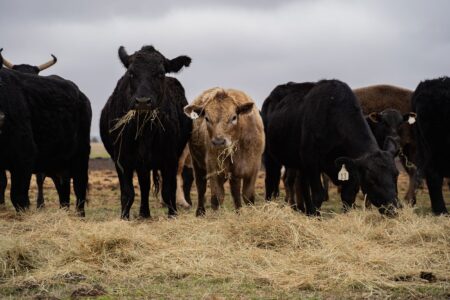





From wolf country, the debate in Washington feels less abstract and more like a tally of dead calves and stressed stock.
On Jan. 31, Reps. Tom Tiffany of Wisconsin and Lauren Boebert of Colorado reintroduced the Pet and Livestock Protection Act, which would remove gray wolves from the Endangered Species List, require the Interior Department to reissue the Trump-era 2020 wolf delisting rule, and bar that action from any judicial review.
The bill will be voted on by the full U.S. House on Thursday. If enacted, the Pet and Livestock Protection Act would shift authority over gray wolf management from federal agencies and courts to state wildlife officials.
Tiffany said “scientific data, coupled with the rise in wolf attacks in Wisconsin, confirms that the gray wolf population has exceeded recovery goals” and accused “activist judges” of leaving “livestock, pets, wildlife, and communities vulnerable to further harm.” The bill, he said, would “restore management to those who understand local needs best — state wildlife officials.”
Boebert framed the legislation as an agriculture-first measure.
“Gray wolves are threatening the livelihoods of our ranchers and farmers with attacks on livestock because our agriculture community has their hands tied by out-of-date policies and progressive legal activism,” she said, calling the bill “a common-sense solution” that “prioritizes the strength of our agriculture community over predators.”
The bill closely tracks an earlier measure, the Trust the Science Act (H.R. 764), which passed the House in April 2024 on a 209-205 vote but stalled in the Senate. That legislation also ordered Interior to reissue the 2020 gray wolf delisting rule and insulated the move from court challenges.
Under the new proposal, the Interior secretary would be required to reissue the 2020 U.S. Fish and Wildlife Service rule that removed gray wolves in the lower 48 from the endangered and threatened list, and that reissued rule “shall not be subject to judicial review.”

That 2020 delisting was vacated by a federal district court in California in 2022, which led FWS to formally reinstate Endangered Species Act protections across most of the lower 48 in 2023.
Agriculture and hunting groups lined up behind the Tiffany-Boebert bill. Hunter Nation president Keith Mark called wolf recovery “an incredible conservation success story that should be celebrated” and said “the best part of this legislation is the provision that prevents judicial review,” which he argued would stop “anti-hunting groups from interfering” with management.
Garrett Edmonds of the National Cattlemen’s Beef Association and Public Lands Council said, “for too long, politicized species management decisions have allowed predators like the gray wolf to run rampant in rural communities,” adding that the act would “allow for better management of the wolf while also protecting rural communities.”
National Rifle Association lobbyist John Commerford said the bill would “allow states to better control the wolf population unique to each state” and “benefit hunters by enabling them to play a more active role in wildlife management.”
Safari Club International’s Chris Tymeson said delisting and state-based wolf management are “endorsed by the best available wildlife science” and by “local residents of those states who are affected by wolves,” adding that “only special interest groups that fundraise off wolves oppose delisting.”
In Wisconsin, where Tiffany has made wolf issues a signature focus, farm and hunting groups echoed the push. Wisconsin Farm Bureau president Brad Olson said wolves have “far exceeded the population goals” and argued that state management would “ensure a balanced approach that protects our farmers, rural communities, and the ecosystem as a whole.” The Wisconsin Cattlemen’s Association cited “depredation on livestock” and “reduced fertility rates” in supporting the bill, while the Wisconsin Bear Hunters Association said “science has shown now for over a decade that the wolf is recovered” and blamed “radical environmental activists” for blocking delisting.