




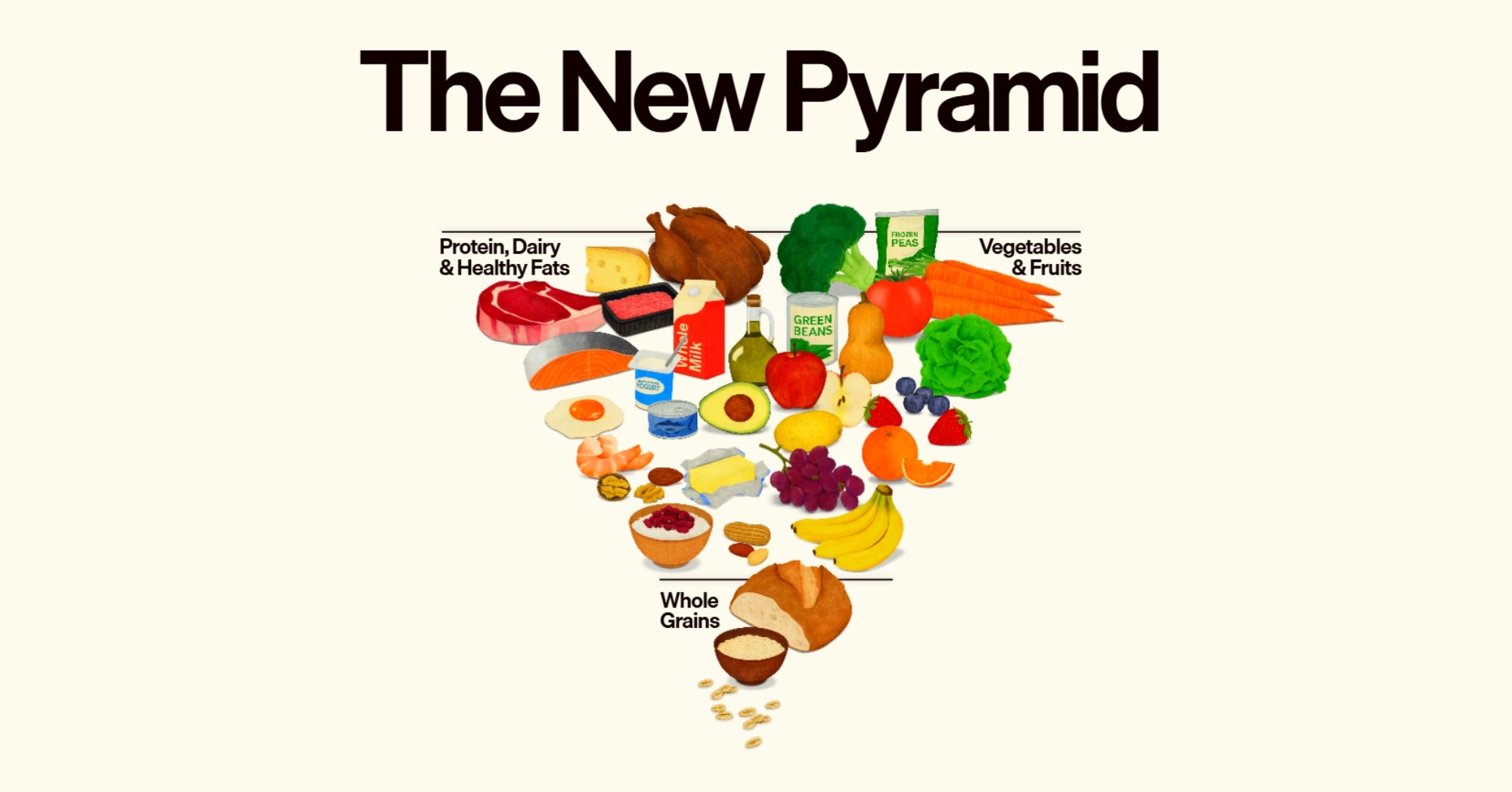
The U.S. Department of Agriculture and the U.S. Department of Health and Human Services released the long-awaited Dietary Guidelines for Americans, 2025-2030, on January 7, dubbing it a “big reset” in nutritional advice that seeks to “put real food back” in American health. Clearly influenced by Robert F. Kennedy Jr.’s Make American Healthy Again movement, the new guidelines even feature a reworking of the food pyramid, now depicted upside down.
The document emphasizes minimally processed, nutrient-dense foods, including protein, dairy, vegetables, fruits, healthy fats, and whole grains, while encouraging Americans to reduce highly processed foods, added sugars, and artificial additives.
“As secretary of Health and Human Services, my message is clear: Eat real food,” Kennedy, who serves as head of Health and Human Services, said in unveiling the document.
One of the big takeaways, according to the guidance update, is the emphasis placed on protein and the recommendation to feature protein as the main protein-source option in all meals. Another important highlight is the tougher line taken on sugar, where added sugars and processed foods are considered “major contributors to chronic diseases and unhealthy outcomes.”
The new guidelines call for avoiding “highly processed packaged, prepared, ready-to-eat, or other foods that are salty or sweet,” as well as avoiding sweetened beverages including soda, fruit drinks and energy drinks.
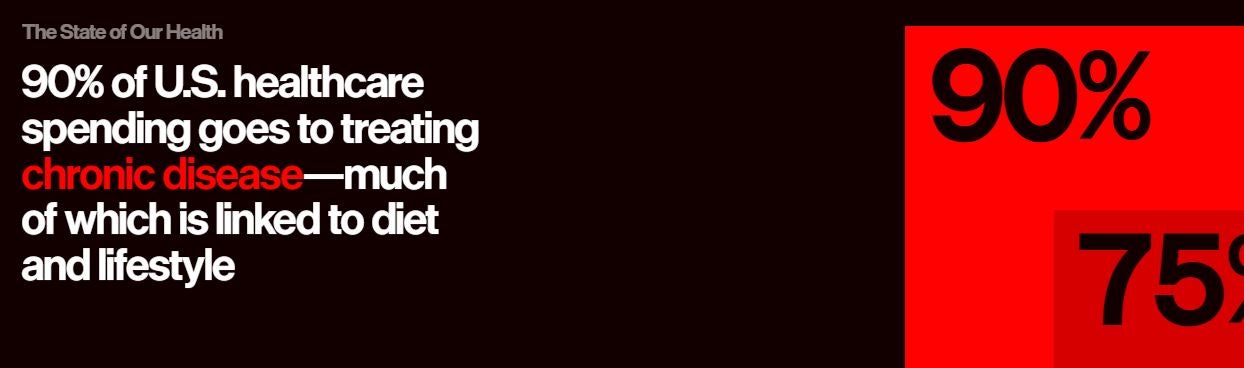
Reinforcing this position, the accompanying website, Realfood.gov, speaks in big letters that “America is sick. The data is clear” — highlighting diabetes and other chronic conditions, along with the massive amount of money funneled toward management of disease.
A long lingering question related to this round of guidelines has been whether the federal government is going to specifically recommend lowering consumption of red meat, an extremely contentious element of previous diet debates. Within the background information in the new guidelines, it is stated that the Advisory Committee suggested lowering consumption of red meat as well as processed meats, but an attempt has not been made in the guidelines for 2025-30.
It is a new version that instead emphasizes a focus on the quality of foods and different sources of protein, without calling attention to a reduction of red meats.
Senate Agriculture Committee Chairman John Boozman (R-Ark.) praised the updated guidance, pointing toward its role in shaping school meals and nutrition programs. “These updates provide easy-to-understand nutritional information for school meals and other federal nutrition programs and helps Americans make healthy, informed choices. … Recognizing the role of nutrient-dense foods, including meat, dairy, fruits and vegetables, in a well-balanced diet will help us meet our nutritional needs while promoting overall health.”
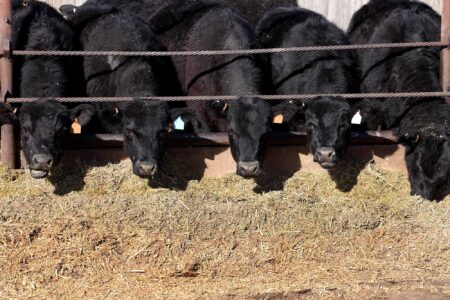
However, this is not the same case as the last cycle of guidelines, where the call to cut consumption of red meat and increase the promotion of plant-based proteins led to fierce opposition from agricultural groups connected to meat. These agricultural groups contended that beef and other animal proteins are a vital part of the diets of the vulnerable, such as children, pregnant women, and older people.
Another notable change is dairy. The new guidance encourages full-fat dairy with no added sugars, signaling a shift away from decades of federal messaging that prioritized low-fat or fat-free dairy. Supporters of the change argue it reflects evolving nutrition science and helps bring policy closer to how many consumers actually eat, while also supporting farmers and processors who have long pushed back on fat-focused nutrition guidance.
National Milk Producers Federation President and CEO Gregg Doud said, “As also shown in the scientific report that preceded today’s guidelines, reducing or eliminating dairy from the diet leads to undernourishment in key nutrients for millions of Americans. These guidelines encourage consumption of dairy nutrients critical to human health. Meanwhile, not all fats are created equal, and because the guidelines acknowledge this, dairy’s benefits are better reflected in this iteration of the guidelines.”
A group of 17,000 doctor members, called the Physicians Committee for Responsible Medicine, had a mixed reaction to the report.
“The Guidelines are right to limit cholesterol-raising saturated (‘bad’) fat,” said Dr. Neal Barnard, president of the organization. “But they should spell out where it comes from: dairy products and meat, primarily. And here the Guidelines err in promoting meat and dairy products, which are principal drivers of cardiovascular disease, diabetes, and obesity.”
He also noted that, “The Guidelines take a sledgehammer approach to processed foods, but plant-based and vitamin-fortified processed foods actually reduce the risk of birth defects, diabetes, heart disease, and cancer.”
The guidelines arrive in the orbit of the administration’s broader MAHA agenda — a context that has drawn attention across agriculture.
MAHA officials, including Kennedy and Ag Secretary Brooke Rollins, had released two major reports during its first year: The original MAHA report delivered scathing assessments of farm pesticides, raising alarm in farm country and triggering pushback from commodity groups and agricultural advocates concerned about public trust, crop protection tools, and the tone of federal messaging. But a second MAHA report later softened its stance, backing away from the earlier pesticide-centered critiques and striking a more measured tone. That shift has been viewed by many in agriculture as a recalibration — moving from direct attacks on pesticide use toward a broader emphasis on diet quality, processed foods, and consumer health outcomes.