


“This story was originally published by Grist. Sign up for Grist’s weekly newsletter here.”
Nearly 20 years ago, a Brazilian lobbying group for soy trading and processing companies signed onto a historic conservation deal known as the Amazon soy moratorium. The voluntary agreement prohibits members from buying soybeans grown on lands deforested after July 2008.
Proponents of the deal say that it has been highly effective at protecting forest land without impeding soy production over the last two decades. Under the moratorium, growing soy on other lands — like those cleared before 2008, or pasture or savannah lands — is still fair game, and reports indicate that production on such lands in the Amazon has quadrupled since 2006.
Now, amid changing political headwinds, the deforestation agreement is in danger.
On January 1, a new law eliminating the tax benefits for members of the moratorium took effect in Mato Grosso, the Brazilian state that produces the most soybeans in the country. These tax benefits functioned separately from the moratorium; nevertheless, following the new law, the lobbying group for soy traders — including multinational firms like Cargill, Bunge, ADM, and others — announced its plan to leave the moratorium, which experts say will put more of the Amazon rainforest at risk of deforestation. Without participation from these major corporations, the agreement risks becoming largely toothless — and exacerbating growing challenges faced by agricultural producers today.
The exodus of agrifood groups from the moratorium is “entirely self-defeating,” said Glenn Hurowitz, founder of Mighty Earth, an environmental advocacy group focused on conservation. For 20 years, “these companies’ commercial success has relied on the soy moratorium,” argued Hurowitz. “Gutting it is probably going to create a lot of marketing and market access challenges for them.”
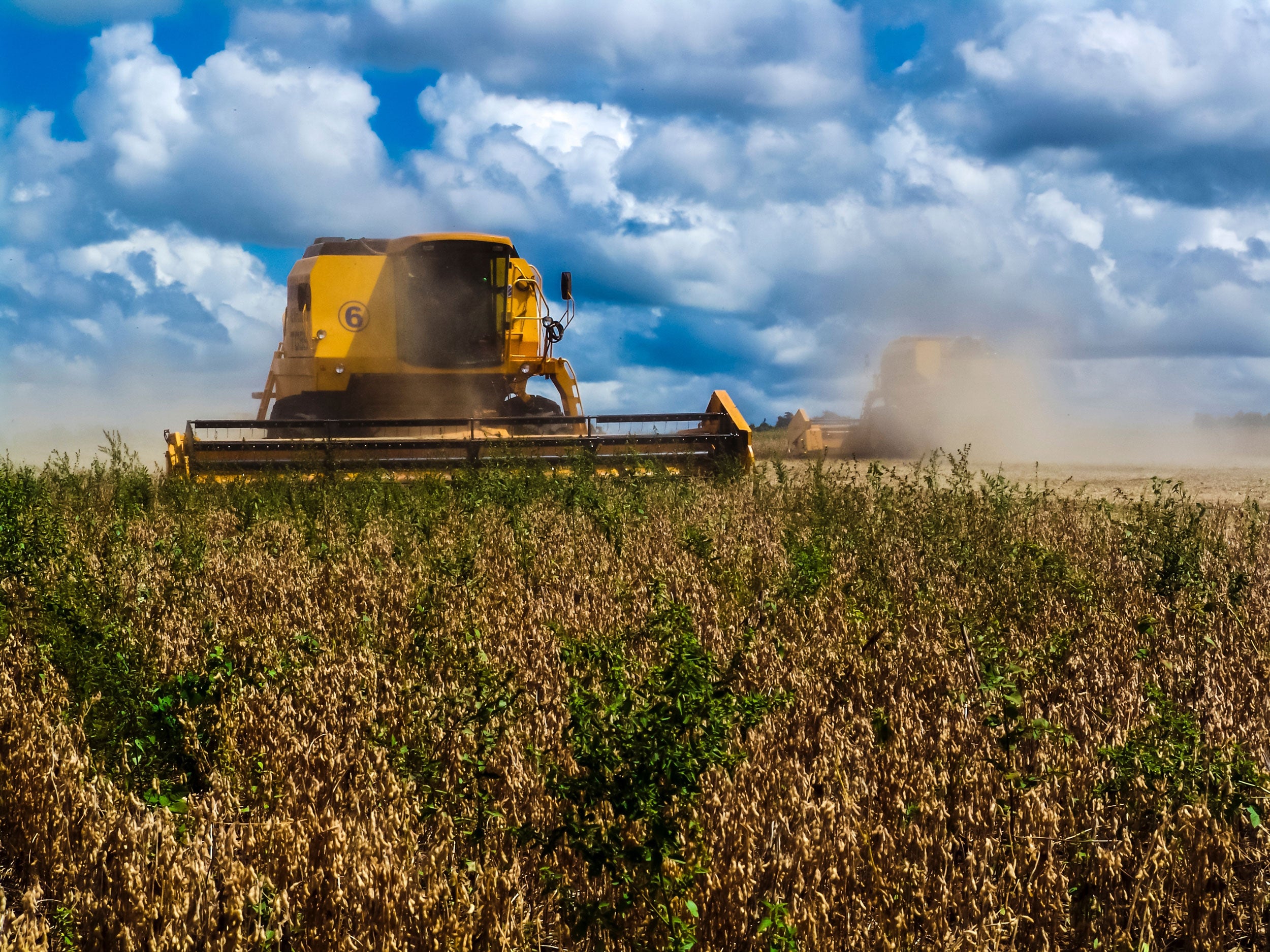
In recent years, there has been growing criticism of the conservation deal as privileging those same multinational corporations over Brazil’s own agricultural producers. Soy farmers and cattle ranchers have long opposed the moratorium, saying it hampers their business. (Raising beef is reliant on soybean production, as one of the major uses of soy globally is animal feed.) Brazilian farmers have been pressuring the state of Mato Grosso to re-level the playing field between them and soy traders, which one farmer lobbying group referred to as a “purchasing cartel.” The dissent came to a head when, last year, Brazil’s anti-competition regulator attempted to squash the moratorium by ordering participating companies to cease complying or face hefty fines.
Mato Grosso’s new tax law appears intended to do that re-levelling. By one estimate, tax subsidies for companies participating in the moratorium amounted to $840 million between 2019 and 2024. João Brites, director of growth and innovation at HowGood, a startup that helps food retailers and manufacturers decarbonize their supply chains, called traders leaving the deal a “huge loss.” (Cargill refers requests for comment to the Brazilian Association of Vegetable Oil Industries — or ABIOVE — the lobbying group that announced its decision to leave the moratorium last week. ABIOVE did not respond to questions in time for publication.)
Brites added that weakening the moratorium will likely have numerous negative repercussions for the ecology of the Amazon and for its ability to sequester carbon. Deforestation releases the carbon dioxide stores in trees back into the atmosphere, turning some parts of the Amazon from carbon sinks to carbon sources. It also threatens the ecosystem’s biodiversity, as species experience the loss of habitat.
One of the most important ways deforestation deteriorates the environment has to do with water, said Brites. The water cycle — whereby trees take in water from the soil, transpire it into the atmosphere, and that water falls in the form of precipitation over the landscape — is of critical importance in the Amazon, especially in areas that are furthest from the ocean. If trees disappear, “you’re actually arming the ability of those local ecosystems to be resilient. You’re actually impacting the amount of rainfall,” said Brites, adding that rainfall is also “directly connected to agricultural yields.”
ABIOVE’s announcement is a “very bad sign that the market no longer wants to actually go into this direction of sustainability, which is really, really bad,” said Ane Alencar, director of science at the Amazon Environmental Research Institute, or IPAM.
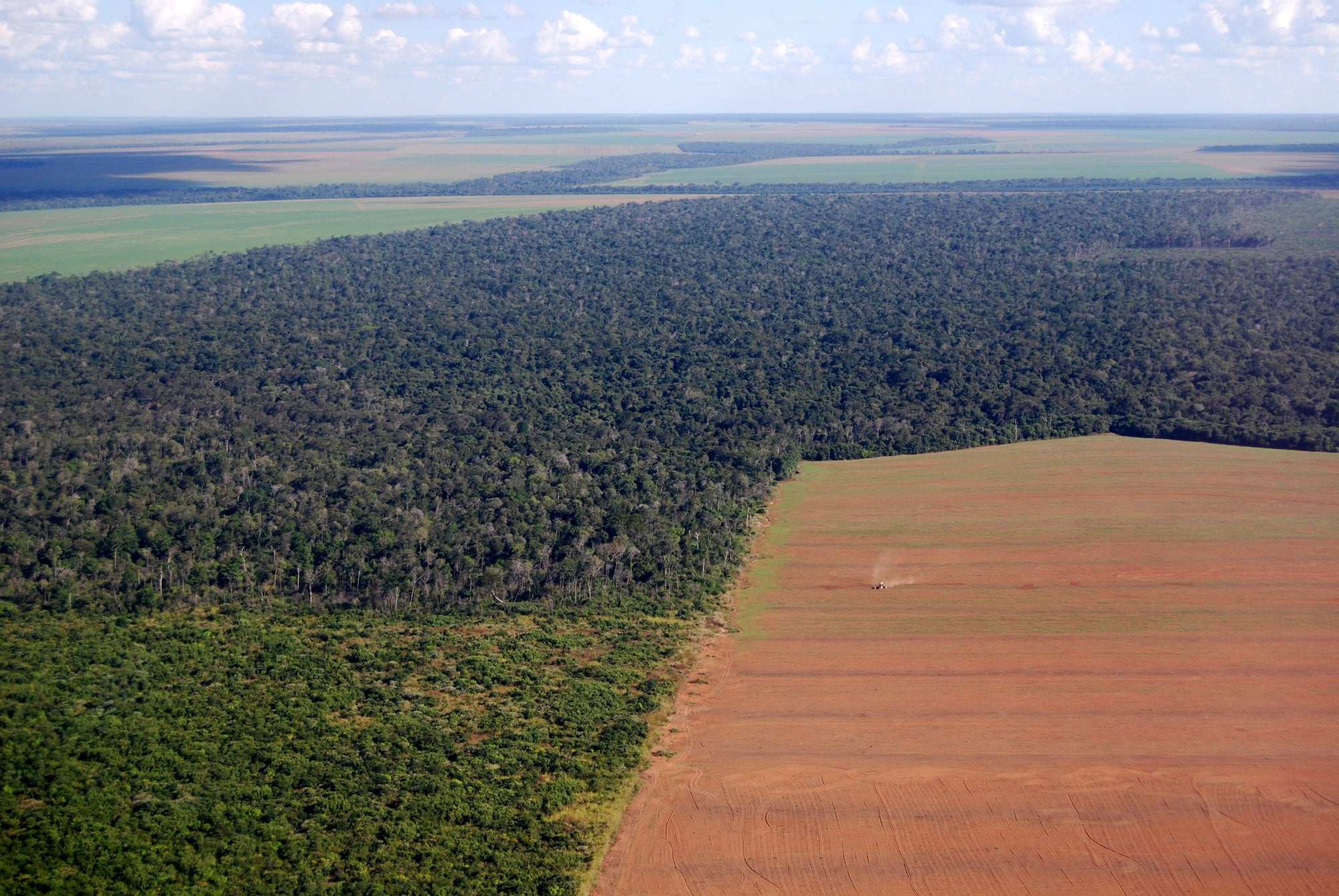
There are many public and private initiatives to preserve forest land in the Amazon — and many accusations of greenwashing. But the soy moratorium is considered to have been especially successful over the last 20 years at getting big corporations on board with sustainability. In the absence of this agreement, companies can certainly still make and pursue commitments to conservation and biodiversity. For example, Cargill, which buys soy from Brazilian farmers and sells soy products to McDonalds and other major food retailers, has said it will continue to work toward its own goal to make its supply chains “free of deforestation” by 2030. But that deadline is a few years away, Brites pointed out, and means the corporation can still source from newly deforested lands until then — whereas under the soy moratorium, it had vowed not to.
The weakening of the soy moratorium also threatens Indigenous lands in the Amazon, as agricultural producers seek new areas in which to expand. “There is a risk,” said Alencar, especially if Indigenous lands are not properly demarcated.
The news from ABIOVE comes not long after COP30 was held in Belém, Brazil — where the host country underscored its commitment to protecting its forests. Contrary to the position championed at COP, this development may reflect how the private sector feels less political and social pressure to act in the best interest of the planet, as governments like the second Trump administration openly roll back sustainability and climate initiatives. “In my entire life — not just in my career, but in my entire life — I have never seen a time where political elites care less about nature,” said Hurowitz.
He argued that commodity traders like Cargill and others will have to work harder to demonstrate their commitment to protecting forests.
Going forward, there will be “some significant amount of consumers probably worried about the fact that they’re going to be complicit in the destruction of the Amazon rainforest,” said Hurowitz.
That pressure, after all, was part of the reason why, 20 years ago, Cargill and others came together and signed on to the soy moratorium in the first place. “It got to be a real brand problem for these companies,” he said. Whether that happens again remains to be seen.
Frida Garza is a staff writer covering food and agriculture at Grist. This article originally appeared in Grist at https://grist.org/business/a-major-agreement-to-protect-the-amazon-is-falling-apart-after-20-years/. Grist is a nonprofit, independent media organization dedicated to telling stories of climate solutions and a just future. Learn more at Grist.org