



:max_bytes(150000):strip_icc()/Elsingfarmtractor-JessiSchoville-6ae176703224437bb7e9f51fa086216e.jpeg "How to Prepare Your Operation for the Next Wave of Autonomy")
Following a tight year for the ag economy — when every dollar mattered — now is a good time to take inventory on the technology you have and identify which upgrades would provide the best eturn on investment.
Tech Audit Checklist
Bryce Baker, North American tactical marketing lead for Precision Planting, suggested some upgrades farmers should invest in.
Autonomous functions, such as grain cart duties and tillage, started making their way into farming operations this year and should only see more development as time goes on, with autonomous corn and soybean planting likely coming in the next couple of years. To prepare for that, Baker recommended investing in aftermarket kits that automate the process.
“If you’re having to manually make adjustments to a piece of equipment today, you’re really not set up on the path to autonomy,” Baker said. “For example, If you’re making manual adjustments to a closing or a downforce system, it’s going to be challenging to make those when you’re not in the field.”
Anywhere you can make agronomic improvements is a key, Baker said. This includes planting with good singulation, protecting the crop, and getting the right map data — all to make sure your emergence is as consistent as possible.
For the smoothest upgrade experience, Baker recommended inviting your dealer to perform an equipment audit. This allows them to understand what you’re working with — whether it is factory-standard machinery or decked out with aftermarket — to make the best possible suggestions.
An Open Mind for Technology
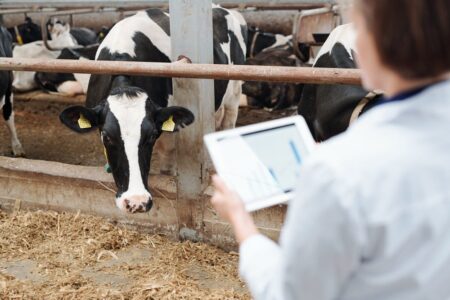
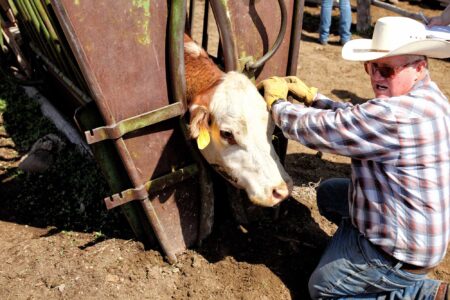
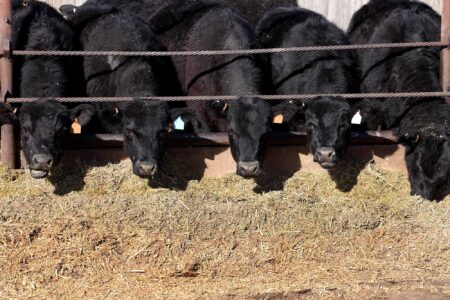
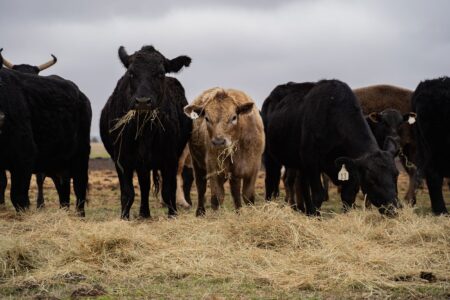
Emily and Avery Elsing grow corn, soybeans, alfalfa, and wheat across a few thousand acres in south-central Wisconsin. They also raise around 800 cattle for milk production, with another 50 head for beef, as part of their family-owned Prairie Raised Beef operation.
For the most part, the Elsings keep technology simple on their operation: The family primarily runs a fleet of New Holland tractors, with a couple of combines, two choppers, two sprayers, and John Deere corn planters. They do the best they can to repair and maintain equipment in their own shop.
Avery said he aims to get his money’s worth out of the tractors and combines and isn’t constantly trading for the latest models.
“We keep the machines until we think they’re slowing down our operation — with too many breakdowns, or getting too worn out,” Avery said. “We have a big shop; we fix a lot of things on our own, so we like to get our use out of them before we get rid of them for good.”
Despite their approach to machinery, the Elsings said they take on new technology when it makes sense. Over the years, they said they’ve added Precision Planting technology to their corn planters, plus Climate FieldView for crop data and field prescriptions, with two additional Ag Leader monitors in their combine. Avery said he plans to invest in precision spraying technology for his custom spraying business but is waiting for improvements to the service before investing.
Last season, the Elsings said they ran Raven Industries’ grain cart automation on a New Holland T8.435 tractor alongside a CR11 combine. Avery said there was almost no learning curve to the cart function, and added he would be interested in using autonomous tech in the near future.
“One of the biggest problems I think any business or farm is facing is labor,” Avery said. “So if we can start running our operation with fewer people, we can become more efficient.”
The Elsings said they plan to address challenges, such as labor shortages, by staying tuned into technology developments, and finding where new products can fit on their farm.
“As young farmers that want to continue farming the rest of our lives, technology is something we’re going to have to be open to and adopt to stay ahead of the curve,” Emily said. “We need to be open — not averse — to the tools and technology that are handed to us.”