


In January, at a rodeo in Edna, Texas, something happened that reminded everyone that this sport is bigger than any payout.
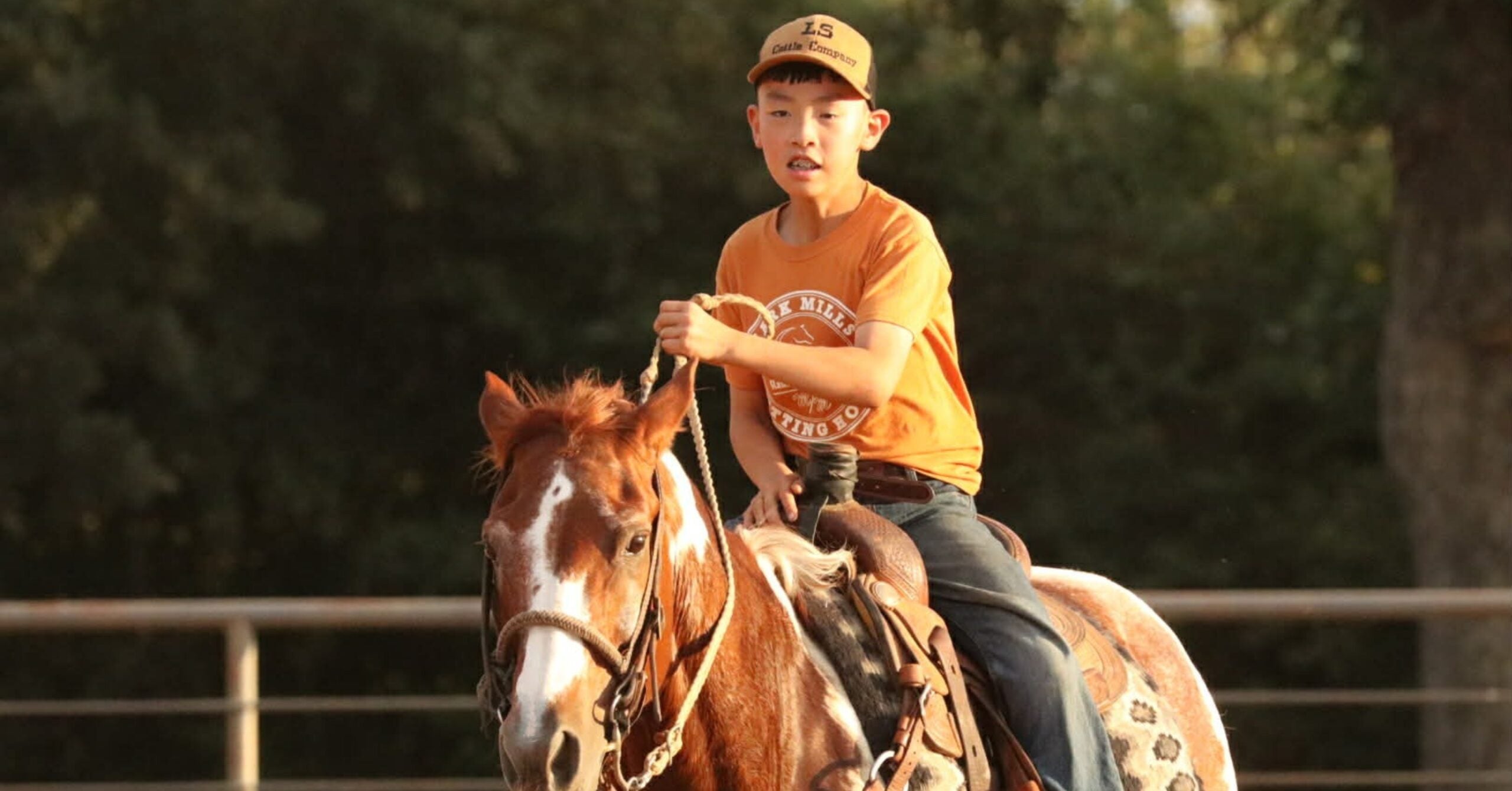
Riding a horse named Catolena, roper Elijah Faske caught his very first live calf. And in that instant, the arena didn’t just cheer – it (and social media) erupted.
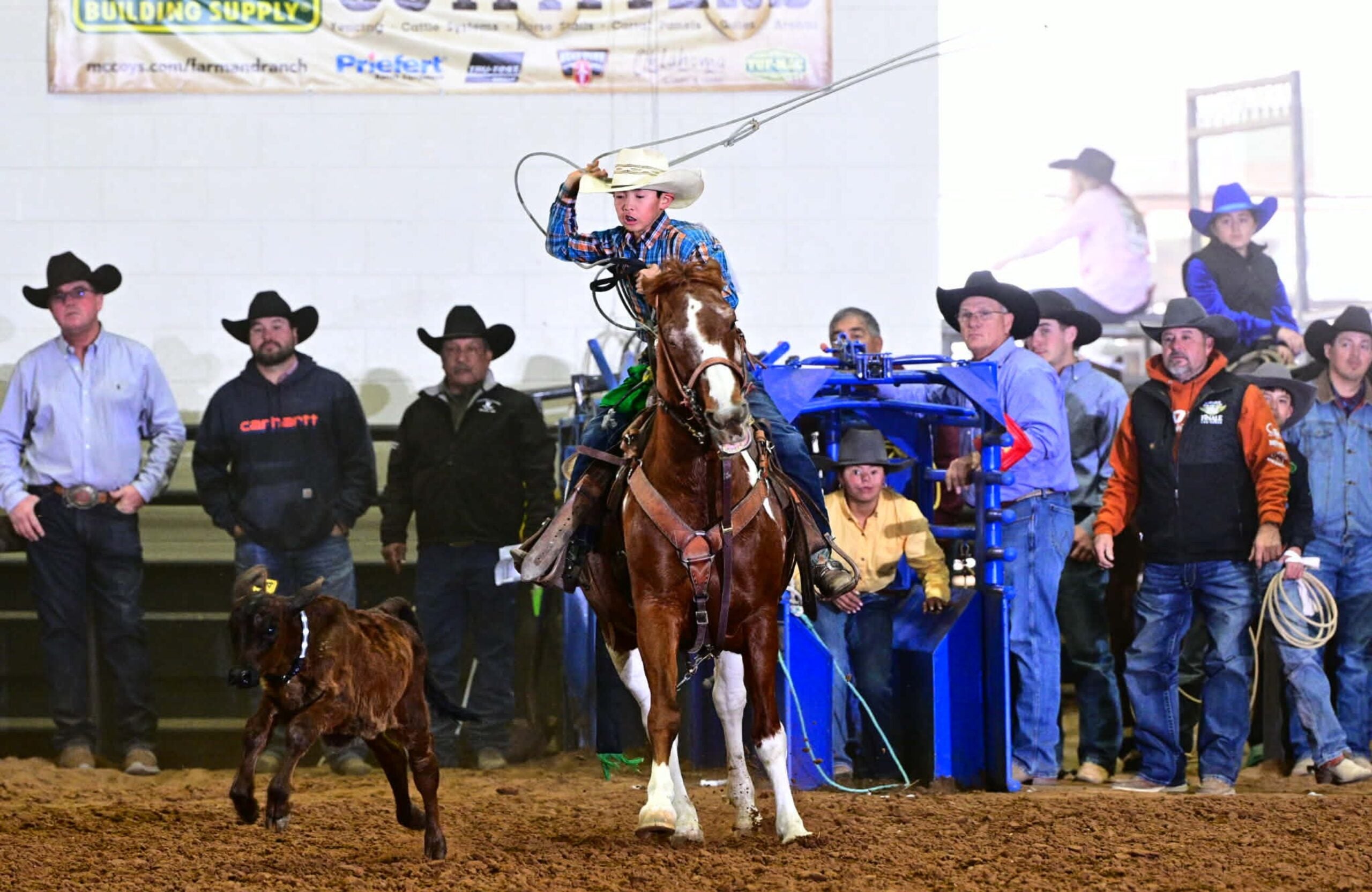
Elijah’s run at the Texas Junior High Rodeo Association Region 7 Rodeo wasn’t just about the clock. Elijah is legally blind. His vision is 250 over 20 in his only seeing eye, and because of a congenital eye condition called coloboma, some areas of his vision are blacked out.
As his adopted mom Suzanne put it, “When he is looking at a person, he only sees parts of that person, and he, his mind kind of puts together that’s a person.”
He’s lived with this condition his whole life.
Elijah was born in China and joined the Faske family at age 6. Today, he’s 12 years old.
His achievement last month is all the more stunning because breakaway roping is one of the most visually demanding events in rodeo anyway. For most families, a first catch is a milestone. For the Faskes (and for the Region 7 rodeo family that has watched Elijah work toward this moment), it was a victory built on years of adaptation, practice, and persistence.
A ranch called ‘New Life’
Elijah’s story is inseparable from the place he calls home: Vida Nueva Ranch (or “New Life Ranch” in Burton, Texas) is a working ranch where the family raises livestock, trains horses, and runs a household that sounds like it belongs in a novel.
But for Suzanne, husband Jay, and the rest of her family members, it’s simply their normal.
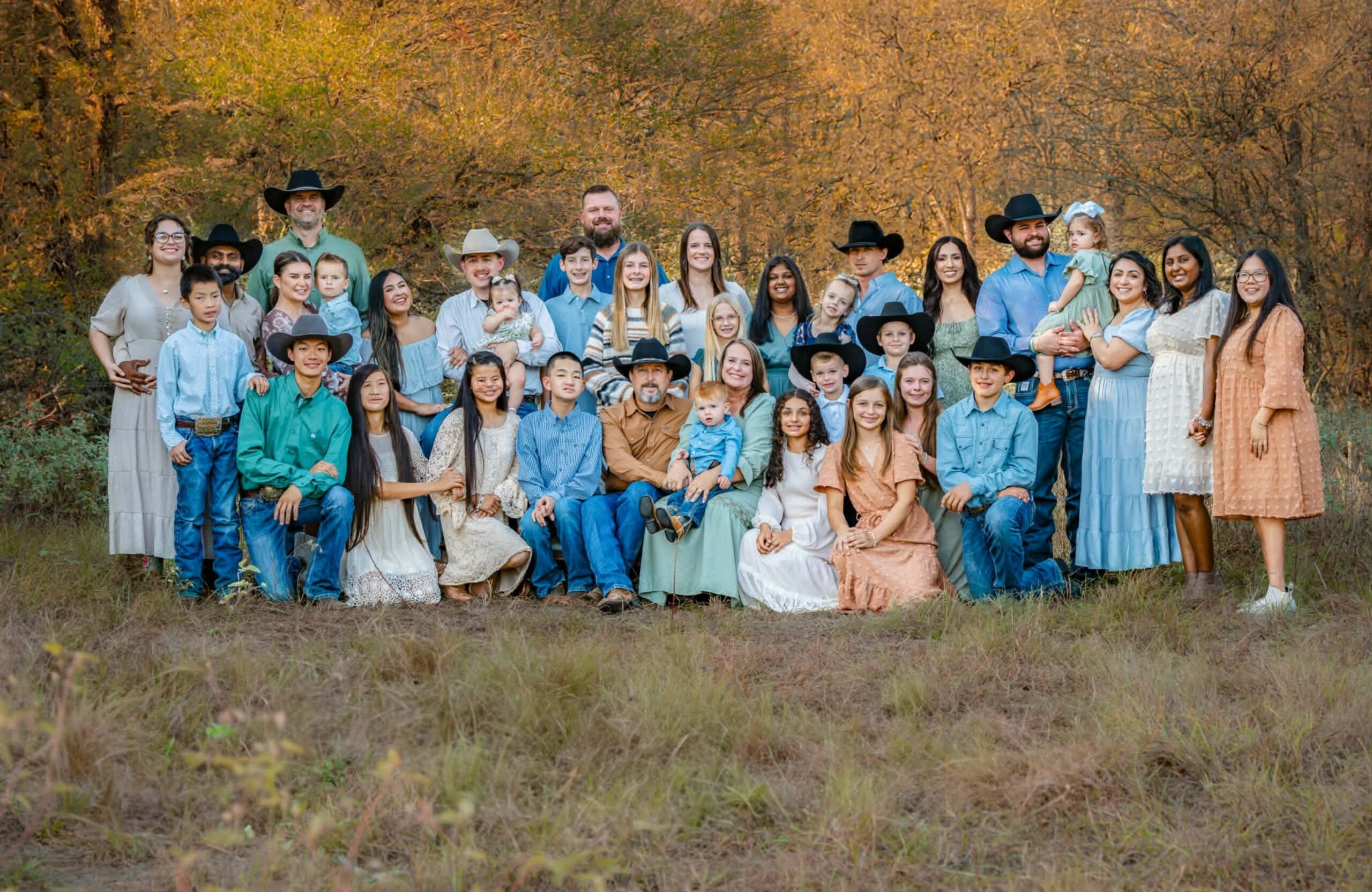
The Faskes are parents to a total of 31 children. “Twenty-eight are adopted and three are homemade,” Suzanne said.
Today, the at-home crew is smaller – but still a full team. “We have 10 at home right now,” she added. “Two are actually adults that are still living at home. One has gone on to college; the other has complex developmental needs and will always need assistance.”
The family’s path into adoption didn’t begin with a plan to adopt dozens. It began with an idea they thought was ambitious at the time. Then, life expanded their definition of “big.”
“We originally thought we’re going to have a big family,” Suzanne said. “And we were going to have two children and adopt two children. And we thought that four was a big family.”
When the family began traveling on mission trips and visiting orphanages, Suzanne said what they saw changed them.
“Just seeing the kids live in such poverty … some of them were so close to starvation,” she said. “It opened our hearts to considering we can go back for another one.”
Over time, the family adopted not just individual children, but sibling groups. And later, through disrupted adoptions, more children arrived at their doorstep. The Faskes’ support for children also grew beyond their own home. Suzanne described the catalyst behind their ministry, Here I Am Orphan Ministries, as a summer host program that brought children from Kazakhstan to the United States.
“We did a summer host program where we brought 29 children from Kazakhstan to the United States,” she said, “with the idea that we’re going to advocate for them and find them a family. And that led to 40 children being adopted from Kazakhstan.”
Elijah rode as soon as he came home
Before Elijah ever tracked a calf and before a lighted collar made breakaway possible, the Faskes focused on the foundation: a safe horse and a kid learning to navigate the world from the saddle.
At first, his participation looked different. He did what many kids do when they start: riding and learning patterns, showing up at play days, and getting comfortable in an arena.
“When he first came to us, we had a horse for him that was also blind in one eye,” Suzanne said.
The horse’s vision loss mirrored Elijah’s in an almost poetic way: “It was the opposite eye,” she added. “So we said, ‘OK, the two of you together, y’all can be a pair.’”
That first partnership was about trust more than competition. “He kind of took care of him,” Suzanne said, explaining that Elijah would “just trail ride on him around the place.”
But low vision changes the learning curve in a way most people never have to consider.
As Elijah grew and his riding expanded into play days, the family had to be particularly considerate of the horses they chose for him. Next he rode Ruby, the mother of Catolena (his current mount) before the family made the tough decision to sell her, with Elijah’s assurances that he was comfortable with that.
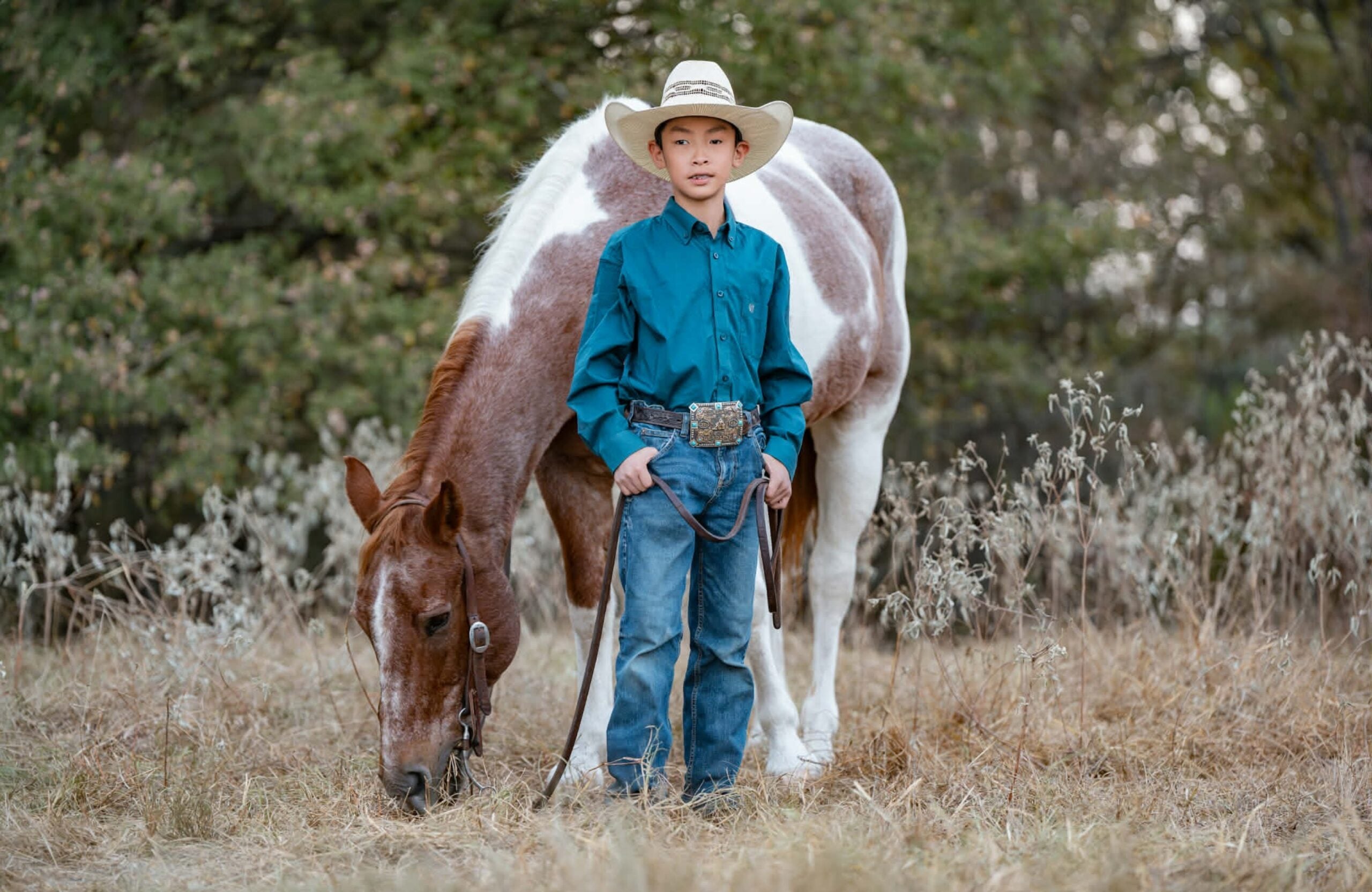
Elijah now rides Catolena, and as the now-viral Facebook video, she takes good care of her young rider.
“You would just have to send him out there, and he wouldn’t see the barrel until he got right on it,” Suzanne said. “But he knew kind of where it was in the arena.” From there, the family would help guide him left or right.
Last summer, at a program Suzanne’s 4-H club runs, she signed Elijah up for barrels, and watched him push back.
“He said, ‘I don’t wanna do girl events anymore,’” Suzanne explained.
Then, she heard him tell friends the same thing, and she made a choice to scratch him from barrels.
Then friends working the roping chutes offered what rodeo people so often do: practical help. The goal of breakaway roping then emerged.
Elijah had been roping at home already, building the foundations the way every young roper does.
“He would rope the dummy and tie the dummy and stuff at home with Caleb,” Suzanne said. Caleb is a domestically adopted sibling, who is a year older than Elijah and has become a central figure in Elijah’s growth.
“Caleb is a really talented roper,” Suzanne said, and “so Caleb is really responsible for helping Eli reach this level.”
They practiced tracking a sled first, where the pattern is predictable. But live cattle introduced uncertainty that made the leap harder. Low vision changes something sighted ropers take for granted: contrast. Dirt color, arena lights, the calf’s hide color — all of it matters.
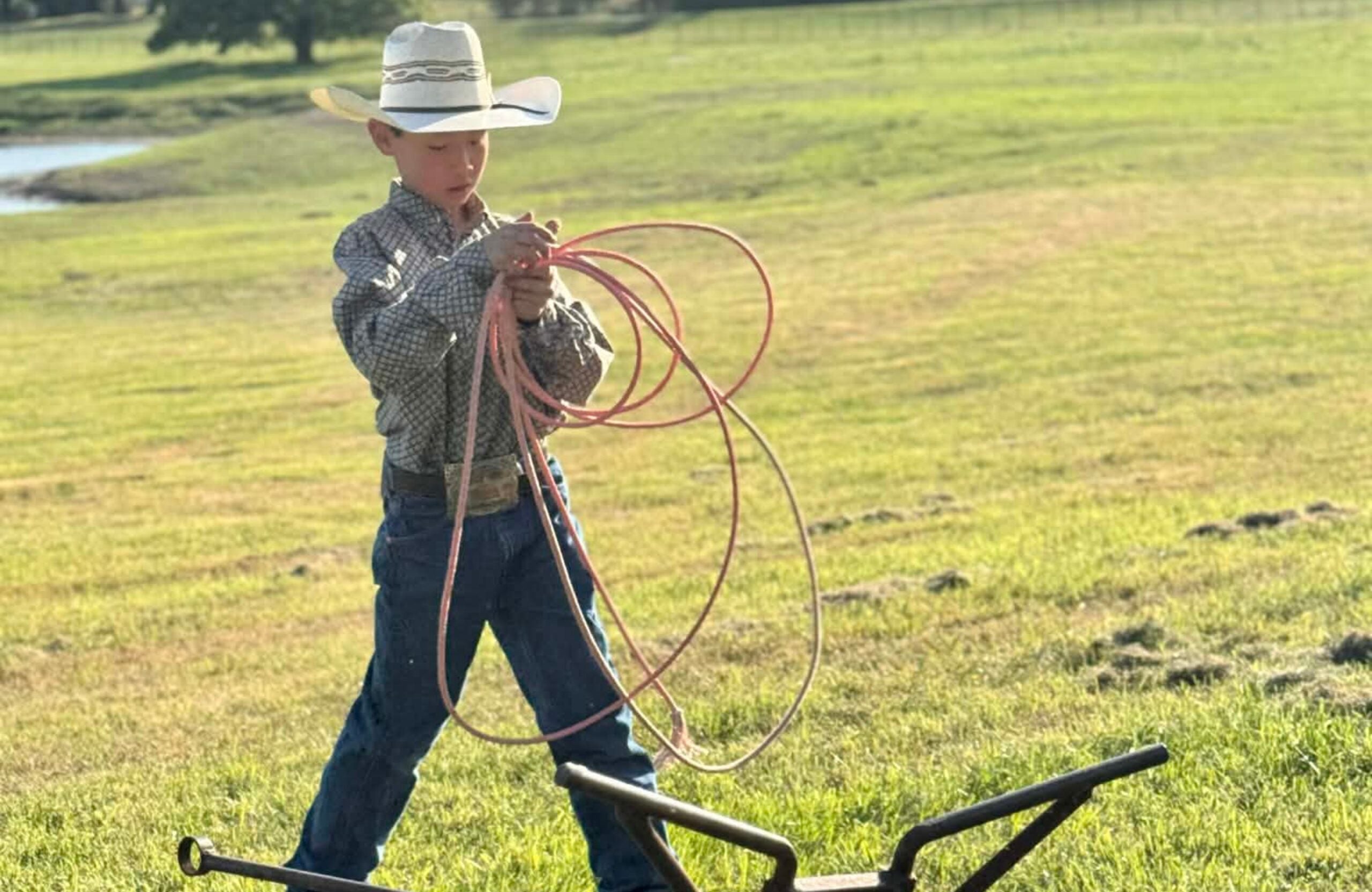
“He can see the calf,” Suzanne said, “it’s hard to see, especially if it’s a dark colored calf on the dark dirt.”
The solution that eventually helped Elijah find his calf didn’t come as a grand invention. Friends Sterling Merryman, Justin Hendrick, and Cody Lore suggested putting a light on the calf, something, they said, “that helps him to be able to see that this is the calf and this is where it’s going.’”
They started with a dog collar, which would fall underneath the calf, and become hard to see. They tried a bell too, and learned quickly that the bell would often make a calf run faster.
They improved the design: Now, it’s lit all the way around. So if it turns on the calf’s neck, Elijah can still see it.
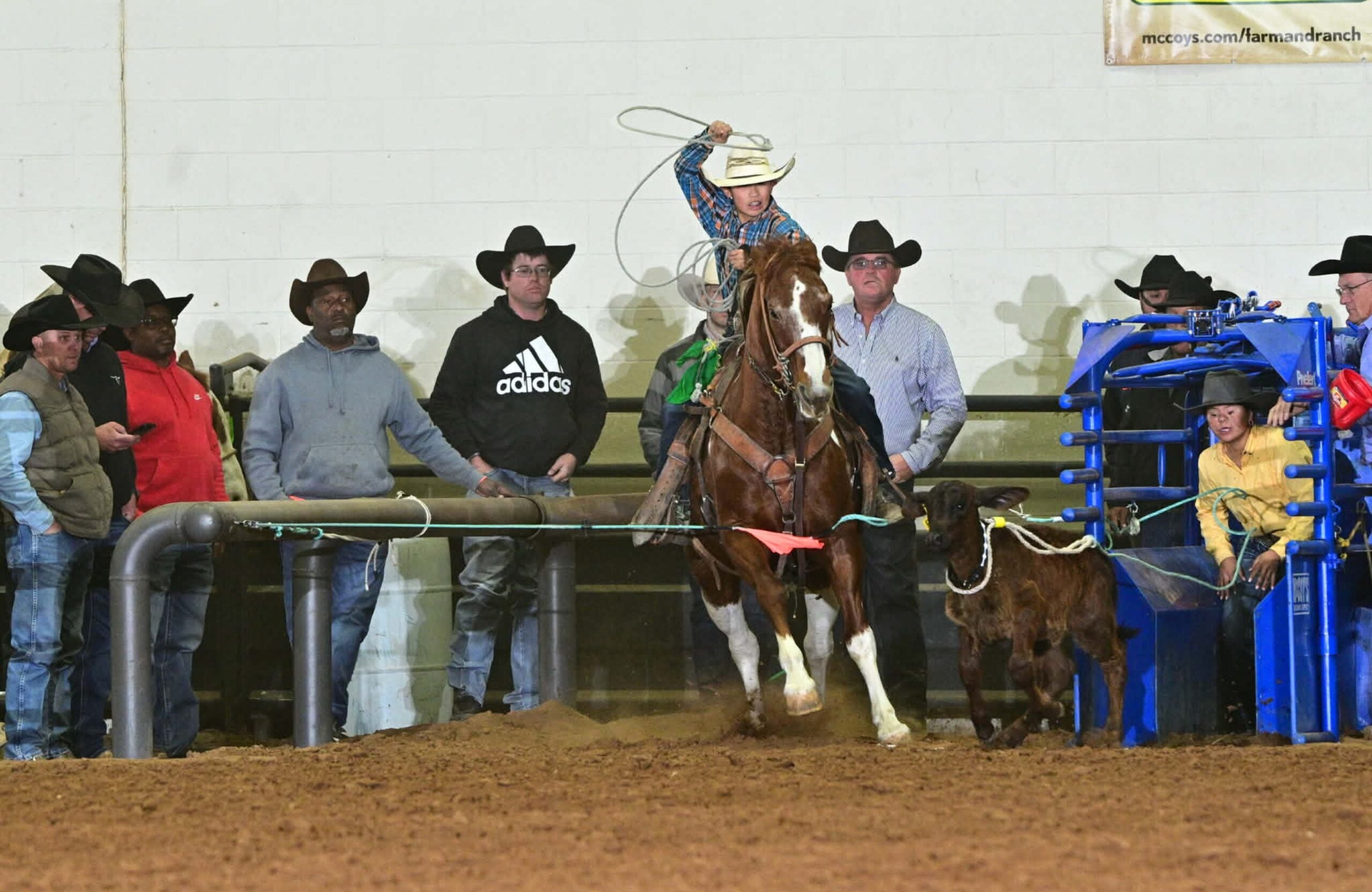
The video of Elijah’s first catch has traveled widely because it shows more than a roper making a loop. It shows a community leaning in. In the stands and along the fence line, the rodeo family rallies in support.
With every miss, the crowd screamed to help guide him toward the calf, shouting advice: “Keep trying! Keep your rope up!”
At times, the support Elijah gets is in the form of practical choreography. Suzanne described how family members help set Elijah up for the best chance before the run.
“A lot of times his sisters will help. Sophia or Gabby will push his calf,” she said. “Because he can’t really see the calf, when it puts its head down, the person pushing it will tell him when it’s time to go.”
And in the box, there’s help too. His older brother, Jonathan, goes to every rodeo and helps Eli in the box and make sure everything is fine.”
Caleb often positions himself down the arena. “If Caleb’s not next in line … he’s halfway down the arena … just to tell him where the calf is and when to throw.”
The family had to approach the high school rodeo organization about allowing the lighted collar.
“Our regional board was enthusiastic about it,” Suzanne said.
Then it went higher. They presented it to the Texas board, and eventually got approval.
But the story didn’t stop there. “It also went to the national level and the national level said yes.”
Region 7’s president, Dan Simpson, took a stance Suzanne didn’t forget.
“He was not going to take no for an answer,” she said. “He told them, ‘We’re going to let him do it, and if he qualifies for state, then we’re gonna have to deal with that when the time comes. But I’m not going to tell this kid no.’”
Rodeo people understand misses
Anyone who has roped almost certainly understands misses. “You miss a lot with full sight,” Suzanne said. Elijah missed plenty too. But as the runs stacked up, something else stacked up with them: closeness.
“He was so consistently hitting the calf in the back of the head,” Suzanne said, “that we knew we were getting close.”
When he finally made the catch at TJHRA Region 7 Rodeo, Suzanne wasn’t expecting it. Not because she didn’t believe in him but because of how the run unfolded. Elijah had already reached the other end of the arena when he threw his rope and caught. Suzanne explains that usually when he loses track of a calf, it’s difficult for him to get back into position.
But he stayed with it. And when the rope landed right, everything changed at once.
“It was awesome and everybody was so happy. And I mean, there were so many people that broke down in tears,” Suzanne said, with pride in her voice. “It made me realize how much support and love that we have in our region.”
Since that rodeo, the Faske family has seen Elijah’s confidence grow in arenas, pens, and living rooms, even when weather keeps practice indoors.
“It is amazing to see what a little confidence can do for someone!” Suzanne wrote on Facebook after another rodeo weekend. “Elijah has been putting in the work in the practice pen, and in our living room when it was icy outside!!!”
At the Lucky Rose Rodeo, the progress was tangible.
“Yesterday, Elijah caught two calves in the ribbon roping, and he caught his very first tie-down roping calf also!” she wrote. “His new lighted calf collar is really helping him track the calf, and his siblings are pushing him to be his best.”
That last part — siblings pushing him — might be the most consistent theme in this family.
Caleb, especially, has played the role of teammate and protector. “Caleb has a really huge heart,” Suzanne said. “And I think he was just determined to include Eli. He can’t see anything from the stands, and Caleb sees how it hurts him to not be included.”
She paused when she talked about it, emotional not from sadness, but from seeing what it means for one kid to make room for another.
“He has worked really hard to try to help Eli to fit in and be able to do the same things that the other boys their age do,” she said.
Elijah’s catch earned him a ticket forward, but the Faske family isn’t treating it like the finish line. The family still has four more regional rodeos in February, and Elijah wants to keep building.
“I think he’s going to keep trying to get better and better and get more consistent,” she said. He’s practicing tie-down roping too, with hopes of adding it next year. “This is only the beginning.”
Horses and kids
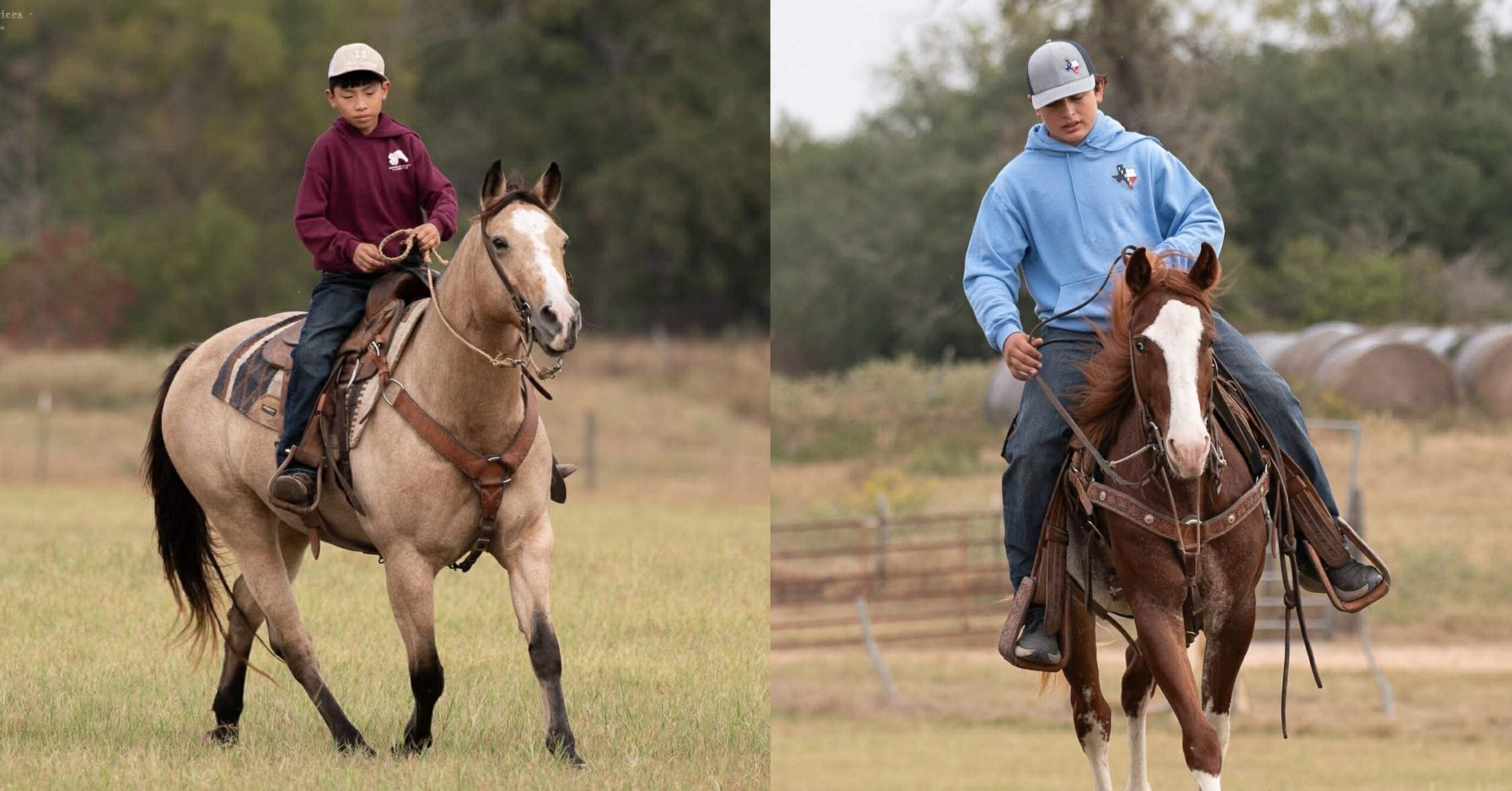
Ask Suzanne what agriculture programs and horses do for youth, and her answer goes deeper than ribbons.
“It has definitely helped to build confidence and accountability,” she said. “But more importantly … I think it has helped my kids heal and recover from some really horrific things.”
“Some of my kids have seen things that no child should ever have to see,” Suzanne said.
And in that reality, horses become translators across language, across trauma, across time.
“My husband said, ‘Just put her out with a horse,’” Suzanne recalled of a teen placed with their family years earlier. “She came from a hard place with a lot of trauma and was angry. And my husband said, ‘You know what, she can say whatever she wants to say to that horse and it doesn’t make a difference. That horse doesn’t care if she speaks English or Russian …’”
She believes the healing is physical and emotional – and that it’s real.
“I think the rhythmic movement … is therapeutic and helps the brain heal,” she said. “But there’s something really awesome about the outside of a horse that’s good for the inside of a human.”
Heidi Crnkovic, is the Associate Editor for AGDAILY. She is a New Mexico native with deep-seated roots in the Southwest and a passion for all things agriculture.