



By Anna Kaminski
TOPEKA — Blueberries unpicked and dropping from plants in New Jersey, crops left to dry up in North Carolina fields, and understaffed rural Kansas cattle operations are becoming more and more common, and food in the United States is going to waste, according to farmers and agriculture professionals.
It is happening in large part because of a labor shortage crisis, they said during a Thursday press call hosted by a coalition called Grow It Here that brought together the topics immigration, government and farming.
“It is clear to me that we can either import our workers or import our food, and that’s a key question, a key issue we need to answer,” said Matt Teagarden, CEO of the Kansas Livestock Association, representing around 5,000 members involved in Kansas’ multi-billion dollar cattle industry.
Farmers from North Carolina, Wisconsin, California, and New Jersey also weighed in, expressing their frustrations with labor challenges and describing their reliance on a federal guest worker visa program that can act as a band-aid to larger issues. The program is often framed as a win-win for employers and workers, but that isn’t always the case.
Brandon Batten of Triple B Farms in Four Oaks, North Carolina, said his farm began using the federal government’s H-2A visa program about a year ago. The program allows employers who meet certain requirements to hire foreign workers for temporary jobs while providing a mandated base wage and housing. Recent changes to the program increased application and processing fees and stripped worker protections.
Labor has been Batten’s biggest challenge, he said, and while H2A provides a safety net, it isn’t always efficient.
“As expensive and onerous as the program is, it’s more expensive to plant a crop and not get it harvested,” he said.
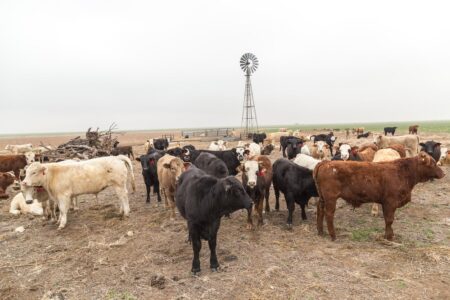
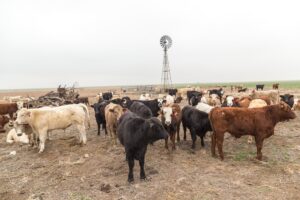
Cattle operations often cannot use the visa program. The jobs aren’t seasonal, so Teagarden said rural Kansas employers are trying to take a holistic approach by recruiting locally, sometimes visiting high schools to encourage fulfilling careers in agriculture and trying to retain existing workers.
John Rosenow owns a 700-cow dairy farm in western Wisconsin that employs 18 people. Thirteen of them are from Mexico, he said. But he cannot use the H-2A program.
“The dairy industry has been asking Congress and asking the federal government for years to modernize the immigration system because dairy is specifically excluded from having H-2A employees,” he said. “We rely on immigrants.”
He said 90% of dairy harvested from Wisconsin cows is done so by immigrants.
Brandon Raso, a fourth-generation blueberry farmer in New Jersey, started using the H-2A program more than a decade ago.
“Aside from its challenges, logistically, and its costs, it’s been a program that has helped us stay afloat,” Raso said. “But I do have to admit, due to the rising costs and increasing challenges that the program has provided, we have dramatically decreased the number of workers we utilize through that program.”
The farm used to have 250 workers through the H-2A program to help offset local labor shortages, Raso said. This season, the farm had 30 workers.
Historically, New Jersey farmers could produce about 60 million pounds of blueberries each season, or about $140 million, Raso said. This year, it was around 36 million pounds. Raso attributes the primary cause of the decrease to labor shortages.
“I know, myself, we left about two million pounds on our farm on our plants to fall off and hit the ground because there was just no one to get that fruit,” he said.
About 70% of crop farm workers in the U.S. are foreign-born, said Zach Rutledge, a professor and economist at Michigan State University. Most of those workers are from Mexico, and about 41% are not authorized to work in the U.S.
About half of farmers say they don’t have the labor they need, Rutledge said, and they gauge their shortage at lacking 21% of needed workers. He said that labor reductions result in production and revenue reductions for farmers. Current trends could lead to billions in lost revenue, an increase in food prices and a heavier reliance on imports, he said.
He added that if immigration enforcement targets agriculture, “there could be major problems.”
“Including the direct effects of having arrests and deportations of workers on the farm and what we call chilling effects, which are when workers get scared because they hear about immigration enforcement and don’t go to work because of fear of being deported,” Rutledge said.
Employers face significant burdens under the federal H-2A program.
So do employees.
“On top of increased immigration enforcement, which is already exacerbating a chilling effect among workers facing abuse, from the start of the Trump administration, we’ve seen sustained efforts to roll back hard-earned worker protections,” said Jimena de Haro of the Centro de los Derechos del Migrante, a binational workers’ rights organization.
The Trump administration has reversed Biden-era protections for workers under H-2A rules and proposed at least $17.29 billion in wage cuts for H-2A workers over 10 years.
The administration’s deportations and efforts to strip people in the U.S. of their immigration and work authorization statuses exacerbate labor shortages, de Haro said.
“In response, we are seeing growers and lawmakers coming up with ‘Band-Aid solutions’ to increase the number of available workers — mainly focused on expanding guest worker programs— without taking into account workers’ wellbeing or rights,” de Haro said.
Recent proposals, also mentioned on the Grow It Here call, include pushes to make H-2A year-round and make it available to other industries, she said.
“But in a program rife with abuse, expanding it would just cause more abuse and exploitation of migrant farmworkers, especially when calls for expansion are accompanied by the rollback of important worker protections,” she said.
A report by Centro called “Ripe for Reform” and a September investigation by ProPublica showed the H-2A program as prone to worker abuse and exploitation.
Kristi Boswell, a former agriculture labor advisor during the first Trump administration and advisor to Grow It Here, said the campaign was created to educate policymakers and the public about labor shortage struggles and the repercussions that come as a result.
The word “crisis” was used several times by the group.
“I’ve been working on this issue for 15 years,” Boswell said. “The situations, the circumstances, have worsened. Labor costs have increased. We’ve seen a trade deficit in specialty crops and fruits and vegetables. I think it is going to continue to elevate.”
Kansas Reflector is part of the States Newsroom, a network of similar news bureaus supported by grants and a coalition of donors as a 501c(3) public charity.