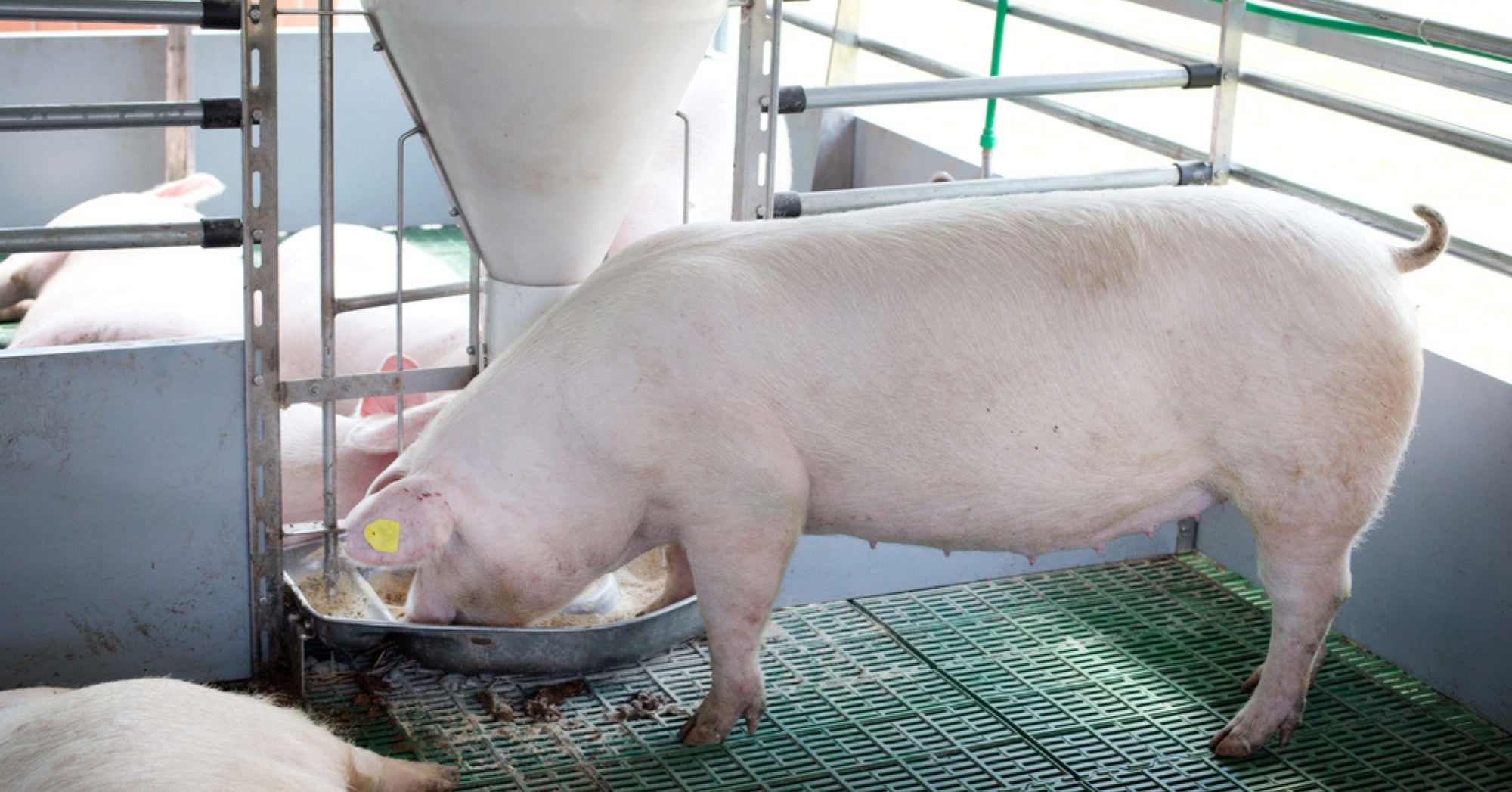






An experimental pain-relieving drug delivery method for farm animals using microneedle patches may not have delivered an effective dose, but it took a pivotal step that offers new leads for innovation.
Jeremy Powell, veterinarian and professor of animal science for the University of Arkansas System Division of Agriculture, said the project originated from a simple question: could livestock receive longer-lasting pain management without repeated drug administration by farmers?
“Could we determine a method by which we could provide some analgesic therapy to help control pain in livestock species and improve animal welfare all at the same time?” said Powell, who is a researcher with the Division of Agriculture’s Arkansas Agricultural Experiment Station.
The project, which began several years ago in cattle with meloxicam, has been supported by a U.S. Department of Agriculture grant. The initial studies led to unsatisfactory pain management for cattle, so the multi-state team of researchers received approval to switch the experiment to pigs using flunixin and dextran, other non-steroidal anti-inflammatory drugs that are more soluble than meloxicam.
The goal is to alleviate some pain after castrations and tail docking. If successful, Powell projects the patch could provide five to seven days of pain relief without daily injections or handling of the animal. The medicine slowly flows through the microneedles from the pain patches for slow-release drug delivery. The patch is designed to eventually fall off and continue degrading into inert natural products that do not generate contaminants, said Jorge Almodovar, the study’s corresponding author and an associate professor in the department of chemical, biochemical and environmental engineering at the University of Maryland, Baltimore County, or UMBC.
Examples of research on microneedle patches in humans include applications for vaccines, pain relief, diabetes management and disease monitoring, to name a few, Almodovar added. Designed to only penetrate the upper level of skin where there are few pain receptors, microneedles are known for being painless to mildly prickly, like pressing fine sandpaper when applied with light pressure, or a cat’s tongue brush.
Proof of concept
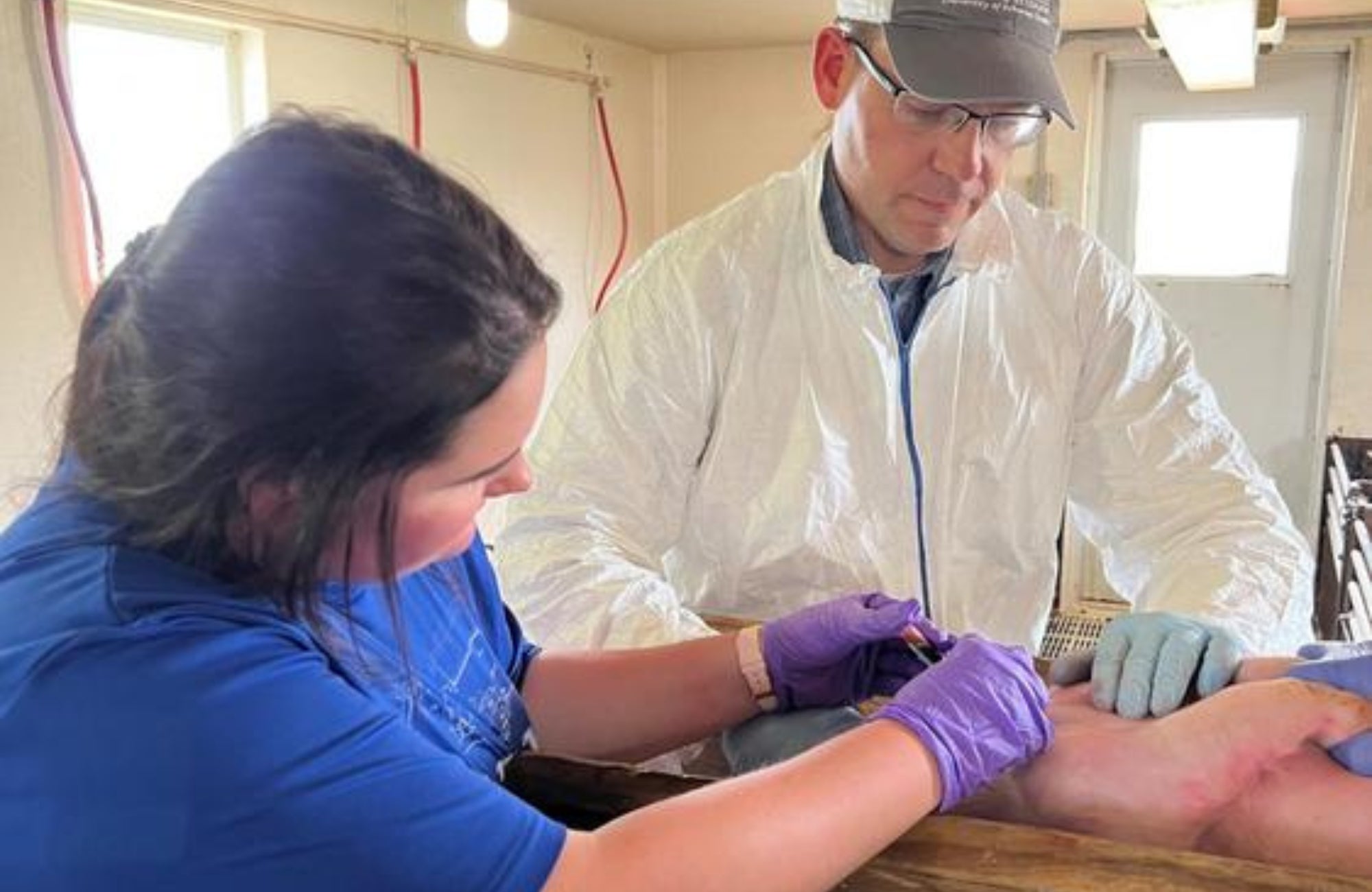
While the drugs administered through the experimental microneedle pain patches on pigs did show up in the pigs’ system, the drug concentrations only reached about 2 micrograms per liter. Powell said they would need 3 milligrams per liter for the medicine to be effective, which is 1,500 times greater than what was achieved. In their most recent published study, patches were applied to the ear and neck to assess the influence of anatomical site on systemic absorption.
The biodegradable microneedle patches are made by the researchers with polyvinyl alcohol, collagen and chitosan using a square mold. The patches are about 1-by-1-inches big and have 625 pyramid-shaped microneedles that are 800 microns tall — about the thickness of a stack of eight sheets of standard copy paper. The medicines were incorporated at a dose of 50 milligrams per patch.
Despite the limited performance, Powell said the project remains a proof of concept, demonstrating that pig skin can absorb medication delivered through a dissolvable microneedle patch. The team also found that the patches work better on the neck than the ear, which Powell said may guide future testing.
The dextran-based patches on the neck achieved higher plasma concentrations than oral administration and ear-applied patches, “demonstrating enhanced uptake from vascularized regions,” the study noted. The flunixin-based patches applied to the ear produced detectable plasma levels up to 72 hours after application, with a maximum concentration of about 1.9 micrograms per liter at 24 to 48 hours, “indicating sustained systemic exposure and reinforcing the potential for long-acting therapy.”
No adverse responses were observed at application sites, Powell added, highlighting the safety and tolerability of the patches. Overall, the findings emphasize the importance of choosing the right spot on the animal and using medications that the delivery method can handle are key to making microneedle drug delivery work better, he said.
“We’re getting there. We’ve run into some challenges, and we’re going back to the drawing board,” Powell said. “But we think we can make improvements.”
The researchers published their results in the journal RSC Pharmaceutics under the title “Systemic drug delivery in pigs using biodegradable microneedle patches.” The lead author was Katherine Miranda Muñoz, Ph.D., a former graduate student in the department of biomedical engineering at the University of Arkansas College of Engineering. Muñoz is now a postdoctoral associate at the University of Miami.