
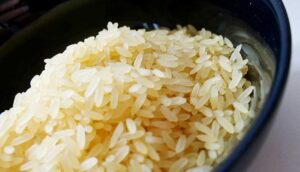


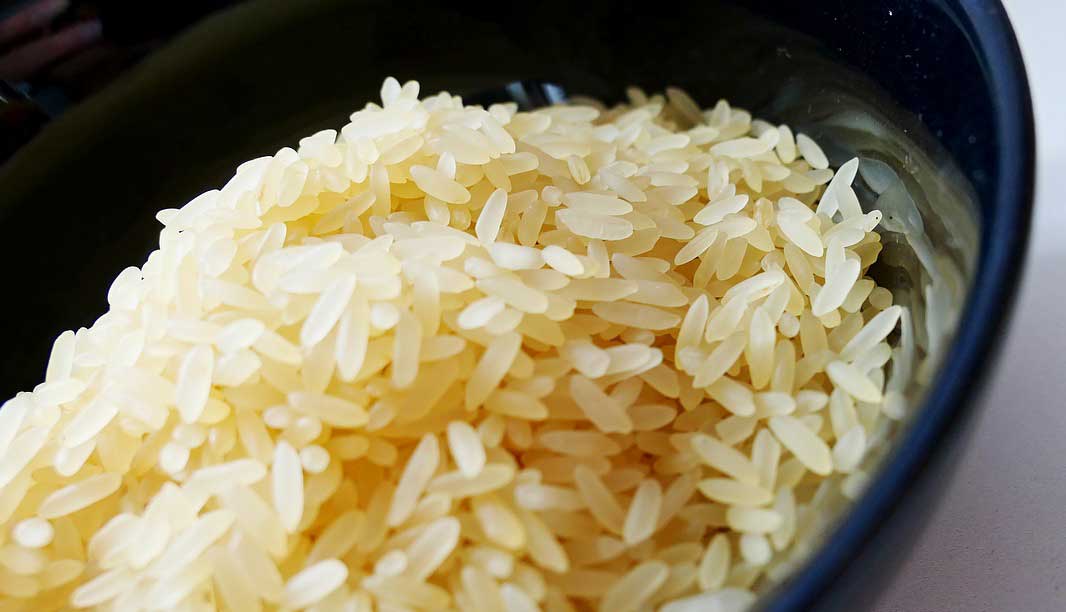
Rice is one of the most-consumed foods in the world: In places like Bangladesh, almost 80 percent of the calories that people consume come from rice.
“About 2 billion people are suffering from iron deficiency, which makes people sick and can even cause death,” said Felipe Ricachenevsky, a professor with the Federal University of Rio Grande do Sul in Brazil.
He and colleagues in Brazil, Italy, Chile, and Germany are working to increase the amount of iron in rice, one of the most-consumed foods in the world. “In places like Bangladesh, almost 80 percent of the calories that people consume come from rice. So, if there isn’t enough iron in rice, then people aren’t getting enough iron,” he explains.
Studies have shown it is possible to increase iron content in rice by modifying an individual gene in the plant. Building on this work, Ricachenevsky and colleagues altered two similar genes in the same plant, hoping it would produce an even greater increase in iron content.
They then used the Canadian Light Source (CLS) at the University of Saskatchewan to analyze their modified rice.
“Using the CLS was a very important step in our research. We used the CLS’ bright synchrotron light to see the 2D distribution of iron in the rice grains from our plants,” said Ricachenevsky.
The team found that modifying both genes did increase the amount of iron in the rice grain. However, it also made the plants more susceptible to a condition called “iron toxicity” where the plant absorbs too much iron, leading to reduced productivity and causing some crops to die. Rice crops grown in shallow water are more vulnerable to iron toxicity.
The team’s findings, said Ricachenevsky, point to opportunities for further research.
He and his colleagues plan to modify the same genes in a rice crop variety grown in aerated soil, because iron in this type of soil is less easily accessed by the plant.
The team also intends to modify both genes in crops that are genetically similar to rice but not prone to iron toxicity because they are not grown in waterlogged conditions, such as wheat, barley, sorghum, and maize.
Ricachenevsky hopes their approach to creating iron-rich crop varieties can help bring more nutrient-dense food to people around the world one day.
This article was written by Victoria Schramm, and submitted courtesy of Canadian Light Source.