


Agriculture FertilizerAgriculture Fertilizer
  • Home
  • News
  • Management
  • Business
  • Insights
  • Crops & Livestock
  • Machinery
  • Technology
  • Weather
  • Trending
  • More
    • Web Stories
    • Press Release

Subscribe to Updates

Get the latest agriculture news and updates directly to your inbox.

What's On
S.D. Lawmaker Proposes 10-Year Ban on Lab-Grown Meat

S.D. Lawmaker Proposes 10-Year Ban on Lab-Grown Meat

January 16, 2026
Applications open for the 1890 National Scholars Program

Applications open for the 1890 National Scholars Program

January 16, 2026
USDA Employees Ordered to Investigate Foreign Researchers

USDA Employees Ordered to Investigate Foreign Researchers

January 16, 2026
Facebook X (Twitter) Instagram
Agriculture FertilizerAgriculture Fertilizer
  • Privacy Policy
  • Terms of use
  • Advertise
  • Contact Us
Facebook X (Twitter) Instagram
SUBSCRIBE
  • Home
  • News
  • Management
  • Business
  • Insights
  • Crops & Livestock
  • Machinery
  • Technology
  • Weather
  • Trending
  • More
    • Web Stories
    • Press Release
Agriculture FertilizerAgriculture Fertilizer
Home » Demo Farm Networks Spur Cover Crop Adoption

Demo Farm Networks Spur Cover Crop Adoption

December 4, 20253 Mins Read News
Share
Facebook Twitter LinkedIn Pinterest WhatsApp Email

Cover crops improve soil health and water quality, prevent nutrient loss, and reduce greenhouse gas emissions, but they’re grown on only about 5 percent of U.S. agricultural lands. That’s despite billions in annual federal investments, primarily in the form of cost-share and incentive payments to farmers who adopt conservation practices.

With a new, first-of-its-kind study, University of Illinois Urbana-Champaign researchers say investments in farm demonstration networks may be the key to faster, more widespread adoption. Their work links the implementation of a Wisconsin farm demonstration program with a 50 percent increase in cover crop adoption over baseline levels within just four years.

“Farmers may have an interest in trying new practices, but there’s a steep learning curve and high costs involved. Programs like this, where farmer leaders adopt practices that can be seen and communicated throughout a region, can really inspire their neighbors to take action,” said study co-author Marin Skidmore, assistant professor in the Department of Agricultural and Consumer Economics, part of the College of Agricultural, Consumer and Environmental Sciences at Illinois.

While qualitative case studies have hinted at the promise of demonstration farms, Skidmore and her collaborators leveraged remote sensing data to provide the first quantitative investigation into the programs. They focused on eastern Wisconsin, where a demonstration program was rolled out in distinct phases across neighboring watershed areas. Analyzing satellite images before and after each rollout, they watched cover crop acreage grow through time and space.
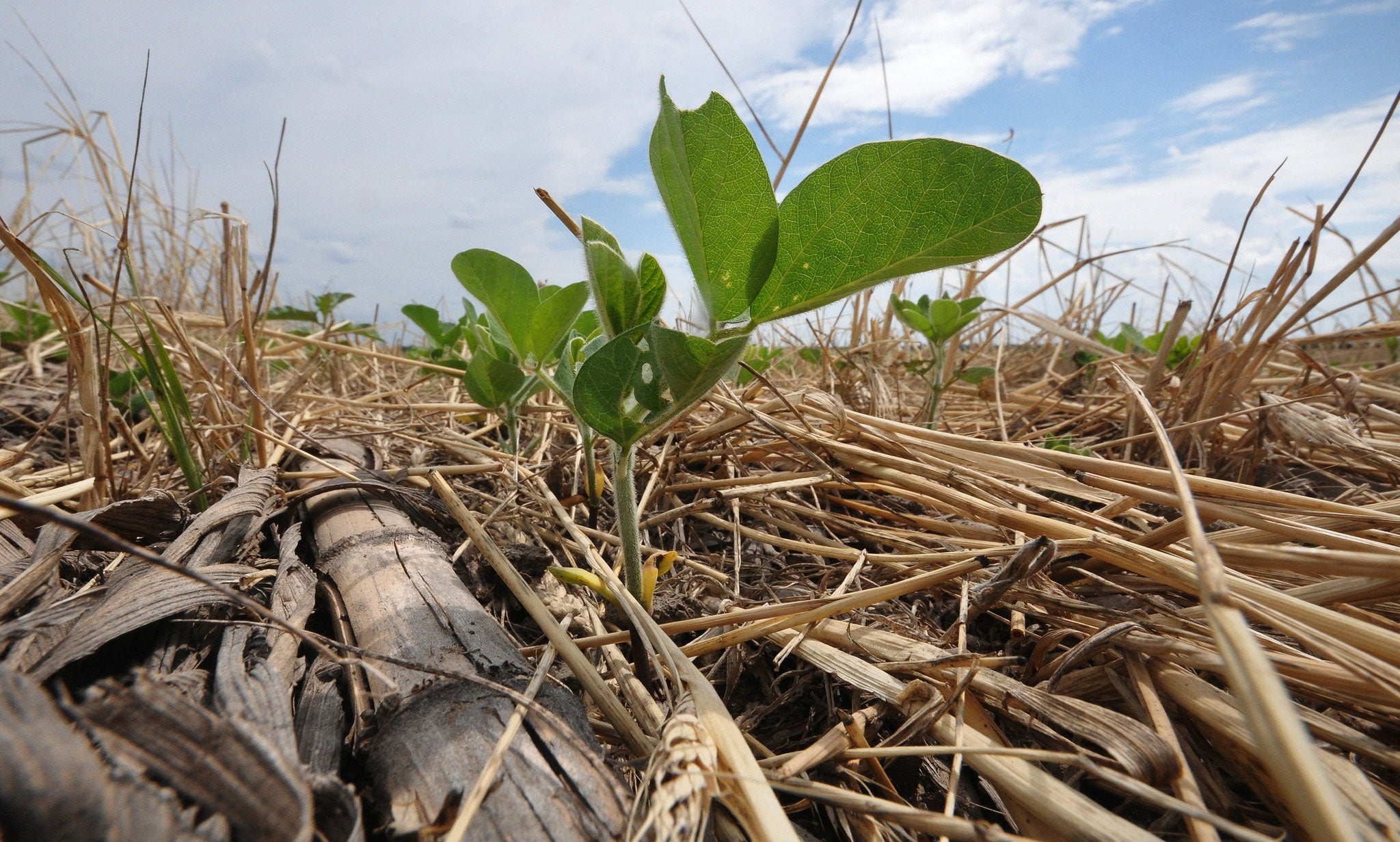
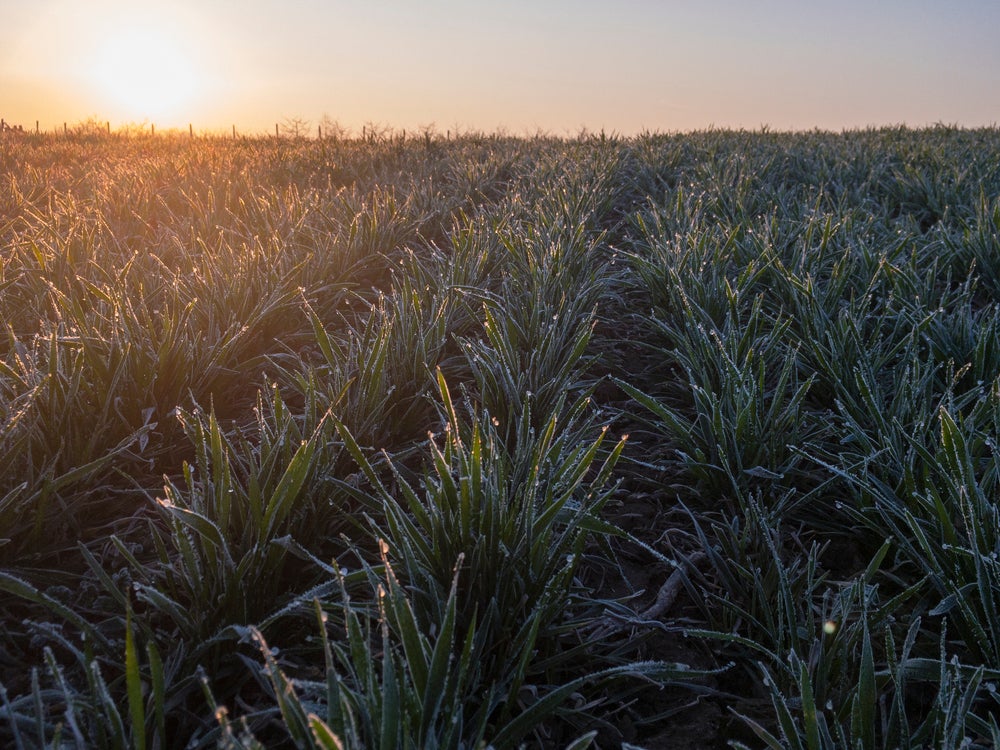
soybean-cover-crops-residue
Soybeans emerge through a thick mat of diverse cover crop plant residues. (Image courtesy of Ron Nichols via USDA-NRCS)

“After ruling out many alternative explanations like changes in state policy or farm income, we found a statistically significant increase in cover crop adoption in the program region as a whole, going from 6 to 9 percent — a 50 percent increase during the four years after implementation,” Skidmore said. “But we also found greater increases within 5 or 10 kilometers of a demonstration farm. That suggests being in close proximity makes a difference. You see the signs more often, and are maybe more likely to attend a field day if you’re right next door.”

Cover crop adoption also followed a specific pattern in time. Study co-author Chloe Wardropper, assistant professor in the Department of Natural Resources and Environmental Sciences at Illinois says adoption isn’t instantaneous.

“We first saw increases in adoption the year after the program became active. If we saw immediate increases, that wouldn’t make sense,” Wardropper said. “The nature of this peer-to-peer learning means we would expect there to be at least a year where the demonstration farmers are planting and demonstrating their own cover crops. It’s not until after the farmer leaders’ influence has been felt that we would expect their neighbors to start planting.”

Adoption rates continued to increase before peaking four years after program implementation, suggesting successful diffusion of information and changing social norms, according to the researchers.

“Our results are supportive of the idea that leveraging demonstration farms and producers as sources of information can be an effective tool in conservation programming and a complement to existing payment-based programs,” Skidmore said.

Although the study focused on cover crop adoption, Wardropper says there are a couple of key lessons from the study that could be helpful for other demonstration programs.

“Because proximity mattered, the spatial density of demonstration farms is important. That means if a program has the resources to train and support more demonstration leaders, that could lead to more adoption throughout a region,” she said. “Another is that these programs take time to work, which speaks to the importance of long-term planning and funding.”
Share. Facebook Twitter Pinterest LinkedIn Tumblr Email

Related Posts

S.D. Lawmaker Proposes 10-Year Ban on Lab-Grown Meat

S.D. Lawmaker Proposes 10-Year Ban on Lab-Grown Meat

January 16, 2026 News
Applications open for the 1890 National Scholars Program

Applications open for the 1890 National Scholars Program

January 16, 2026 News
USDA Employees Ordered to Investigate Foreign Researchers

USDA Employees Ordered to Investigate Foreign Researchers

January 16, 2026 News
8 New Cases of New World Screwworm Found Near Texas Border

8 New Cases of New World Screwworm Found Near Texas Border

January 15, 2026 News
Penn. 4-H Teen Wins National AI Challenge with Soil-Mapping Robot

Penn. 4-H Teen Wins National AI Challenge with Soil-Mapping Robot

January 15, 2026 News
2026 Farm Bureau Farm Dog of the Year Winner Announced

2026 Farm Bureau Farm Dog of the Year Winner Announced

January 15, 2026 News

Leave A Reply Cancel Reply

Don't Miss
Applications open for the 1890 National Scholars Program News

Applications open for the 1890 National Scholars Program

By staffJanuary 16, 20260

The U.S. Department of Agriculture is now accepting applications for the USDA 1890 National Scholars…

USDA Employees Ordered to Investigate Foreign Researchers

USDA Employees Ordered to Investigate Foreign Researchers

January 16, 2026
8 New Cases of New World Screwworm Found Near Texas Border

8 New Cases of New World Screwworm Found Near Texas Border

January 15, 2026
Penn. 4-H Teen Wins National AI Challenge with Soil-Mapping Robot

Penn. 4-H Teen Wins National AI Challenge with Soil-Mapping Robot

January 15, 2026

Subscribe to Updates

Get the latest agriculture news and updates directly to your inbox.

Our Picks
What’s Really Alarming About the 2025-2030 Dietary Guidelines

What’s Really Alarming About the 2025-2030 Dietary Guidelines

January 15, 2026
2026 Farm Bureau Farm Dog of the Year Winner Announced

2026 Farm Bureau Farm Dog of the Year Winner Announced

January 15, 2026
2026 Farmland Market Isn’t Weakening, but it is Evolving

2026 Farmland Market Isn’t Weakening, but it is Evolving

January 15, 2026
Kansas Currently Being Hardest Hit by Avian Influenza

Kansas Currently Being Hardest Hit by Avian Influenza

January 14, 2026
Agriculture Fertilizer
Facebook X (Twitter) Instagram Pinterest
  • Privacy Policy
  • Terms of use
  • Advertise
  • Contact Us
© 2026 All rights reserved. Agriculture Fertilizer.

Type above and press Enter to search. Press Esc to cancel.