




It’s the holiday season and food is a big part of what makes this time of year so special. Whether it’s seasonal items (like everything peppermint) that you can only get now, meals shared with family and friends, or special time-consuming recipes where you break out the good dishes, food means a lot.
Yet food can also come with lots of questions, and the holiday season is no exception to all the myths surrounding food, so let’s debunk some of the biggest holiday food myths!
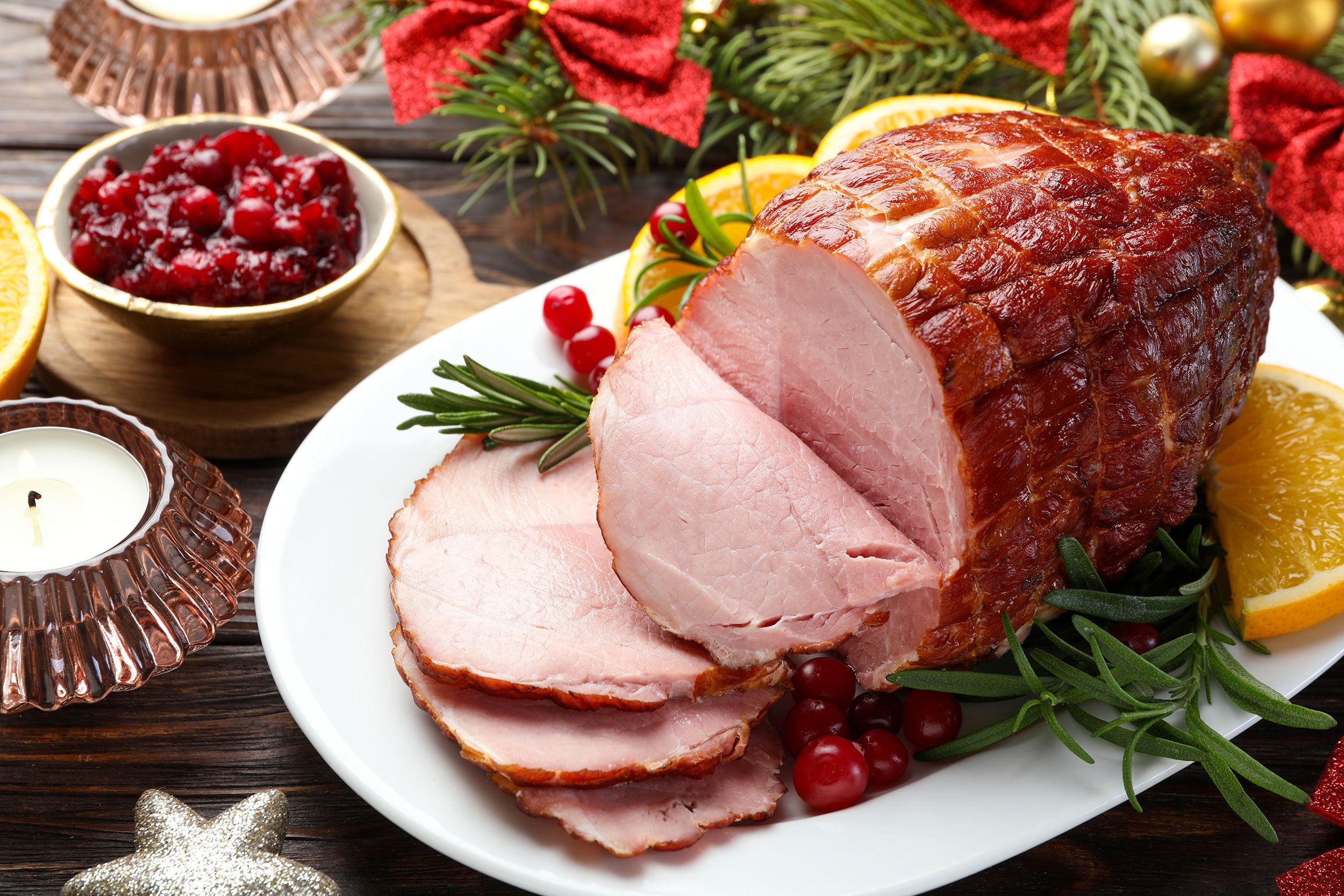
‘There are bad additives in ham’
Additives can be a scary word, but all it means is that a substance was used during production to improve safety, freshness, taste, texture, appearance, and/or nutritional value. The most common additives in ham that tend to be a concern to people are nitrates and nitrites. Nitrates and nitrites are used to prevent bacteria from growing (keeping your meat safe to eat) and give ham and bacon its pink color. They are also naturally found in vegetables like broccoli, lettuce, carrots, beets, and more!
There are extremely strict limits on how much can be added so that your food stays safe and flavorful. Nitrates and nitrites get a bad rap, but as long as you don’t eat mass quantities every single day, you’ll be just fine.
‘Bleached flour must be soaked in Clorox’
Short answer: No! Flour needs time after milling to oxidize and whiten. If flour is unbleached, it can be left to dry for several weeks. Bleached flour uses chemicals to speed this process up. In this controlled process, food-safe oxidizing agents help the flour to whiten and oxidize faster. These oxidizing agents break down or evaporate, leaving completely safe flour with no discernible taste difference to that of unbleached flour.
This isn’t just crucial to making the flour look white — this process also improves elasticity, allowing for a better texture and baking! No real bleach here, just a safe way to make flour better.
‘No way eggnog is safe to drink
Actually, eggnog is perfectly safe. It seems like there are two types of people, those who love eggnog and the thought of its safety has never crossed their mind, or those who have always been skeptical.

Traditional eggnog used to be made with raw eggs, which could definitely be a safety concern. Today, (and for a long time now), store bought eggnog is pasteurized. This is the same process that milk undergoes, heating it to a temperature that destroys harmful bacteria. Even a lot of home made eggnog calls for pasteurized eggs to eliminate any food safety risk.
‘Turkey and chicken is filled with hormones’
The use of hormones and steroids in poultry (including chicken and turkey) and pigs has been banned in the United States since the 1950s. You can be confident that there are never added hormones in poultry. Check out one of my past articles to dive deeper into hormones in food. Another thing to know is that all foods have hormones, even plants. So technically there is no “hormone free” food, but poultry certainly has no added hormones!
‘Food dyes in holiday desserts are awful for you’
Some of the best treats this time of year are the ones that are red and green. It can take a lot of dye to make those cookies completely red, but is that bad? Food dyes have been studied extensively for decades. There are some concerns over food safety, but just like almost anything, the dose makes the poison. If you’re only consuming food dyes in small doses (which is the case for just about any food), there is absolutely nothing to worry about.

Food dyes have continually been proven safe in small doses. It is possible, but very rare for people to be allergic to food dye. All food dyes must be listed on labels so people can identify what dye and if there is any present. At the end of the day, you don’t need to worry about the Christmas cookie.
‘Canned pumpkin isn’t even pumpkin’
This isn’t a huge myth any more, but you’ve probably heard that your can of pumpkin isn’t even pumpkin. This is both right and wrong. The pumpkin you’re thinking of is not the kind in the can. The bright orange field pumpkins are not good for eating. They tend to be stringy and watery and overall lacking in flavor. Instead, a different variety of pumpkin is used. The pumpkins used for canning have a tan exterior and are smooth and large, looking much more like a squash. The technical definition of a squash vs. a pumpkin is actually a bit fuzzy, so some people call it a squash while others call it a pumpkin, and neither is wrong! At the end of the day all that matters is that we can make delicious things with our can of pumpkin (or squash).
This time of the year food myths can run rampant. At the end of the day, you can count on your food to be safe, highly regulated, and delicious. This is the time to be celebrating with your family and friends over good food, not arguing about the “healthiest” thing on the table. Don’t let food myths spoil your fun!
Michelle Miller, the Farm Babe, is a farmer, public speaker, and writer who has worked for years with row crops, beef cattle, and sheep. She believes education is key in bridging the gap between farmers and consumers. Find more about Michelle on her website.