


Consolidation in ag, higher input prices, land access issues, and other obstacles make it hard for young farmers to gain a foothold in U.S. agriculture.
MONTEZUMA, Iowa — Ben De Boef grew up working on his grandfather’s 400-acre farm in Montezuma, Iowa, and hearing stories about it.
“I loved it since I was a kid,” said De Boef. “I didn’t really want to do anything other than farm.”
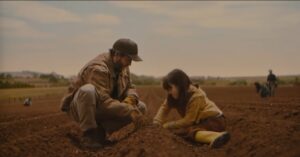
Now 23 years old, De Boef grows corn, soybeans and some alfalfa on his grandfather’s land in south-central Iowa with his wife and young daughter. A couple of years ago he took some college-level agriculture classes to prepare himself to expand his operation. But when he tried to rent an additional 1,000 acres of farmland De Boef said landlords were skeptical of leasing to a young farmer.
“I can understand [why] they didn’t want to rent it to someone who was just starting out. I don’t have any financial backing,” De Boef said. “I just don’t think it was God’s timing. It just didn’t work out for me.”
Like farmers before them, those working the land today have to figure out how to run a business in a precarious and changeable market. But today’s ag environment is full of new challenges, too. Consolidation is squeezing out smaller family farms and finding land is difficult and expensive. Inflation, erratic weather and tariffs implemented by the Trump Administration put extra pressure on farmers in 2025, particularly those that raise commodity crops typically exported to China. Young farmers who are just entering the ag world are facing hurdles that previous generations didn’t have to clear.
Struggling to access, afford land
Kristiana Coutu, director of the Beginning Farmer Center at Iowa State University, said land access is “the number one hurdle” new farmers face across the country, but especially in Iowa.
“It’s hard,” Coutu said. “Oftentimes you’ll see beginning farmers lease or rent at first before buying just because it is difficult to access land and it takes time.”
Coutu said that finding available land to lease can be an issue, too, and the costs are high. When a farmer does find land, she says he or she often stays on the rented land longer than they anticipated.
“Maybe they’re renting for a certain amount of time on land that isn’t ideal for them, but it allows them to get started, build equity [and] gain their farming skills,” Coutu said. “Sometimes it takes time for that forever farm, or the more permanent farm, to come along.”
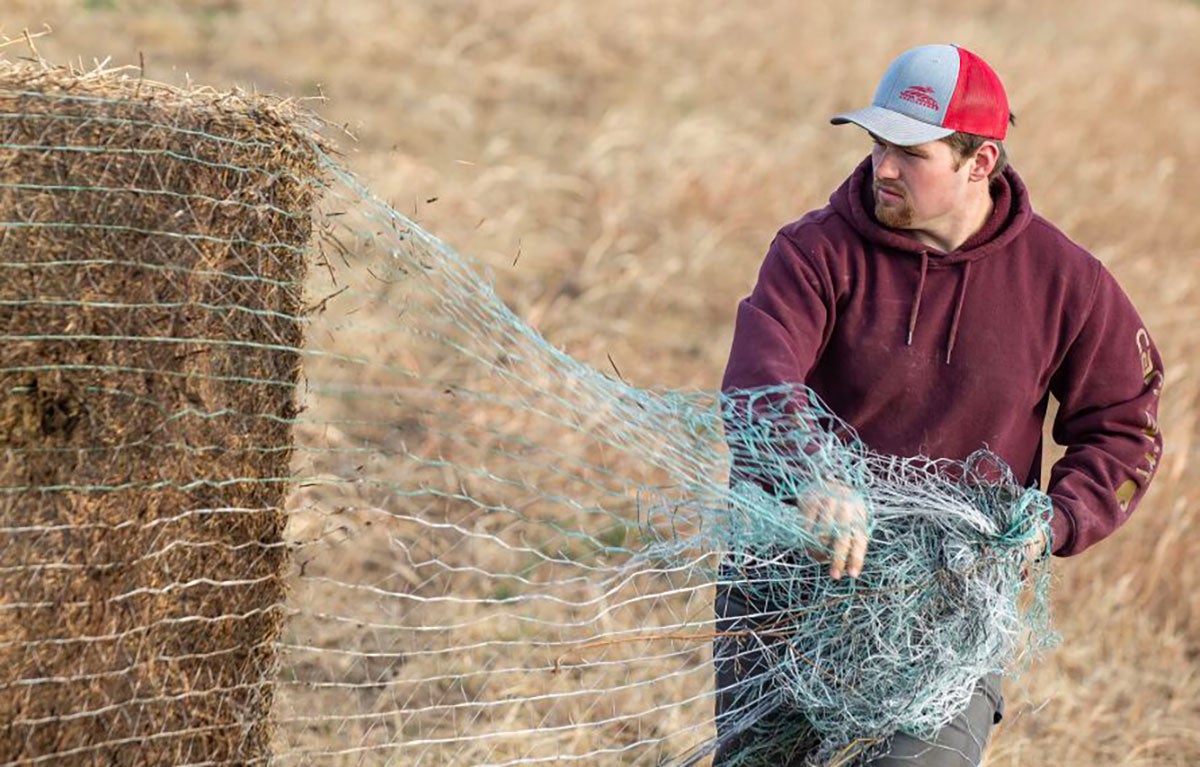
When they’re ready to buy, there’s another set of hurdles. According to Iowa State University’s extension service, the statewide average cost of farmland was $11,467 per acre as of November 2024, a 126 percent price increase over 2010 prices, which averaged $5,064 per acre.
In Arkansas, between 2010 and 2024, the average cost of farmland grew from about $2,500 per acre to just over $4,000 per acre — marking a 60 percent increase — according to the Arkansas Farm Bureau.
The price of good cropland in Missouri grew by nearly 200 percent to about $8,596 per acre during the same period.
Some of the most expensive farmland is in the Midwestern Corn Belt but throughout the Mississippi River Basin many states saw farmland real estate values increase by up to nearly 8 percent between 2024 and 2025 alone, according to the U.S. Department of Agriculture.
Prices are growing because farmers still see long-term income potential, but also due to competing land uses, like renewable energy development, and interest from investors, according to the American Farm Bureau Federation.
Rachel Burke, senior beginning farmer engagement coordinator with the nonprofit Practical Farmers of Iowa, said that even farmers lucky enough to have family land can often experience transition issues.
“A parent or grandparent might not be ready to transition, but the beginning farmer is and navigating that conflict between family and business,” Burke said. Professional land transfer navigators can help farming families talk through expectations around business transitions as non-biased third parties, preserving family relationships.
“So much conflict, from what I hear from beginning farmers, comes from unknown expectations,” Burke said.
De Boef farms on land owned by his grandfather and father, and leased land. He splits the inputs and crops with his grandfather and raises livestock. Despite farming full-time, the majority of his income comes from flying drones to spray and seed fields in the summer.
“Trying to eke out a living [farming] from square one was just not possible,” De Boef said.
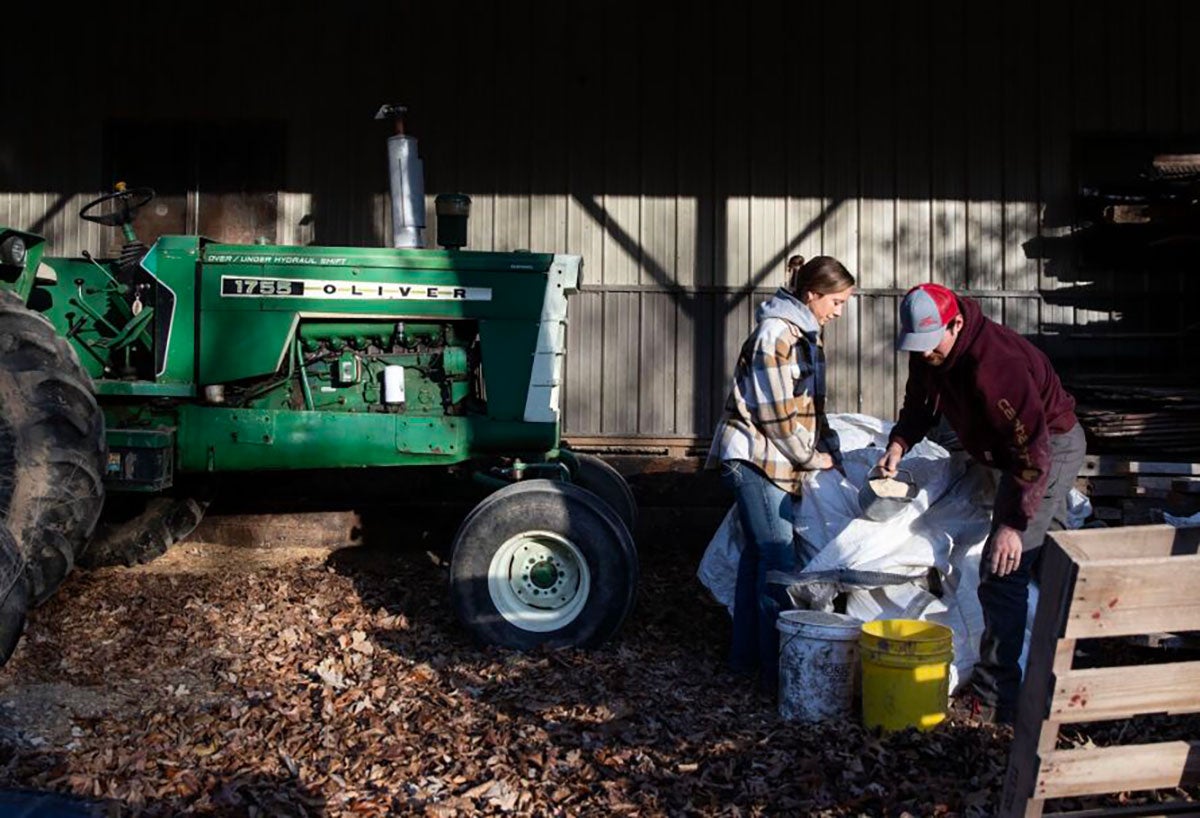
De Boef said last year wasn’t as profitable as he had hoped — bad weather and disease affected his yields and prices for his crops have been low. A trade war stemming from tariffs imposed by the Trump administration was particularly painful for soybean growers.
“I just started to farm two years ago, I don’t know what it was like the last time crop prices were really high,” he said. “But all in all, it is getting tougher to make money.”
Despite that, De Boef plans to look for opportunities to work more land in the future.
Rising costs, weather pose constant challenges
Access to land is not the only hurdle for newcomers.
Ali Simpson, 36, started farming at Kimberly Ann Farms in southeast Tennessee in 2021 with her partner. His family purchased the 60-acre property more than 15 years ago when prices were low, she said. They grow a variety of vegetables and fruit and raise a small number of cattle and other livestock, selling mostly to area restaurants and customers at farmer’s markets in Knoxville.
For young farmers who did not learn from family members or grow up on farms, there’s a learning gap, Simpson said. Her grandmother grew up on a farm, but it “skipped a generation” before Simpson decided to take up farming.
“You’re also competing against even more of a monolith than maybe your parents or grandparents or great-grandparents were competing against,” she said, pointing to large agricultural corporations. The number of farms has been declining for decades while the size of operations has been growing. In 2024, there were 1.88 million farms, the lowest number in over a century.
Simpson said she began farming without much capital to invest. She worked on other people’s farms to learn the ropes, before going fulltime in 2022. Since then, she’s been trying to slowly grow and diversify her farming operation each year.
Producing multiple crops and animals acts as a type of insurance for her small farm, she said. “When, inevitably, something just has a bad year, you have something else that decided to have a good year.”
But inflation has driven up the cost of just about everything: The post office charges more to ship live chicks. Machine parts, hydraulic fluid and diesel fuel are more expensive. Fencing materials cost more.
Over the last five years, farmers’ expenses have been consistently higher than their crop revenue, according to a 2025 American Farm Bureau Federation analysis of federal data. Rising interest rates have also made it more expensive to borrow money, which some large-scale farmers rely on, particularly in years with higher than usual input costs.
While Simpson doesn’t use farm operating loans, higher input prices still hurt her bottom line.
“When your margins already aren’t great, all that stuff has a pretty big impact,” Simpson said. She wishes she had saved more money before starting to farm. “It’s like that one ]saying], if you want to make a million dollars farming, start with $10 million,” she said.
The second Trump administration’s recent cuts to federal farming programs also created barriers. Simpson said she was considering applying to a Natural Resources Conservation Service program to try to get another hoop house — a small greenhouse structure that can help protect produce from frost and extend growing seasons — for the farm.
The NRCS went from a 2025 budget of $896 million to a 2026 budget of $112 million, according to a USDA budget summary for fiscal year 2026.
“With all that chaos, we’re just like, we’re not even going to try and deal with that,” Simpson said.
And weather is an ever-present challenge.
“I’ve worked outside for the past six summers or so, and every single one, almost without exception, has been hotter and drier than the last,” she said.
Simpson said in these conditions she feels less inclined to take on risks.
“I don’t have a lot of money to play around with already, so often it makes me feel like I need to shrink back, when what I really need to do is grow more. In order to make everything viable and sustainable, the growing space has to expand.”
Searching for support
Some states are proposing legislation to help beginning farmers.
In early January, Iowa Secretary of Agriculture Mike Naig introduced legislation that would prioritize beginner farmers in the Choose Iowa program, which gives producers money to invest in value added services on their farms. The proposal also broadens tax exemptions to retired farmers to ease succession planning. “The Iowa Farm Act is about meeting today’s challenges while preparing for the future,” Naig said in the state’s new release.
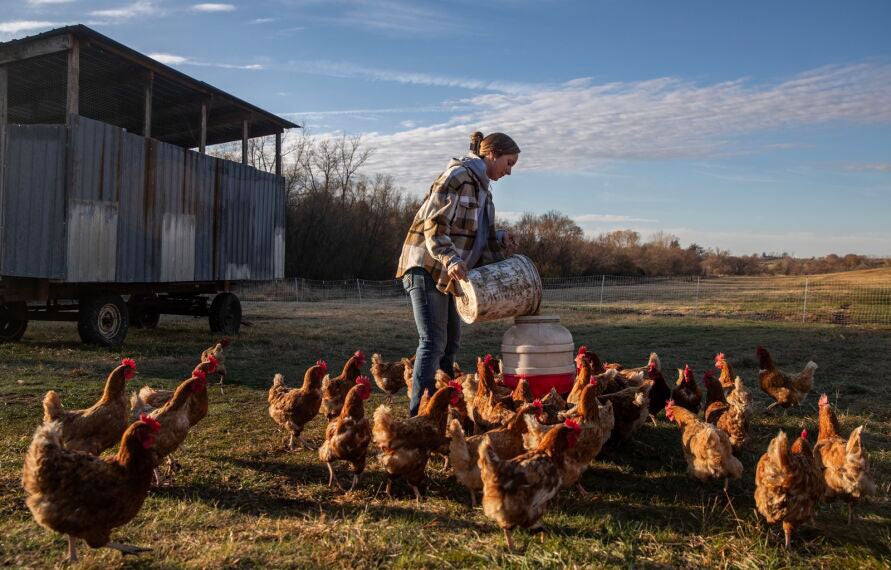
In Tennessee, Simpson is running a campaign for a statehouse seat on a platform that includes preserving agriculture, farmland and soil health. Simpson’s platform prioritizes supporting a farmer’s right to repair their own equipment without restrictions, embracing small- and mid-sized processing businesses and commercial kitchens that can turn crops into higher value products, and growing programs that purchase food for schools from local farms.
Despite new barriers, some of the challenges of being a beginner farmer — like how to apply for government grants and handle cow birthing emergencies — are constant. Simpson said having a local network of farming mentors has been the most valuable resource.
“They’ll teach you all these invaluable things that they have learned through decades of doing it,” she said.
She also finds connections with other young farmers beneficial and is part of the Southeast Tennessee chapter of the National Young Farmers Coalition.
The sense of community and seeing what she can produce keeps her going.
“I bust my ass, in contact with all the things that I make, and I see the faces of the people I’m selling these things to,” she said.
This story is a product of the Mississippi River Basin Ag & Water Desk, an independent reporting network based at the University of Missouri in partnership with Report for America, with major funding from the Walton Family Foundation.