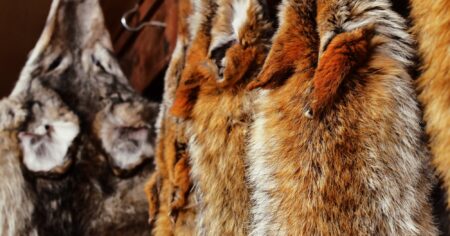





Ranchers say the real conflict is with the rules and whether agencies can keep up.
Editor’s Note: This is the third in a three-part series exploring the impact that wolf reintroduction in the U.S. has had on livestock operations. Caution: This article includes graphic images of livestock carcasses.
Wolves are no longer a hypothetical part of the Western United States. For ranchers that are operating in recovery, reintroduction, and even zones where wolves are crossing state lines, they’re a daily management reality. As apex predators, wolves bring a new layer of risk to operations that are often already stretched thin by drought, rising input costs, and labor shortages.
As wolf populations grow, and territories shift, producers are reporting livestock losses, disrupted grazing patterns, and added time spent monitoring herds instead of running other parts of their businesses. But, it’s not just depredations that are fueling frustration, it’s policy and management uncertainties. While states manage wolves under a patchwork of rules, and shifting framework. Ranchers share stories of uncertainty on whether the system meant to manage them can respond quickly, communicate clearly, and prevent repeat problems.
In Colorado, economic and political burdens are rising fast. The state’s wolf recovery plan has exceeded $1 million in livestock losses to predators in 2025 (triple the state budget for compensation), with disputes over depredation confirmation, removal decisions, agency credibility widening and continuing to divide those on all sides of the issue. Meanwhile, speculation surrounds the Democratic governor’s ties to wilderness advocates, influencing the rapid implementation of the referendum vote. Leadership turmoil and the possibility of federal intervention have only intensified scrutiny over the state’s wolf program, and whether Colorado’s wolf program is equipped to manage long-term conflict.
Former Colorado Parks and Wildlife director Jeff Davis, who led the department through the contentious reintroduction period, has been hired as the new deputy director of the Wyoming Game and Fish department following his resignation in Colorado “in lieu of being terminated,” according to a settlement agreement obtained by local news outlet 9NEWS.
“I think Jeff Davis was put into an impossible position,” Colorado resident John Michael Williams wrote Jan. 7 on the Colorado Wolf Tracker Facebook page. “ I didn’t agree with what he did with the Copper Creek Pack, but he did make the tough calls to sign off on the lethal removal orders for three different wolves.”
In an interview with Cowboy State Daily, Williams posited that Gov. Jared Polis and other state officials were pulling the director in different directions.
Despite initial support from the U.S. Fish and Wildlife Services under the Biden administration, issuing permits for the export of 15 wolves from British Columbia in January 2025, the agency sent a letter on Dec. 18, 2025, threatening to pull the program’s authority from CPW. The federal demand, written by USFWS Director Brian Nesvik, includes a full report of wolf conservation/management activities and documents going back to the Memorandum of Agreement period, with a deadline and escalation consequences.
“The MOA … allows the Service to terminate the agreement upon 60-calendar-day written notice,” the USFWS letter reads. If the MOA is terminated, management authority will revert to federal control, including lethal removals and relocations depending on federal decisions.
Now, Colorado’s wolf program controversies are now influencing leadership and policy dynamics beyond its borders. Just south of the Colorado line, ranchers running under the Mexican gray wolf program say the story sounds uncomfortably familiar.
A Colorado Parks and Wildlife spokesperson contacted AGDAILY on Dec. 17, 2025, and said the agency was reviewing the questions. At publication time, CPW had not delivered any other response.

Problems elsewhere in the Southwest
Ineffective depredation-confirmation protocols have also been identified in other states. A 2021 U.S. Department of Agriculture investigation found that although New Mexico and Arizona services used a consistent approach for attributing livestock deaths to Mexican gray wolves, investigators did not always provide adequate support. In some cases, the investigation found, they failed to include photographs documenting evidence found at depredation scenes, such as tracks, scat, or hair.
The 2024 annual population survey found at least 286 Mexican gray wolves now roaming the mountains and forests of Arizona and New Mexico, an 11 percent increase in a single year and the ninth straight year of population growth. Wildlife managers documented 60 packs, 26 breeding pairs, and 99 confirmed livestock predation cases in 2024, even as they reported a downward trend in verified kills and hundreds of hazing operations to push wolves away from homes and herds.
In southeastern Arizona, Mike Wear operates his ranch on more than 11,000 acres of private land near Chiricahua National Monument. There’s no Forest Service permit, no BLM allotment, no public land buffer.
“We run on 18 sections of private property,” he said. “That’s all it is. To me, that’s the wolf’s eminent domain. They’re utilizing the wolf as a means to take away your private property rights … they devalue the property.”
Wear told AGDAILY that the presence of Mexican wolves has already changed how he manages cattle. At one point he pulled 70 cows completely off pasture and sent them to a feedyard because the wolves seemed localized on his ranch.
“We moved the cattle out and had no more wolf sign, no more tracks,” he said. “Within a month I brought them back … and last week I found a wolf track again. They know to come back. They’ve got killing corridors — they’ll kill in those areas until they deplete it, and then they move on.”
Like Colorado producers, he describes a pattern of losses that didn’t fit what he’d seen from other predators in four decades of ranching and wildlife work. Wear has a degree in wildlife science from New Mexico State University and says he’s familiar with lion, bear, and coyote kills.
The first carcass that made him suspect wolves was a cow Wear found in 2021 that had been run down so hard she collapsed under herself, with a full-term calf pulled out and lying about 50 feet behind her.
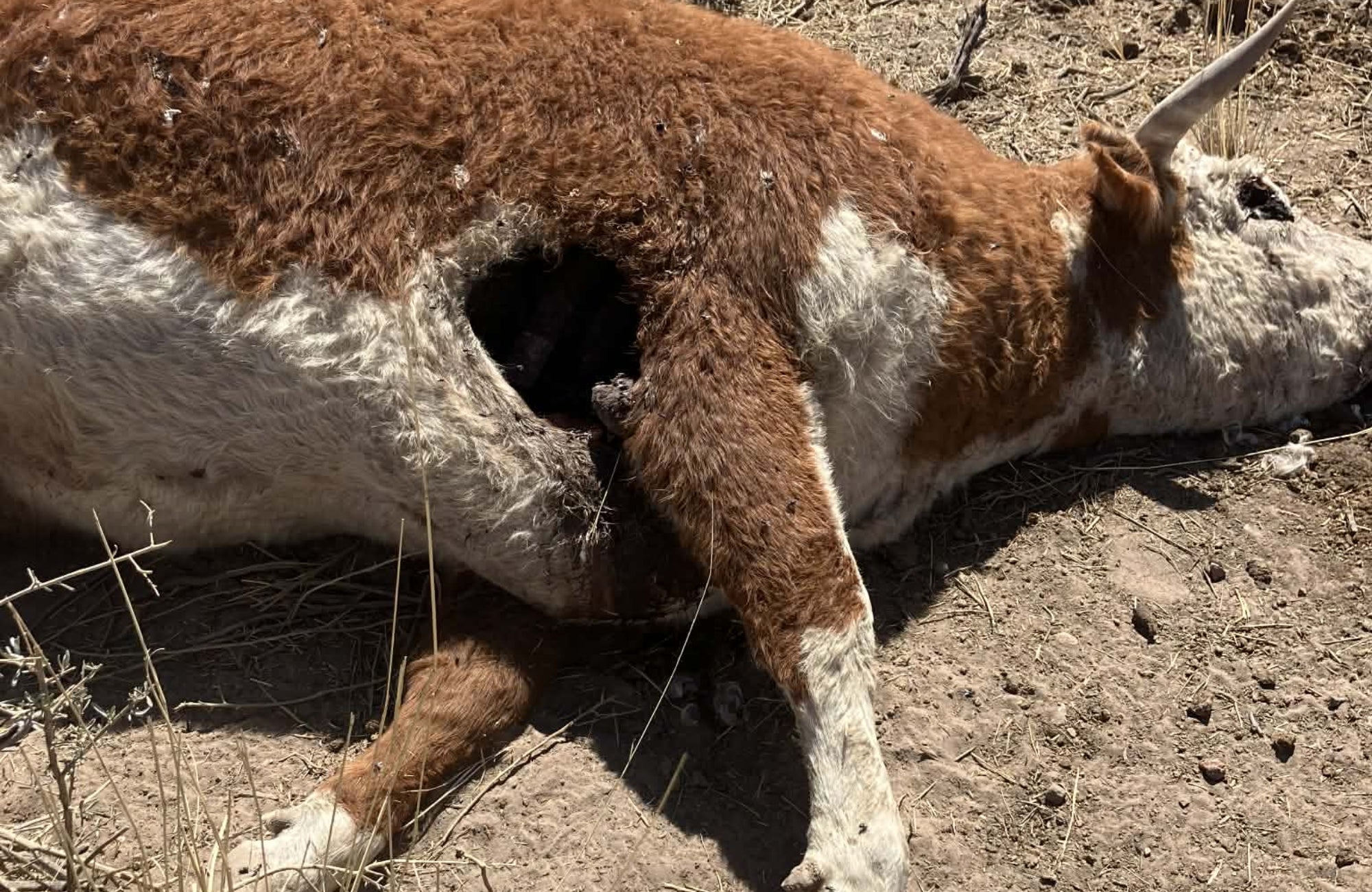
“Her eyes were bugged out,” he said. “Normally that’s a stress indicator — they’ve been chased so hard they just went down from exhaustion.”
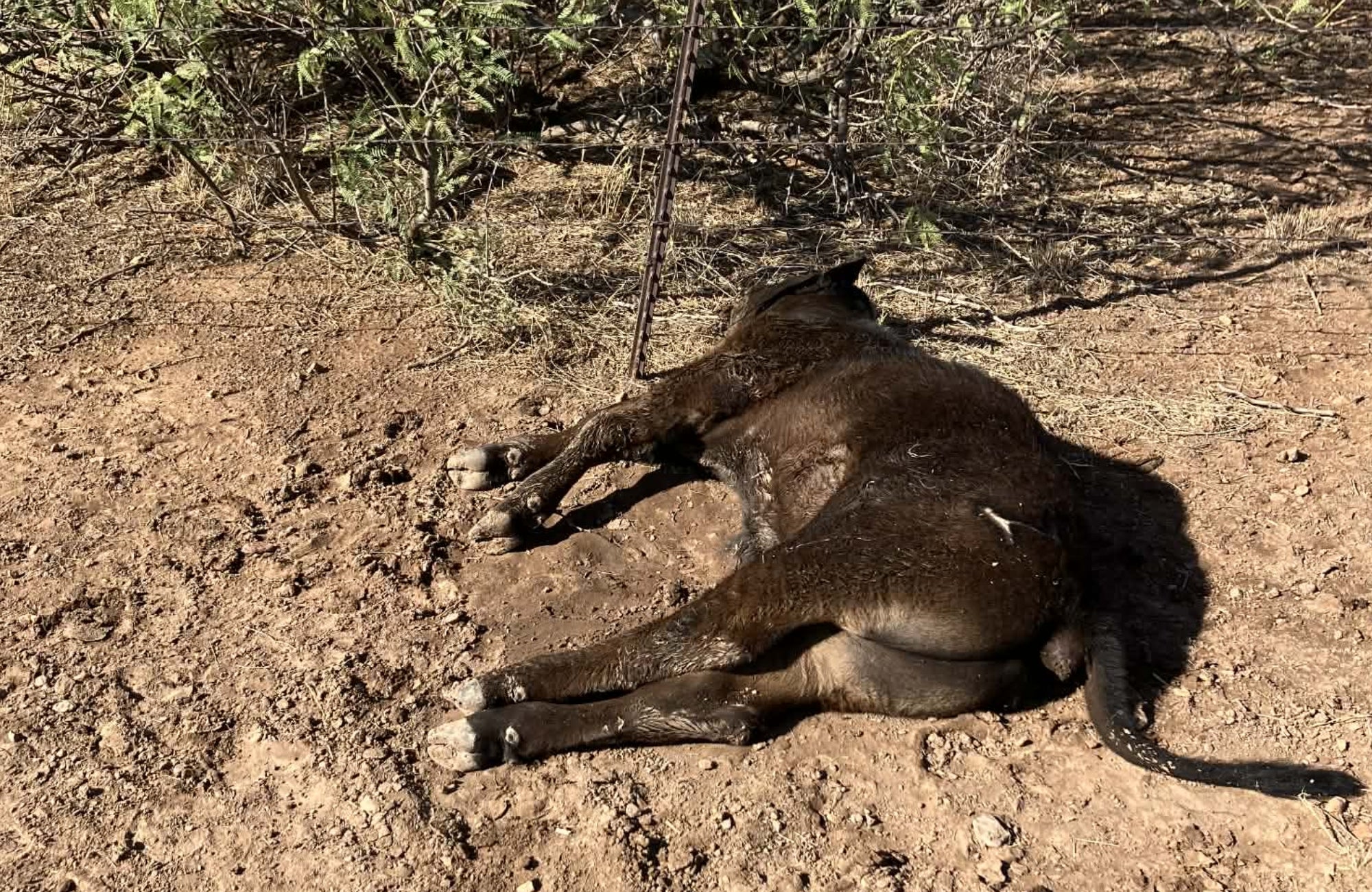
Over the next several years, he kept finding “odd” kills: a calf with only the left front shoulder removed, another dead with almost no flesh eaten, others cleaned up before investigators arrived.
When he finally reported one of those cows, he said federal investigators confirmed it as a kill by an uncollared wolf, a rare admission in Cochise County, where officials had long insisted there were no wolves. That one confirmation, he said, “set it going,” prompting the Mexican Wolf Recovery Program to acknowledge occupied habitat in the county.
But when Wear called in additional carcasses, he said the picture blurred. One cow was ruled “too old” to evaluate, even though he said the decay level matched the earlier confirmed case. Another calf was labeled a feral dog kill, despite what he described as a large canine spread on the bites. Wear and other ranchers began taking their own measurements, comparing bite marks from confirmed kills, fresh carcasses, and large coyotes shot on the range.
Wear believes that some cases that should fall into a “hybrid or wolf” category are being pushed into the coyote or dog box — representing a similar financial outcome to the seemingly obvious Colorado wolf kills that are being labeled “inconclusive.”
Although the University of Arizona affirmed the genetic purity of released wolves in 2018, the confusion over canine spread has amplified concerns over the animals currently impacting ranchers in his area. Wear argues how easily wolves and hybrids can be misidentified in the field. Coyotes get mistaken for Mexican wolves in advocacy campaigns; in turn, ranchers say wolf-coyote hybrids and uncollared wolves are written off as dogs or “just big coyotes” in depredation reports.
“They don’t even know what the true canine spread on a Mexican wolf should be,” Wear notes. “They’ve got a real problem with hybrids.”
Wear is blunt about what he sees as outside influence on the program. Many of those groups advocate for expanded use of nonlethal tools such as range riders, fladry, guard dogs, fencing, carcass removal, and hazing to reduce livestock conflict. He argues that nongovernmental organizations have too much sway in how the Mexican wolf is managed and describes “NAR wolves” — non-authorized releases — that he believes are being turned loose outside the federal program. Those claims are disputed by wildlife advocates, but they track with a larger political fight along the southern border, where ranchers’ groups in Arizona and New Mexico are now backing federal legislation to delist the Mexican gray wolf and separate U.S. and Mexican populations for management purposes.
For Wear, the policy arguments boil down to what he sees every time he drives up on a fresh kill.
“It’s chilling,” he said. “You pull up and you go, ‘What’s happened here?’ You see the scat, you see the tracks – and then you start asking yourself, do I even call this in? Because the minute I do, they put another blue dot on the map for occupied wolf habitat.”
Threat to New Mexico ranchers, too
Across the border in New Mexico, some communities say the conflict has tipped into crisis. In April, Catron County commissioners declared a local state of emergency, citing reports of Mexican wolves snatching pets from front yards and maiming cattle.
At that meeting, rancher Tom Paterson, president-elect of the New Mexico Cattle Growers’ Association, told officials, “For those of us on the ground, [wolves are] a very real daily threat.”
Farther north in Datil, New Mexico, rancher Louis Sanders told The Santa Fe New Mexican he spent more than 100 consecutive nights patrolling his ranch with a spotlight after eight calves and a cow were killed.
“I was out every night until well past midnight,” Sanders said, describing the toll of living with wolves that “seem to have no fear of humans.”
Experts say the Mexican gray wolf program is pushing entire communities beyond what they can absorb. Tracy Drummond, Catron County Extension Agent with New Mexico State University, has worked on the wolf issue since the first releases in 1998 and says the situation has steadily intensified.
“Approximately 90 percent of the wolves in New Mexico are located in Catron County,” Drummond said. “There’s more wolves in Catron County than in the entire state of Arizona. There’s no plan to address these problems as they continue to grow.”
For decades, Drummond and other NMSU specialists have tried to help ranchers adapt, but he says the tools available fall far short of the reality on the ground.
“Wolves tend to depredate on livestock year-round regardless of the stage of their production cycle,” he said. The only workable management recommendation he can offer ranchers is to “calve as close to when the elk calve as possible” to maximize alternative prey.
He disputes the idea that wolves are needed for ecological balance in the Southwest.
“Outside of the greater Yellowstone ecosystem, there is no place in the United States where man has not taken the wolf’s place in terms of managing wildlife populations,” he explained. “They’re not needed here on the ground. Hunting and other mechanisms already manage elk and deer.”
Without the ability to remove chronic depredators, he said, wolves simply accumulate.
“We’re not able to take problem wolves out when they need to be taken out. Those wolves are protected and propagated.”
For rural Catron County families, the fallout is not just financial but also personal and constant, with much of the population having personal interactions with wolves in the past six months. In this county, the presence of wolves has even reshaped daily life. The county drew statewide criticism for building enclosed bus-stop shelters, which were quickly dubbed “wolf houses,” for children along rural highways.
To Drummond, the core issue is that the current federal program appears designed to increase wolf numbers, not manage conflicts.
“The wolf program as a whole does not appear to have any management plan behind it other than to increase wolf populations,” he said. “As the population goes up, we have more human-wolf conflict, more livestock-wolf conflict. With the current management path, I don’t see that changing.”
Those local emergencies are unfolding alongside a fierce policy fight in Phoenix and in Washington, D.C. Last summer, Arizona U.S. Rep. Paul Gosar introduced the Enhancing Safety for Animals Act, a bill that would remove the Mexican gray wolf from the Endangered Species List and return primary authority to the states. He argues that wolves “prey on livestock and create financial losses for ranchers” and that the population is now stable enough to be managed without federal protection.
The National Cattlemen’s Beef Association, Arizona Cattle Growers’ Association, and New Mexico Cattle Growers’ Association have all lined up behind the bill, saying the species is “overly abundant” in some areas and that the current rules leave rural communities bearing disproportionate costs.
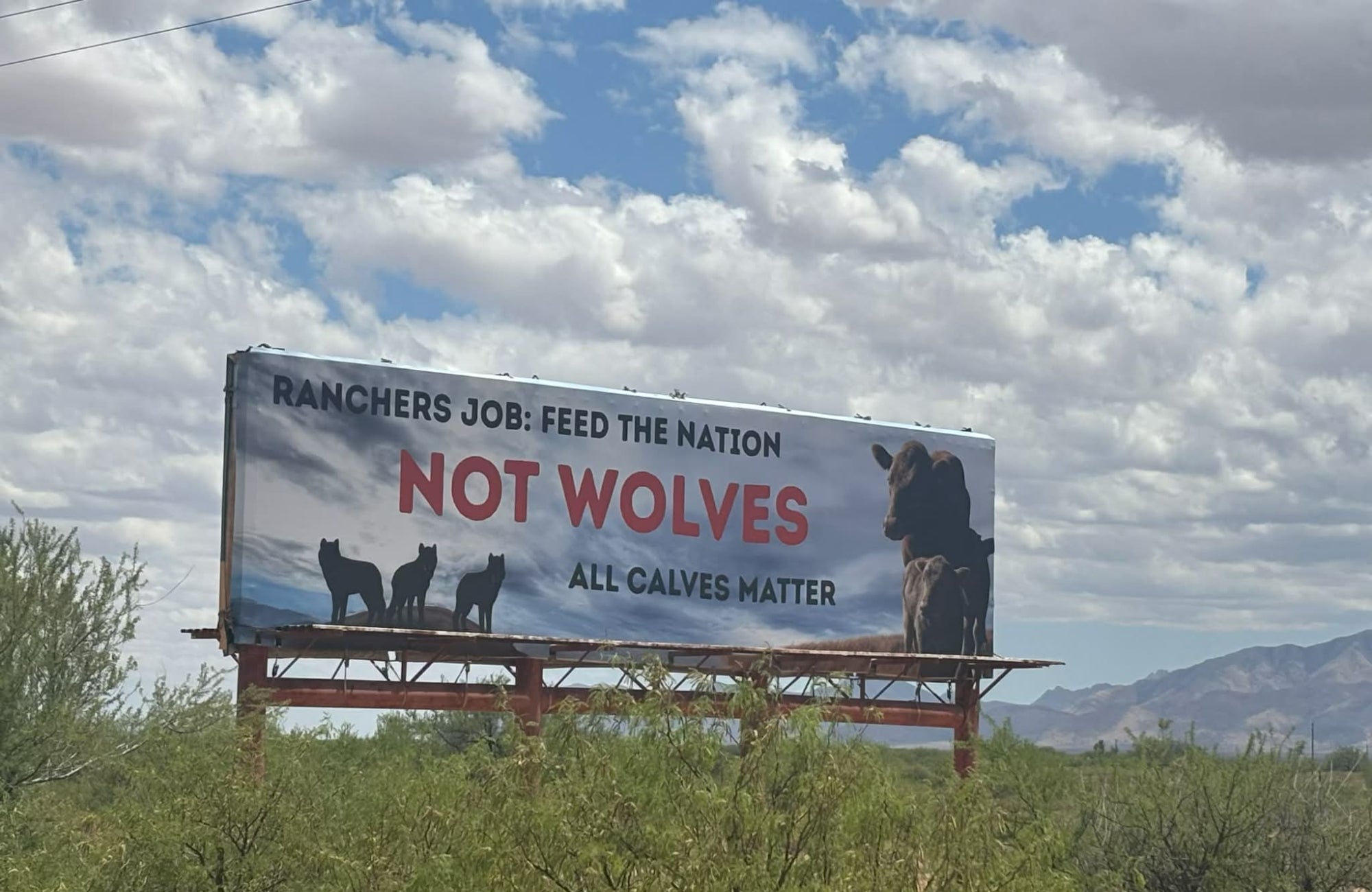
Conservation groups see the same numbers and reach a different conclusion. They note that 286 wolves across two states is still a fragile population compared with historic levels and warn that delisting would halt releases from captivity, end federal investigations into livestock kills, and cut funding that supports compensation programs.
The Center for Biological Diversity, a pro-organic and anti-livestock advocacy group that regularly weighs in on agricultural issues, says removing ESA protections would “stop releases of wolves from captivity to diversify the gene pool” and “shut down monitoring of the wolves” at a critical point in their recovery.
Even within the recovery program, tensions run both ways and mistakes have been made.
In April 2025, federal officials acknowledged that a collared, presumably pregnant Mexican gray wolf (AF1823, known as Asiza) was erroneously killed in Arizona under a removal order that was supposed to target an uncollared pack member after a series of depredations. Later, records showed a three-month-old wolf pup in New Mexico’s Gila National Forest was shot from a helicopter under another federal order of depredations.
Wolves on the West Coast
In northern California, wolves aren’t just drifting through wilderness as a “backcountry issue” — they’re learning to hunt cattle on irrigated pastures at the edge of the timberline.
The Golden State offers a glimpse at situations where depredations climb faster than agencies can respond. In October, California wildlife officials euthanized four members of the Beyem Seyo wolf pack, including a breeding pair and two subadults, after the group was linked to 70 livestock losses between late March and early September.
As recently as Jan. 1, wolves attacked a calf and injured a 20-year-old horse (who was later euthanized) at Willow Creek Ranch north of Susanville, according to the Lassen County Sheriff’s Office, leaving tracks and blood adjacent to the main residence. Investigators later reported that the blood trail came close to a children’s playground on the property.
That surge, amounting to nearly two-thirds of the state’s recorded wolf-caused livestock losses over the period, was met with intensive non-lethal mitigation efforts: drones, ATVs, 24/7 field patrols, bean-bag rounds, fladry, and more.
“These wolves had become habituated to preying on cattle, a feeding pattern that persisted and was being taught to their offspring,” the state’s wildlife director, Charlton Bonham, said in a statement. The removal marked the first time in decades that California, under its endangered-species protections, authorized lethal control of wolves.
Jim and Mary Rickert run a closed, high-health cow-calf herd and branded beef program in Siskiyou County, surrounded on three sides by U.S. Forest Service ground. For years after Oregon’s famous wolf OR-7 slipped into California in 2011, wolves were more rumor than reality. Crews occasionally spotted tracks, but there was little direct conflict. Then the Whaleback pack established a den in the timber just a few miles above their irrigated meadows.
With that, everything changed.
“About 12 years ago, we had [a California wildlife advocate] come up not long after OR7 crossed the border,” Mary Rickert recalled. “Some of our crew had already sighted a wolf or two, and we just kind of held our breath for eight to 10 years.” In their view, wolves “basically cleaned out the deer herd — and the elk — and then decided, ‘Oh, let’s start eating these docile little ladies over here.’ ”

In 2024 alone, the Rickerts counted 20 confirmed wolf kills and roughly 40 missing calves. Out of 200 bred cows, only 160 calves hit the ground — far beyond normal death loss for their operation. They’ve also seen a clear drop in fertility. One episode still sticks with them: On a slaughter day at their U.S. Department of Agriculture plant, a pen of yearlings panicked, blew through fencing, and were later found a mile and a half away on Highway 97.
“Nothing else scares cattle like wolves do,” Mary Rickert said. “The cortisol levels just skyrocket when something like that happens.”
Those on-the-ground observations match what researchers are starting to quantify. A UC Davis team analyzing wolf scat from packs in northeastern California found that about 72 percent of samples contained cattle DNA, suggesting cattle are now a major calorie source for recovering wolf populations. Their economic modeling estimated that one wolf in a high-conflict area can cause tens of thousands of dollars in indirect cattle losses per season through lower pregnancy rates and reduced weight gain.
California’s wolves are also showing up exactly where ranchers spend their summers. Instead of staying high on remote peaks, several packs, including the Lassen and Whaleback packs, have established territories in valley bottoms and forest fringes “where the summer cattle graze,” not in the backcountry.
Like producers in Colorado and the Southwest, the Rickerts have tried nearly every non-lethal tool offered: fladry, range riders, riding at night, and even drones. A drone with a loudspeaker briefly pushed wolves off their herd, long enough for the story to make The Wall Street Journal, but the predators simply shifted to a neighbor’s cattle.
“That isn’t solving the problem,” Mary Rickert said.
Furthermore, their herdsman has had to euthanize badly mauled calves after non-fatal attacks.
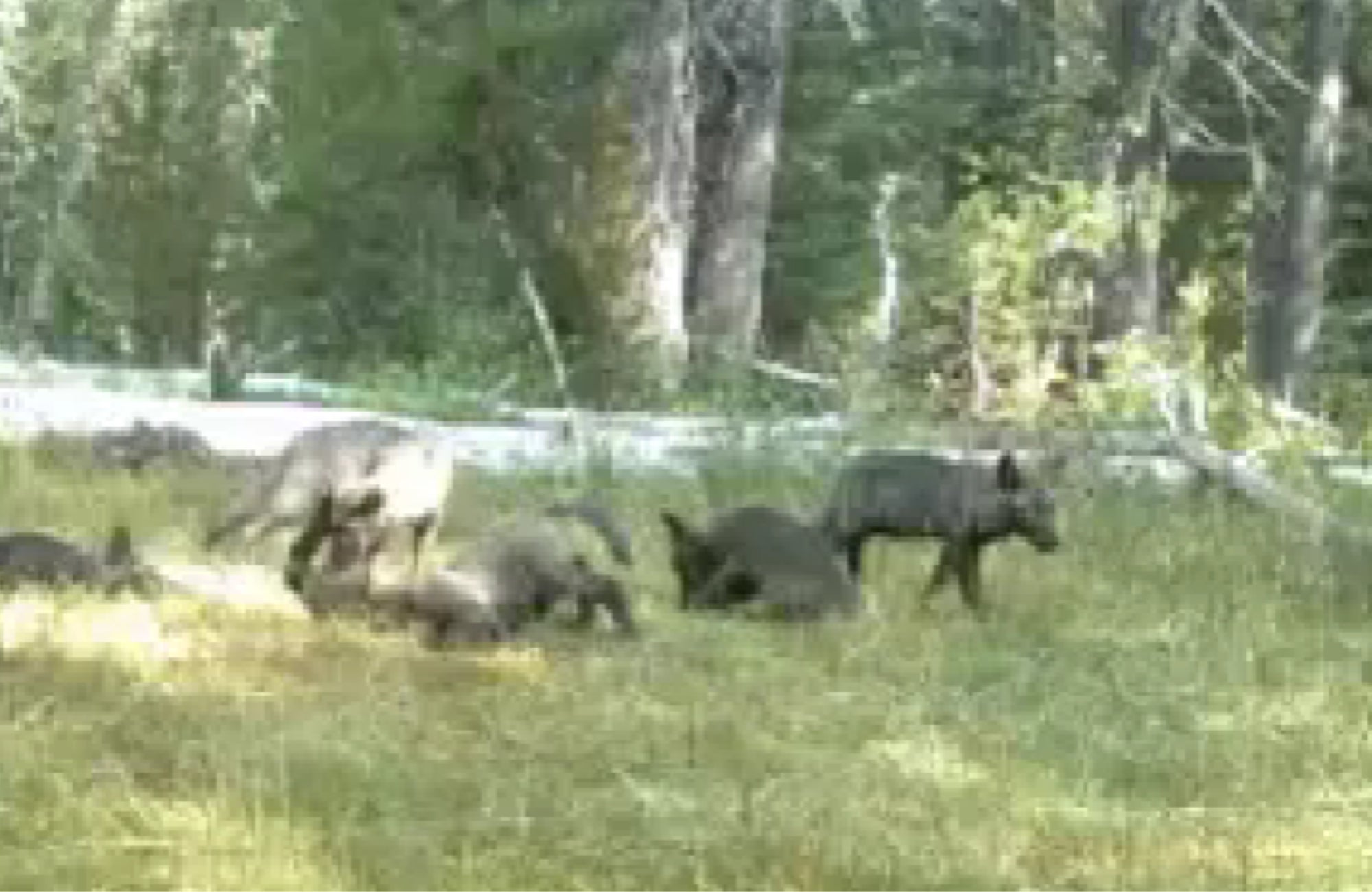
“It’s not a clean kill like a mountain lion,” she said. “He’s had to put down a good portion of the ones that were attacked, and that weighs real heavily on him.”
The ranch has also been forced to change how and where it finishes cattle, pulling them in close to the slaughter plant and tightening fencing. Because wolf protections and disposal rules make open “bone yards” risky, they now truck offal and carcasses to a landfill across the state line — roughly $1,500 a month in extra cost, with no direct tie to an individual depredation claim.
Despite those 20 confirmed kills in a single recent year, the Rickerts say state compensation hasn’t made them whole and does not recognize “pay for presence” impacts like lost pregnancies, weight loss, or land-value risk. That frustration echoes up and down the state, even as California now has at least seven documented wolf packs and additional lone animals, all fully protected under state and federal endangered-species laws.
For the Rickerts, the policy debate feels far away from the day-to-day reality.
“We’ve worked for this our whole lives,” Mary Rickert said. “It’s a hard way to be going out.”
Whose livelihood do wolves actually serve?
For decades, Western wildlife agencies have been responsible for managing wild ungulate numbers through controlled harvest, population objectives, and winter range monitoring.
States are legally required to keep elk populations at or near established objectives through hunting quotas and habitat management. Those systems fund themselves with nonresident elk hunters pumping tens of millions of dollars into states such as Montana and Idaho every fall, supporting guides, outfitters, hotels, restaurants, and conservation programs through license fees and Pittman-Robertson excise taxes.
But wolf advocates often frame predators as an ecological management tool that could reduce the need for human hunting. Some go further and argue that wolves restore ecosystems by pushing elk out of riparian areas, reducing browsing, and allowing willow and aspen to rebound summed up in the term “trophic cascade.”
The science, however, is far more complicated.
Colorado State University’s Center for Human-Carnivore Coexistence cautions against overstating the ecological promise of wolves. While studies, primarily in National Parks such as Yellowstone, have suggested that wolves might reduce overbrowsing by elk and deer, other studies also show that the effects of wolves are complex – and wolves were not solely responsible for the types of ecosystem changes documented in Yellowstone over the past 20 years.
Outside of parks, those effects become even harder to see. Reintroduction of carnivores doesn’t always fully — or quickly — restore degraded ecosystems.
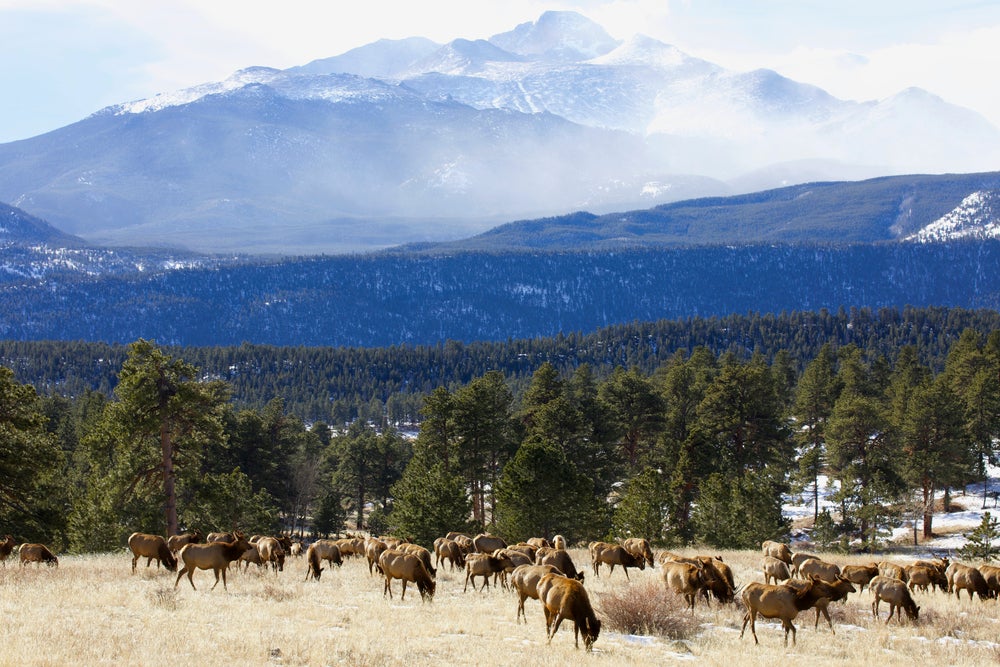
Independent research supports that caution. Kauffman et al. (2010) found that Yellowstone’s aspen recovery was patchy, inconsistent, and heavily influenced by habitat conditions and hunting pressure, not just wolves. Wolf ecologist L. David Mech has warned the public and media against “sanctifying” wolves or treating them as ecological saviors, arguing that the benefits are often oversimplified or exaggerated.
Social science research out of Colorado shows that these ecological promises — and fears — are exactly what get weaponized in public debate. In a 2022 study, Rebecca Niemiec and colleagues tracked opinions before and after Colorado’s wolf ballot and found that support for reintroduction dropped from 84 percent in a 2019 survey to about 64 percent in a post-election survey, even though the measure still narrowly passed statewide.
The same study found that the top reasons people supported wolves were “restoring ecological balance” and a moral duty to “right a past wrong,” while the top reasons for opposition were concerns about livestock, elk, and deer impacts, as well as cost. This highlights the fault lines between hunters, ranchers, and urban voters.
Niemiec’s team also showed how fast perceptions can shift. In just over a year, Coloradans became more likely to believe wolves would cause “large numbers of attacks on livestock” and big losses in deer and elk, and less likely to believe wolves would simply bring ecosystems back to their “natural” state. Local news was the most commonly cited information source, underscoring how media framing — not just biology — drives the wolf-as-ecosystem-fix narrative and the backlash against it.
All of this raises a core tension: How much predation should be ceded to wolves?
In 2020,hunting in Colorado generated over $626 million in economic impact, $666 million in Idaho, and over $748 million in Montana. Estimates vary by method, but state reports and economic studies consistently show that big-game hunting pumps hundreds of millions of dollars a year into Western economies through licenses, travel spending, and associated taxes.
Montana’s economy offers a particularly keen example of the stakes. In a typical year, over 60 percent of Montana’s big-game revenue comes from nonresident hunters, who travel from across the country to hunt elk. Some rural counties rely on that annual influx the same way ski towns rely on winter tourism. If wolves take a larger share of the annual elk surplus, it raises questions about hunter opportunity – and the loss of hunting-based revenue that supports everything from wildlife habitat projects to local schools and community businesses.
Beginning in 2011, Idaho launched annual wolf-control operations when regulated hunting and trapping failed to reduce predation pressure. In a 2019 report, the agency confirmed removing seven wolves that winter alone, part of an ongoing management plan designed “to improve elk survival in the area” and rebuild numbers to the state’s objective of 6,100 to 9,100 cow elk and 1,300 to 1,900 bulls.
But economic and ecological debates don’t capture the full cultural reality. For many Indigenous communities, wolves complicate a different kind of balance.
Anita Hand, a Navajo and Apache rancher from the Alamo Navajo Reservation, rejects the popular narrative that wolves are iconic or sacred.
“From a Navajo perspective, the word for wolf is ‘witch,’” she said. “Wolves are nothing short of a skinwalker — somebody coming around to witch you.”
She describes deep cultural associations between wolves and sickness, imbalance, and spiritual harm. For her family, the introduction of wolves onto ancestral lands threatens both livelihood and cultural continuity.
“We don’t raise cattle to feed the wolves,” she said, explaining why her family refuses compensation for wolf depredations. “Allowing wolves to kill our animals is allowing evil onto our ranch.”
Hand emphasizes that tribal lands were not meaningfully included in early management plans, and that the program now pushes wolves toward state land, BLM land, private holdings, and eventually reservations.
“Fish and Wildlife needs to readdress the management plan to consider Native cultures and customs, especially among the Navajo. Releasing an apex predator is an injustice to our way of life — not only as agricultural producers, but as Native Americans.”
Ranchers and wildlife managers in the West are learning in real time that bringing wolves back is not a one-time decision, but a permanent management commitment. Right now, too many producers say that the burden of that commitment falls on them, while the rules remain unclear and responses are too late.
Whether that debate stays centered on delisting, lethal control, or nonlethal tools, the next phase will come down to credibility: Can agencies prove they can manage conflict, recovery, and response to depredations? If not, wolves will likely remain less of a symbol of restoration, than a flashpoint over whose livelihoods, values, and voices carry more weight.
Heidi Crnkovic, is the Associate Editor for AGDAILY. She is a New Mexico native with deep-seated roots in the Southwest and a passion for all things agriculture.
Jake Zajkowski is a freelance agriculture journalist covering farm policy, global food systems and the rural Midwest. Raised on vegetable farms in northern Ohio, he now studies at Cornell University.