



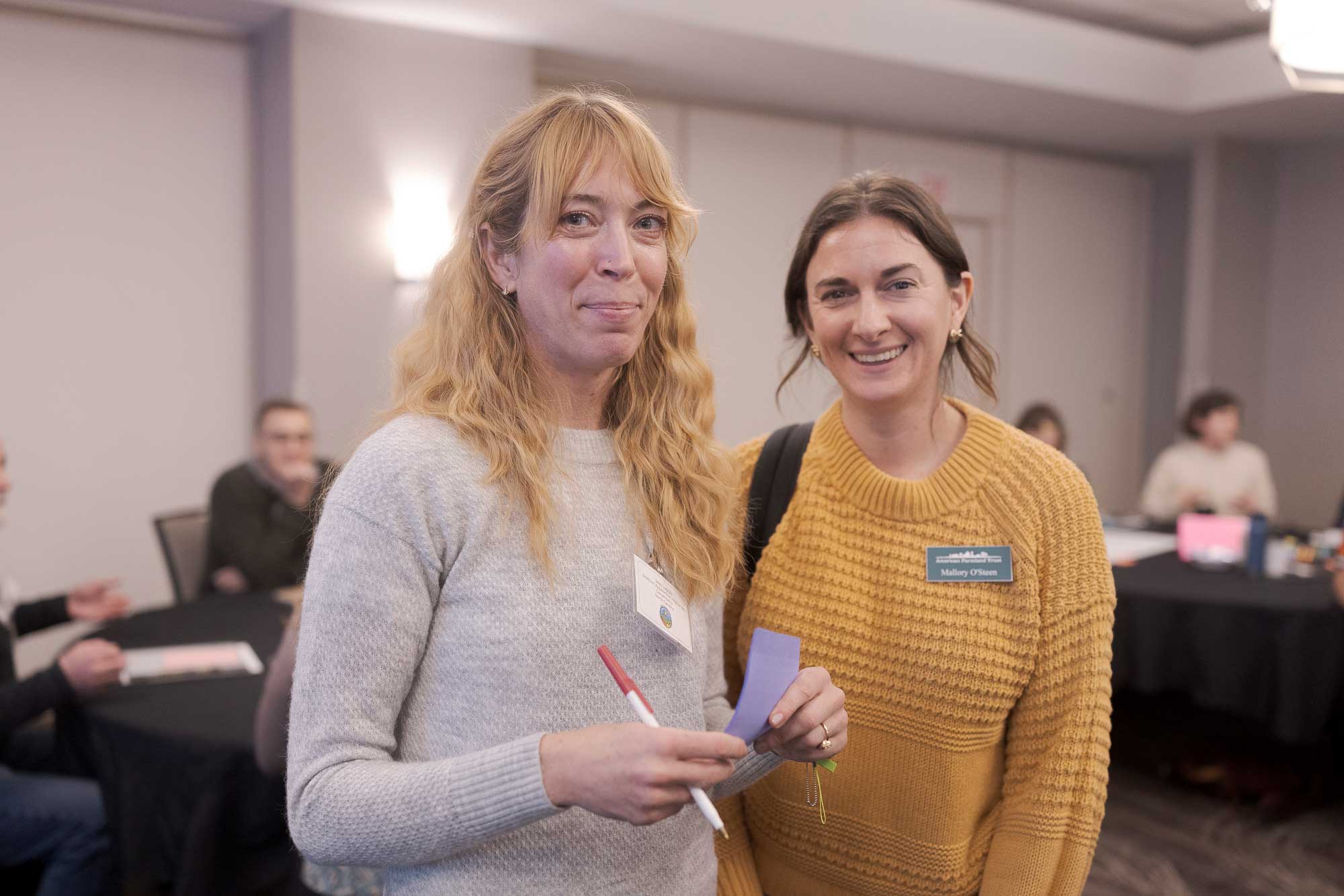
Mallory O’Steen is the Senior Southeast Program Manager for American Farmland Trust (AFT). Based in Athens, Georgia, her work focuses on securing a brighter future for farms and farmers in her home state and across the region. Lately, she has been directing more time and energy toward supporting aging farmers in the succession planning, or “farm transfer,” process. Such efforts are essential to the success of Georgia agriculture. Without help, many farm families risk losing their land and legacy.
Below, Mallory is in conversation with Brooks Lamb, AFT’s Special Advisor for Strategic Communications. Together, they discuss the challenges of generational farm transitions, the benefits of crafting a vision and plan, and the ways that succession planning can feel a little like, well, math homework.
Farm Transfers Can Be Tricky
Brooks: Across the country, more than 300 million acres of farmland are set to change hands in the next two decades as current owners age and retire. That’s a lot of land. I know this issue is of particular interest to you in Georgia. Why are farm transfer and succession planning such important issues, and why can planning for the future of a farm be so difficult?
Mallory: It’s a great question. On the surface, “farm transfer” might seem simple: just pass the land on to your children or next of kin. Done. But in reality, transitioning a farm from one generation to the next in 2025 requires significant planning, resources, tenacity, and, perhaps most importantly, creativity.
Around 40 percent of farmers in Georgia are over 65, and the pressures on family farms are coming from every angle. From farm consolidation and corporate investors to housing developments, data centers, and more, farmers can feel bombarded. One farmer I work with told me he counted 20 flyers, all from people trying to buy his family’s land, in his mailbox in just one week. There are plenty of options for farmers who want or need to sell, but far fewer for those trying to keep their land in agriculture and in the family.
For farmers who own land, it is often their biggest financial asset and selling it may be a critical piece of their retirement strategy. In other cases, farmers may have multiple heirs they want to pass the land and business to, but none of them live close to home or want to farm, or the one heir who wants to farm may not be able to afford to buy out the others. Things can get tricky real fast.
Brooks: Those are great points, Mallory. I’ve seen those issues myself. In some ways, the future of farming and food depends on what happens when land changes hands.
Defining a Vision, Making a Plan – and Doing Your Math Homework?
Brooks: You work on the Land Transfer Navigators project as part of your role at American Farmland Trust. This nationwide effort, which is supported by the USDA Natural Resources Conservation Service, helps to ease generational land transitions for farm families. As a Navigator, how do you help families through this process?
Mallory: I once had a farmer tell me that farm transfer planning was like math homework in school – it was the hardest, so she saved it for last. I guess that makes me something like a tutor or a coach. As a Navigator, I work with farm families to build a transition plan that is unique to their situation. I also host events and workshops, and I connect farmers with the resources and service providers needed to put a plan in place. Honestly, it’s my favorite part of my job.
Farm transfer planning is complicated, it’s emotional, and it involves a number of steps that are almost never linear. It is my job to help families identify their goal for the farm, connect them with the tools to make it happen, and support them along the way.
At AFT, we break the transfer process down into 10 steps. I work to guide farm owners through these steps and overcome hurdles along the way. Within that, I probably spend the most time on 1) helping farm families clarify what they want and 2) encouraging and facilitating “early and often” communication with all the stakeholders involved, such as a farmer’s spouse, children, business partners, employees, and lessees.
Brooks: Yeah, frequent and clear communication is key. It’s nice that you can help facilitate that for families. Are there any stories that jump to mind that highlight why setting a clear vision and coming up with a plan are so helpful?
Mallory: A common scenario I see is a group of siblings that either already inherited or are about to inherit the family farm. These siblings may live in different parts of the state or country, and they may or may not want to keep the land. They all have complex family and financial situations of their own. In a scenario like this, the default solution is to divide the land equally among the siblings, or for the siblings to own the land collectively.
In some scenarios, this approach may work just fine. But more often than not, I have seen that it increases family conflict and the risk of land fractionation while reducing a farm’s economic viability. It’s my job to help families anticipate these challenges and explore fair options that set the farm and family up for success for generations to come.
Brooks: That’s a great reflection. So many farmers I know want their land to be their legacy, and they want their children—and maybe even their children’s children—to have a chance to tend it. It takes foresight and commitment to make that happen.

Conservation Easements as a Succession Planning Tool
Brooks: In previous conversations, you’ve shared that agricultural conservation easements, which help protect farmland from real estate development, can go hand-in-hand with succession planning. How are you and your Georgia colleagues elevating these mutually beneficial strategies?
Mallory: Agricultural conservation easements are an excellent tool in the toolbox. In short, these legal agreements are deed restrictions that permanently protect farmland from development and significant subdivision. They are a critical option for farmers who want to ensure their land and legacy are sustained.
In Georgia, we’ve been working with federal, state, and local governments and partners to develop and enhance purchase of agricultural conservation easement, or PACE, programs, which compensate farmers for protecting their land. They can use these funds to reinvest in their farms or help pay for their retirement. The public benefits because at-risk land, which supports wildlife habitat, food production, and rural economies, is preserved.
Just since 2022, we’ve seen USDA’s Georgia farmland protection program double in funding and participation. We’ve seen the development of a brand-new state effort to support this work, called the Georgia Farmland Conservation Program. And we’ve seen increased interest and commitment from county-level local leaders, including the creation of a farmland conservation program in Morgan County, Georgia, the third such program in the state. Farmers are excited about these programs, in part because they can help with planning for the future.
Brooks: It’s amazing to hear about the creation and expansion of Georgia’s farmland protection programs, all in such a short span. These investments—of time, money, and energy—are a gamechanger.
Putting Farmers in the Driver’s Seat
Brooks: It’s clear that you care deeply about this work, Mallory. Why are you so committed to helping families in the farm transfer process?
Mallory: In so many areas of life and especially if you’re a farmer, it can feel like there is a lack of agency. Weather, climate, commodity prices, input costs… These variables are all out of a farmer’s hands. As a Navigator, I see it as my role to ensure farmers feel like they’re in the driver’s seat when it comes to the future of their land. To ensure they know what options and resources are available to them. To ensure that they have agency.
Although I come from farming roots—tobacco farmers in South Georgia—as a professional, I kind of backed into farm transfer work. My education is in environmental science, and I have a background in land conservation. But over the years, I have been consistently humbled by the perseverance and creativity of farmers in my home state. The knowledge they hold and the heart they have for their land is the key to meaningful conservation. I want to help them however I can.
If you’re a farmer who would like more information about farm transfer planning or succession support, or if you’re not a farmer but are still interested in these topics, please visit https://farmland.org/land-transfer-navigators. Here, you can find resources, connect with service providers, and see other stories that highlight farm transfer – all of which can help you start planning for the future of your farm.
Brooks Lamb is the Special Advisor for Strategic Communications at American Farmland Trust. He grew up on a small farm in rural Tennessee and now lives in Memphis.
This article was funded by and published on AGDAILY on behalf of American Farmland Trust.