




The Trump administration has announced $12 billion in relief for farmers but that won’t cover all their losses.
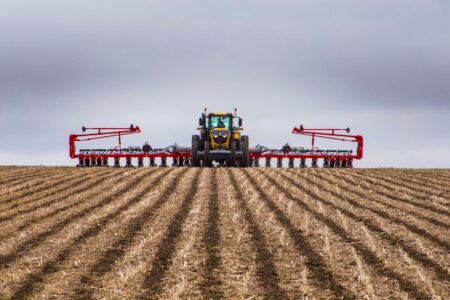
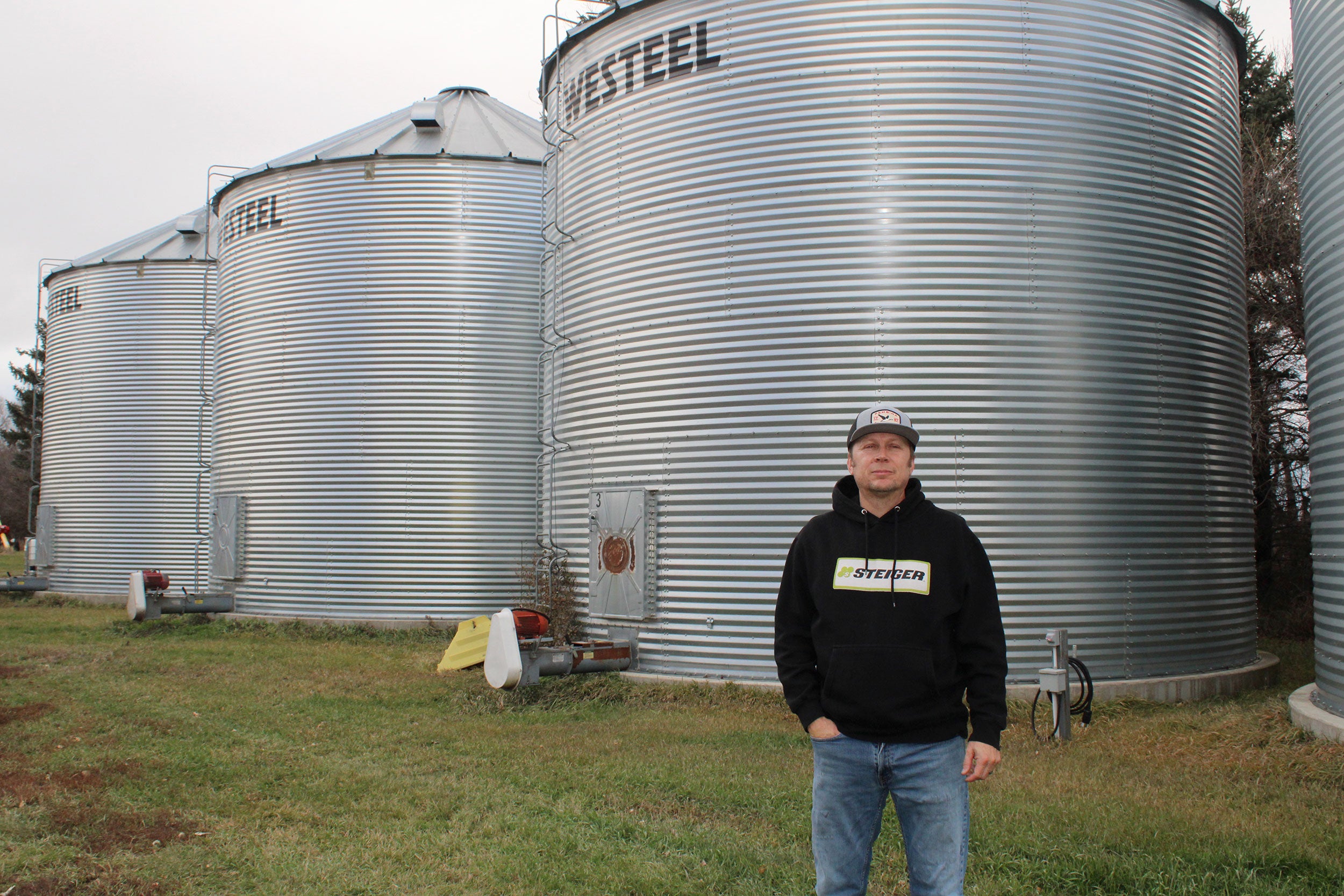
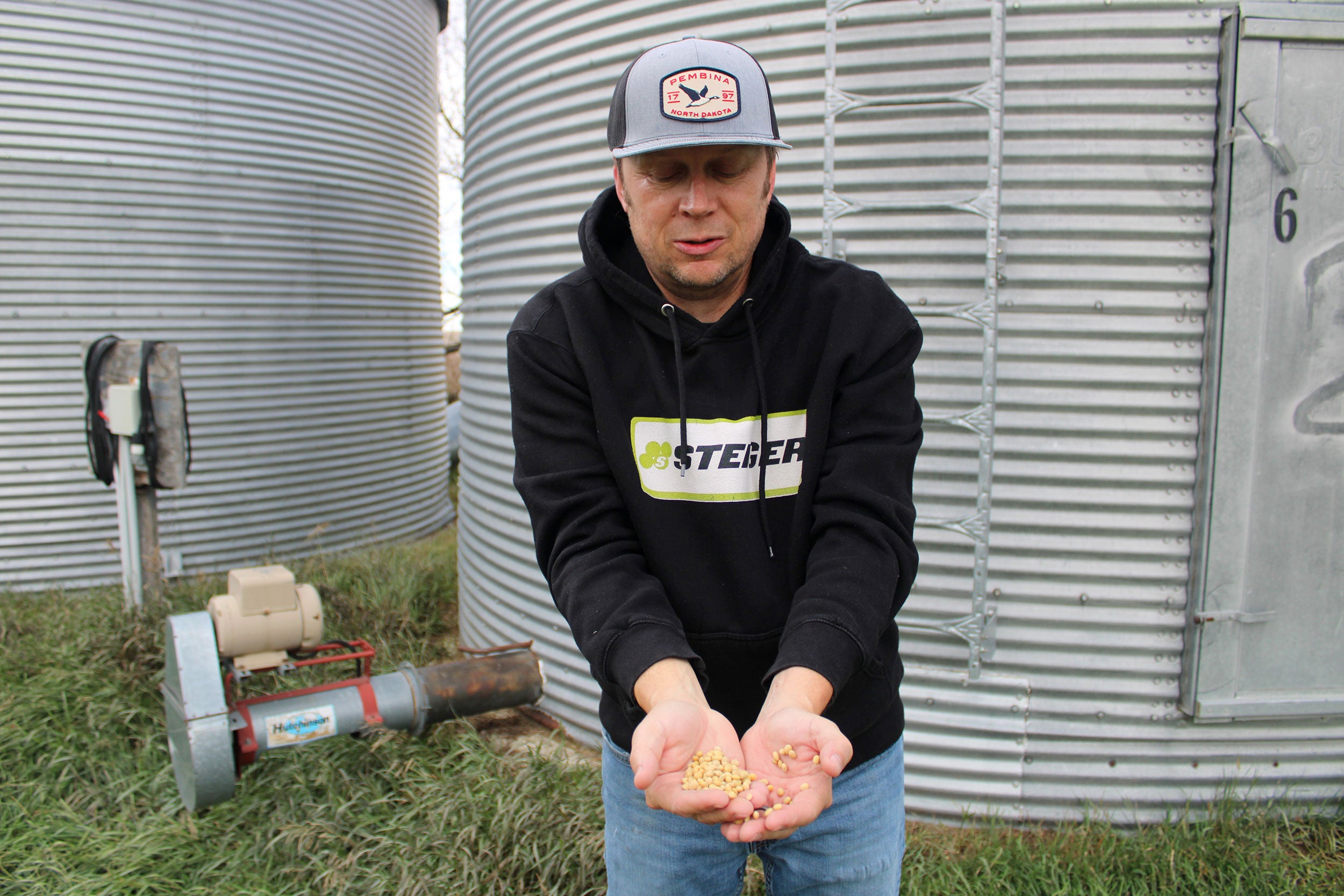
RYDER, N.D. — Tyler Stafslien is a fourth-generation farmer who’s worked his family’s land in central North Dakota for about 20 years. Roughly half of his 2,500 acres are typically dedicated to soybeans, a major crop in the state and in the Mississippi River Basin. But growing soybeans has become less profitable over the last decade as input costs rose and the Trump administration’s tariff negotiations in 2018 and 2025 destabilized trade and strained farmers’ incomes.
This year, wary of the precarious export market, Stafslien decreased his soybean acres by half.
“We’ve been experiencing in ag, the last couple of years, a downturn in commodity prices, a lot of that related to just a large supply across the globe of major commodities, but then you add this trade war on top of it, and it’s like the icing on the cake,” Stafslien said.
The administration announced Monday a $12 billion fund for one-time payments to row crop farmers to offset a portion of their inflation- and trade-related losses in the 2025 crop year.
Farmers were asking for the federal relief funds and are happy the administration is finally answering, said Stafslien. But he’s still facing uncertainty. The administration has yet to announce how much money per acre eligible growers will be receiving, and the funds will not be distributed until February, further stressing farmers like him with large debt and growing interest.
“Payments announced this week must be followed by additional and expedient efforts to keep farmers on the land and to improve the farm safety net, leaving annual bailouts as cautionary historical context rather than ongoing policy,” David Howard, policy development director of the National Young Farmers Coalition, wrote in a statement Tuesday.
Farmers and farming associations are looking for longer term solutions: to diversify trade partners and increase domestic uses for soybeans as export revenues become less certain. Some, like Stafslien, are shifting to other crops, like corn and wheat.
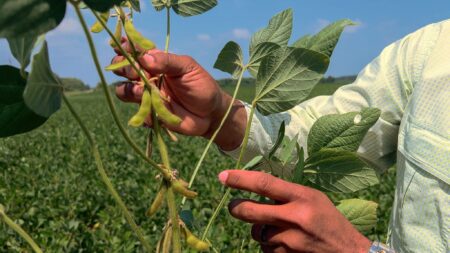
Soybeans are the largest agricultural export in the U.S. The legume covers more than 81 million acres — or 10 percent — of all U.S. farmland, the U.S. Department of Agriculture reported in September, and more than 40 percent of the nation’s soybeans are exported to other countries.
U.S. farmers received $24.5 billion from soybean exports in 2024, with Chinese purchases accounting for $12.6 billion — roughly twice the amount purchased by the next five largest export partners combined, according to USDA data.
But this year, China stopped purchasing U.S. soybeans during tariff negotiations with the Trump administration, instead falling back on its relationships with Brazil and other South American countries to meet its soybean needs. For U.S. soybean farmers, this growing season ends with low prices, unsold harvests, big financial losses and uncertainty going into the next season despite a tentative new deal with China.
“We learned firsthand that being heavily reliant on China for export sales is only good when things are good,” University of Tennessee Professor of Agricultural and Resource Economics Andrew Muhammad said.
How did we get here?
Soybeans brought by traders and missionaries from Asia first took root in North America in small quantities in the 1700s, but the USDA did not begin tracking soybeans as a crop until the early 1920s.
Around that time, the USDA, land grant university extension agents and farm groups started to promote the soybean to farmers as a soil-fertilizing crop that yielded high-protein meal for animal feed, oil, and even meat replacements for human consumption.The Mississippi River Basin’s flat plains and intermittent rain proved to be ideal conditions for the crop.
Soybeans gained a foothold on U.S. farms in “fits and starts” over several decades, author Matthew Roth writes in his book, “Magic Bean: The Rise of Soy in America,” but really took off as a cash crop after World War I. Its success was later buoyed by the Agricultural Adjustment Act that allowed soy plantings while restricting other commodities as a way to stabilize crop prices during the Great Depression, policies limiting foreign oils, and the growing need for animal feed and oil during World War II, according to Roth.
The crop helped diversify farming in the south and midwest. By the 1960s, Roth writes, “the soybean had insinuated itself thoroughly into the American diet,” but indirectly – as feed for the country’s livestock, oils for salads and derivatives in processed foods.
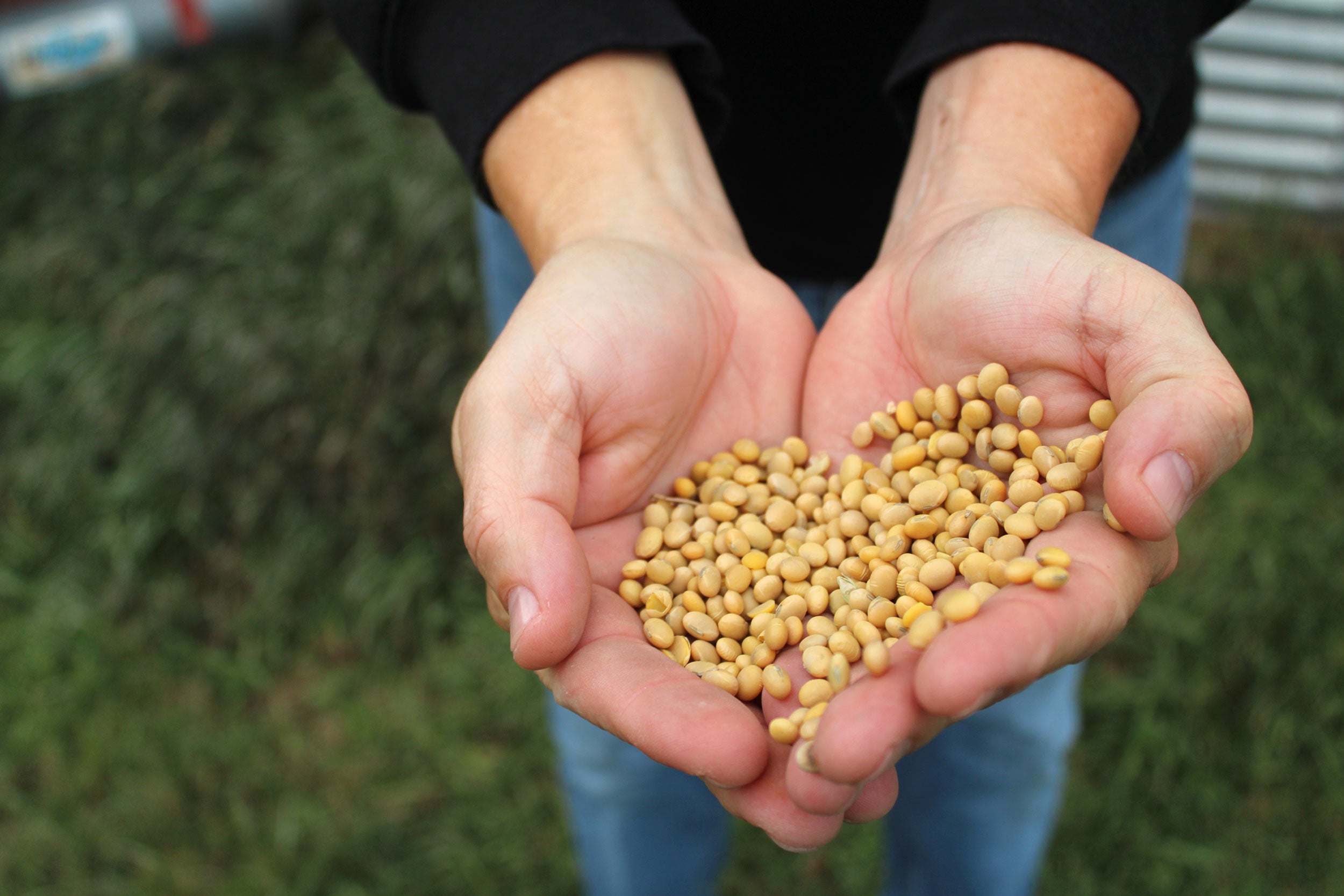
At the same time, soybeans proved to be a desirable product for international trade partners. In 1989, U.S. soybean exports totaled around $4 billion, about a fifth of which went to Japan. The Freedom to Farm Act in 1996 allowed farmers to plant single-crop fields, and with rising export demand from China starting in the early 1990s, many farmers chose to plant soybeans, Roth wrote.
In 2001, China joined the World Trade Organization and gained better access to globalized trade with the organization’s members, including the U.S., according to Muhammad and the Council on Foreign Relations. From there, growth in China’s tourism economy and middle class spurred increased demand for meat protein, Muhammad said, heightening the country’s need for animal feed in the form of U.S. soybeans.
By 2000, the crop was planted on more than 74 million U.S. acres, according to the National Agricultural Statistics Service.
“Over time, China has grown, and it seems to be the case that our total export sales have grown with our exports to China,” Muhammad explained. “They’ve sort of driven that rise over the last two decades.”
Brazil’s soybean industry has competed with American exports since the 1970s, but since 2017 has consistently exported more than the U.S.
When Trump first upped tariffs on Chinese goods in 2018, China retaliated, Muhammad said, and began investing more heavily in purchases and transportation infrastructure in Brazil. Their turn toward Brazil as a primary provider during trade negotiations in 2025 “represents a return on that investment (for China),” he said.
Farmers in the U.S. are reckoning with the fallout.
Farming pains and changing plans
Justin Sherlock farms 2,400 acres of corn and soybeans in eastern North Dakota. His dad started farming in the early 2000s and he took over the farm in 2012.
“The last, you know, 13 years that I’ve been going, the last decade, has been pretty tough to really try and get established,” he said.
For Sherlock, China coming to market very late in the 2025 harvest season was a blow to profits. Nearly one-quarter of the state’s agricultural exports hinge on soybeans, with China serving as the largest market for U.S. grain.
Sherlock was able to sell most of his soybean crop early to North Dakota soybean elevators — facilities that store the beans — which then found domestic processors in Nebraska and Kansas to sell to. But those domestic markets were also absorbing the supply that would typically be exported to China, so prices — around $8.65 per bushel — dropped significantly below Sherlock’s cost of production. He said he will lose “several hundred thousands of dollars” this year, on top of similar losses last year.
“We just have to find a way to hopefully make it to next year,” he said. “That’s the struggle right now for a lot of producers.”
Especially for young or beginning producers, said Sherlock, farmers will likely be having “tough financial discussions with their bankers and lenders.” Or, worst case scenario, these losses could mean losing their farms.
“You cannot have a successful agriculture industry in North Dakota without trade,” he said. “It’s so important that we fix these trade relationships and get back to doing business with other countries.”
Trade uncertainty was keenly felt by soybean farmers in several Mississippi River Basin states, many of which lead the nation in soybean production and exports.
Illinois accounts for 16% of the country’s total soybean exports, followed by Iowa with 13%, according to the most recent data from the U.S. Department of Agriculture’s Economic Research Service. North Dakota comprises 5% of national exports.
Even in states that aren’t among the country’s top producers, soybeans can make up a significant portion of the state farm economy. Tennessee ranks 16th in the nation for soybean exports, for example, but soybeans were the highest-ranked agricultural commodity produced in the state in 2023, bringing in more than $990 million in cash receipts. In 2025, soybeans covered nearly 1.5 million acres of Tennessee farmland – the most of any crop in the state – according to the University of Tennessee Institute of Agriculture.
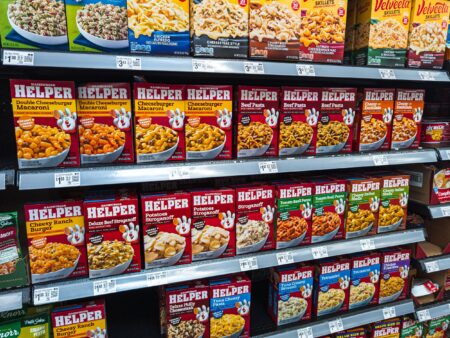
The USDA’s Economic Research Service reported in July that more soybeans are being processed domestically. Most of the soybeans that stay in the U.S. are crushed into oil and meal, and a majority of that meal goes toward feeding livestock. The oil is used in biofuels, for industrial uses, and in food. New crush facilities that separate the beans into oil and meal are under construction in North Dakota, Nebraska, Wisconsin, Iowa, Kansas and Ohio — states that previously shipped soybeans to other countries to be processed. Biofuel has increased domestic demand for soybeans — and crush facilities — since around 2010, providing an alternative for farmers facing lower demand from traditional export partners.
April Hemmes, a fourth-generation farmer in north-central Iowa, said in September that she is fortunate to have nearby options for her beans: there is an ethanol plant and a crush facility that makes soybean meal, biodiesel and food-grade oil, about 10 miles away from her farm. Farmers who don’t have those options will have a harder time adapting to changing export markets, she wrote in an email.
The lack of money in farmers’ pockets is trickling down to other sectors in farming communities, too, said John Bartman, a regenerative farmer working about 850 acres in northern Illinois. He pointed to farm equipment dealers and factories in Illinois and Iowa that are shuttering well-paying jobs because business has been so slow.
“So it’s more than just farmers who have been affected by this,” Bartman said.
What comes next?
In October, China and the U.S. hammered out a trade agreement. China agreed to purchase at least 12 million metric tons of U.S. soybeans by the end of the year, according to the White House, and will purchase at least 25 million metric tons each year through 2028. USDA export sales data from Oct. 2 through Dec. 8 shows China made soybean purchases from the U.S. totaling about 2.8 million metric tons.
For comparison, China purchased an annual average of 29 million metric tons of soybeans from the United States between 2020 and 2024, according to The Center for Strategic and International Studies, an international public policy think tank.
The deal “really isn’t much of a trade deal at all,” Bartman said.
“We’ve just gone through this tariff war, which we’re still going through right now, and what did we get out of it? China agreed to buy less soybeans than what we had last year, and we as farmers have suffered the collateral damage from this,” Bartman said.
With low trade prices and higher input costs, he warned, “we have not improved our economic situation for next year.”
Bartman is among farmers who are promoting investment in domestic uses for soybeans, including biofuels and plastics, though he acknowledges that a market the size of China’s will be “very difficult” to replace.
Muhammad said the turbulence in the soybean exports market shows that disruption of stable trade policy has consequences, which can hurt some sectors more than others.
The U.S. agriculture sector is often a political target in trade disputes, he said, because other countries understand the agricultural community’s significance in U.S. politics.
“It’s not a major export in the context of all exports, but it’s a politically viable community, and it carries a lot of heft in the context of trade agreements and trade policy because of the national security nature of food,” Muhammad said.
Farmers who are eligible for the Trump administration’s $12 billion Farmer Bridge Assistance program should expect the USDA to announce payment rates for crops the week of Dec. 22, according to the department. Payments are limited to up to $155,000 per person or legal entity.
The program appears similar to a $10 billion aid package offered to farmers impacted by trade retaliation in 2018. Those subsidies did not cover all of farmers’ losses.

For many farmers like Sherlock, these subsidies are a necessity for short-term survival. He said any farming subsidies he receives go straight to paying his bills and paying off loans.
“There will be a lot of producers, especially young, beginning producers, who won’t be able to make it and farm next year if we don’t do something to help them pay their bills from this year,” he said.
Even established producers are worried. Stafslien works land that’s been in his family since 1912, but the tough years are piling up.
“This is my future. This is my retirement. I don’t have a 401k plan. I have a farm,” said Stafslien, who lives on the farm with his wife, Shannon, and their two kids. “If I have to keep burning through this equity, that’s very, very scary for my future and my family’s future.”
This story is a product of the Mississippi River Basin Ag & Water Desk, an independent reporting network based at the University of Missouri in partnership with Report for America, with major funding from the Walton Family Foundation.