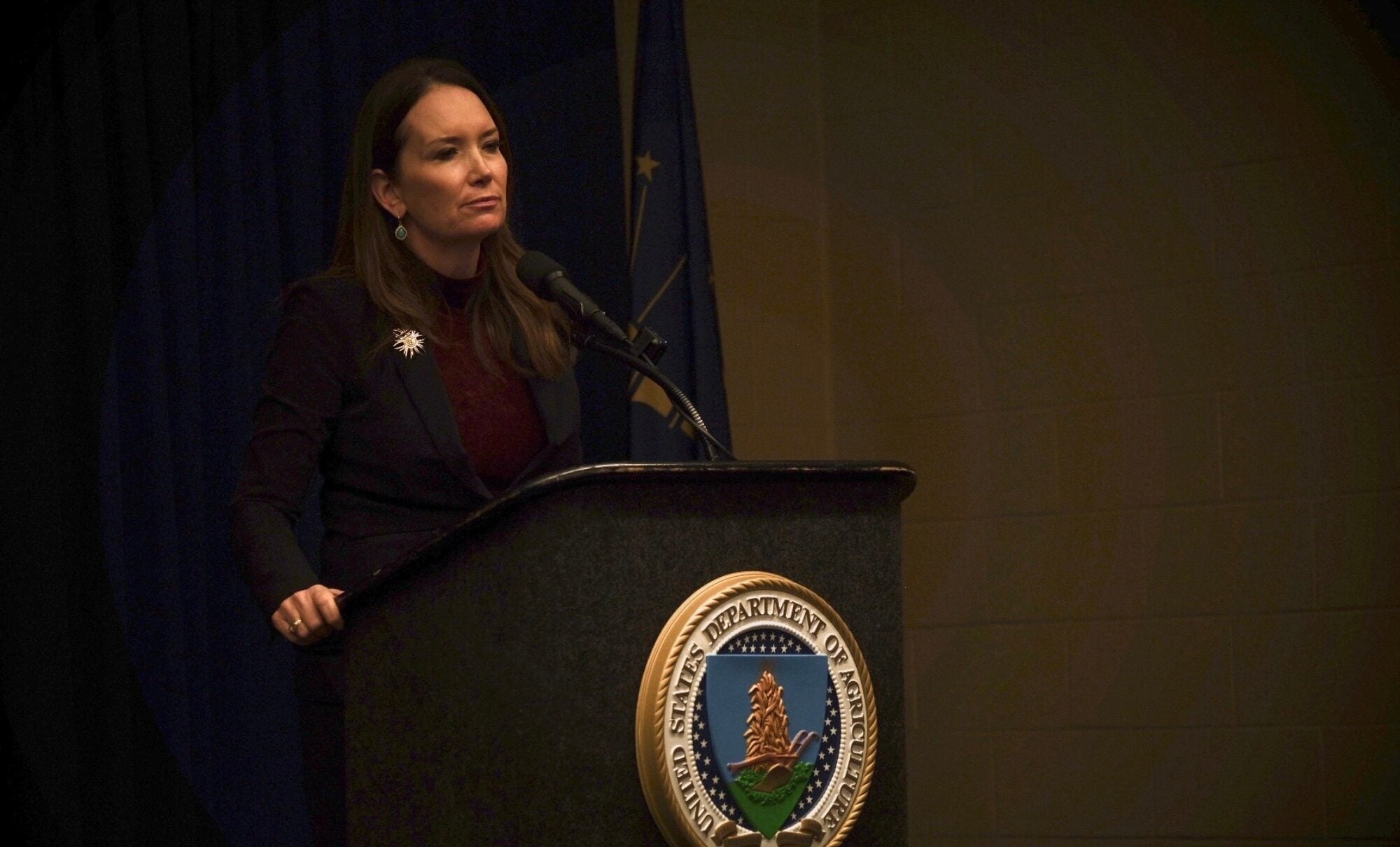

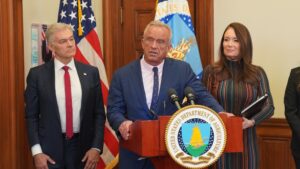


INDIANAPOLIS — While at the 98th National FFA Convention & Expo, U.S. Agriculture Secretary Brooke Rollins spoke with AGDAILY and two other agricultural media outlets about some of the industry’s key issues, such as efforts to preserve American cattle herds and the Trump administration’s plan to import additional beef from Argentina.
With roughly 250,000 Mexican cattle stalled at the southern border due to the ongoing New World Screwworm outbreak, Rollins said the U.S. Department of Agriculture is taking a “not yet” approach to reopening crossings until the risk is fully contained.
She said that while cattle are waiting to cross the U.S.-Mexico border, now is not the right time because of the need for the USDA to keep the New World Screwworm at bay.
“Just a few weeks ago, we had one that was identified 70 miles from the Texas border, so we obviously take this incredibly seriously,” Rollins told AGDAILY. “We released a five-point plan. I’ve been down to the border now, announcing a new sterile fly facility. So, we will continue the conversations. We are not there yet. Obviously, in Mexico, there are about 250,000 head of cattle waiting to move over, but I am not convinced yet that we have this under control.”
Rollins explained that the screwworm, which devastated American livestock in the 1950s and 1960s, “took more than a decade to get back out in front of.” After decades of eradication efforts, it had “moved all the way back down into South America and has slowly been creeping up.”
She emphasized that the Trump Administration “has identified $1 billion to fight this parasite and to keep it out of our country.”
However, without an agreement between agricultural leaders from the U.S. and Mexico to reopen cattle crossings, and with a significant drop in imports from Brazil due to President Donald Trump’s tariff-based trade strategy, currently under review by the Supreme Court, a widening import gap has emerged.
Economists note that imports now account for about 10 percent of the U.S. beef supply and are crucial to meeting consumer demand. In recent years, the majority of those imports have come from Mexico and Brazil. Persistently low herd numbers and near-record beef prices have prompted the administration to explore alternative import sources.
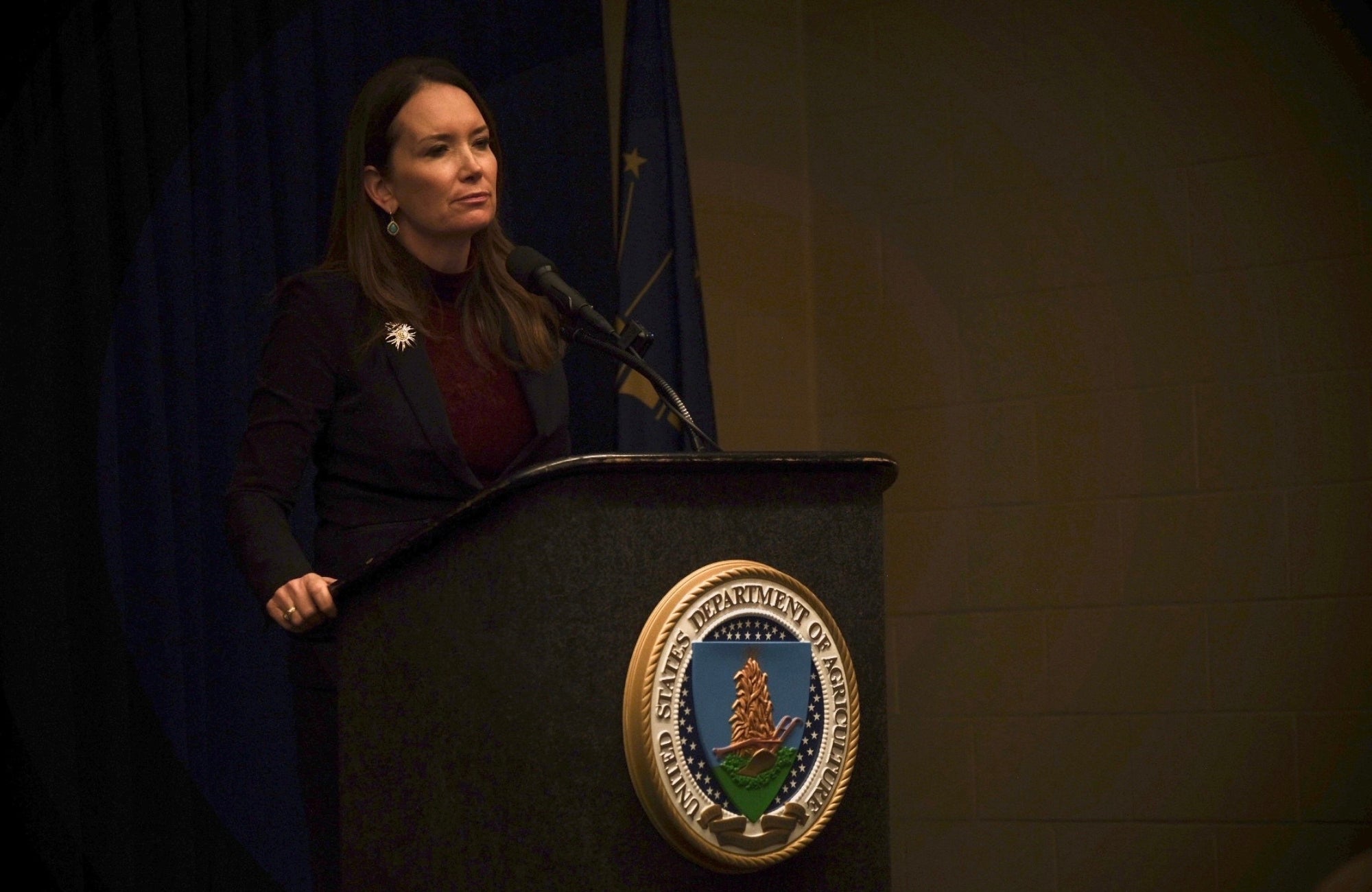
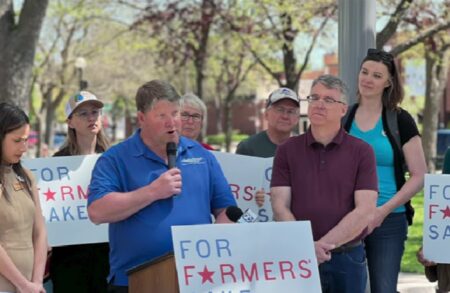
Trump’s recent remarks about increasing imports of beef from Argentina to ease retail prices for consumers have drawn criticism from U.S. cattle producers. During the media conference, Rollins responded directly to concerns voiced by National Cattlemen’s Beef Association President and its CEO, Colin Woodall, who said the move would harm American beef producers.
“What the president was talking about was nothing much different from what we have done for a really long time,” Rollins said. “Currently, we import about 20,000 metric tons from Argentina, so a very small amount. The president was talking about going to 40-, 60-, or 80,000 metric tons — even a small amount of the 2 million we already import [in total annually from other countries].”
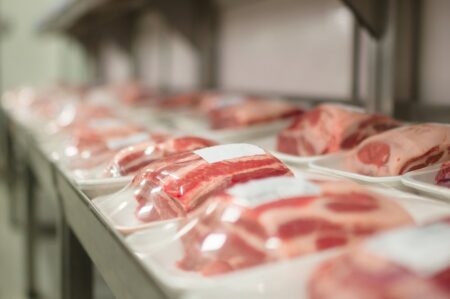
Rollins emphasized that imports are largely used for lower-cost ground beef, “for those who can’t afford a $30, $50 or $70 steak.” She added, “When you put that up against the fact that we have closed the ports — we have no crossing of live cattle in the last almost six or so months, the tariffs — the 50-percent tariffs on Brazil. So, what the president was talking about in terms of Argentina doesn’t even make up for what we haven’t gotten across in the last few months.”
In defense of the administration’s broader agricultural goals, Rollins outlined a plan to support U.S. cattle producers: “We’re opening up 5 million acres of Forest Service Land — USDA land and [U.S. Department of] Interior Land for very low-cost leases for our ranchers to have an additional opportunity to build their herds. We are putting a ton of money into smaller processing plants around the country [to allow] more competition from the processors. USDA is going to be launching a $100 million ad campaign in January [called] ‘Buy American Beef, Product of the USA.’”
The plan has sparked bipartisan concern. Fourteen Republican members of Congress, including Indiana Rep. Rudy Yakym, sent a letter to Rollins and U.S. Trade Representative Jamieson Greer warning that the proposal could “undermine American cattle producers, weaken our position in ongoing trade negotiations, and reintroduce avoidable animal-health risks.”
The letter further stated, “On average, Argentina exports over $200 million of beef annually to the U.S. while purchasing less than $2 million of U.S. beef in return. This persistent imbalance, combined with Argentina’s continued tariffs on U.S. beef and its documented history of foot-and-mouth disease, raises serious questions about reciprocity, safety, and long-term fairness.”
Responding to questions about the Supplemental Nutrition Assistance Program and the continued government shutdown, Rollins said at the time last week, “We are basically 24 hours, 36 hours away from all those benefits being cut off. We do not have the funds to go into November with SNAP. We don’t have the 9.2 billion. We’ve already bubblegunned this deal. We’ve duct taped this deal.”
Rollins criticized Democrats for the impasse: “I have never seen, never seen the Democrats be so irrational and irresponsible. It just, it makes no sense to me … for the Democrats to vote 13 times to keep the government closed.”
She added that about 42 million Americans could see their food benefits disrupted, saying, “There is a significant number that are most vulnerable, that rely on this benefit to be able to feed their family.”
Today, the Trump administration announced that it will partially reinstate SNAP food benefits, paying recipients half of their normal amounts using a $5 billion contingency fund. A federal judge had told the administration on Friday that it could not cease paying SNAP benefits.
Rollins also reiterated the Trump administration’s commitment to decentralizing federal agencies. “We started this process at the very beginning when I was announced and announced five new hubs where the USDA headquarters are moving to,” she said, citing Indianapolis, Kansas City, Raleigh, Boise, and Fort Collins. “Why do we have thousands and thousands of people in Washington who’ve never stepped foot on a farm before?”
She concluded, “That is what the vision is for USDA. How do we get out of Washington and get where we can better serve the American people?”
»Related: Brooke Rollins calls FFA to faith, freedom, and farming’s future