







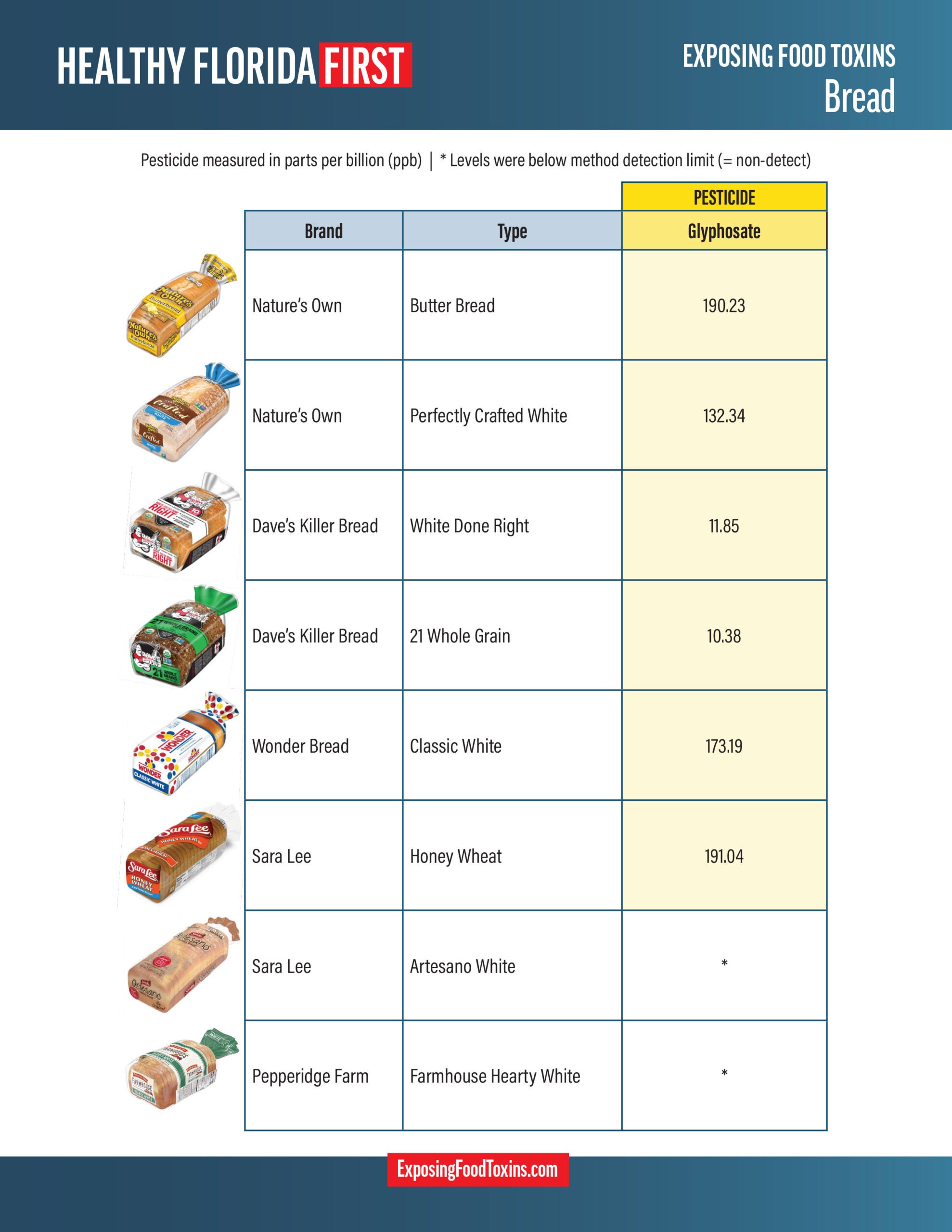
Breaking news: The Healthy Florida First initiative — fronted by First Lady Casey DeSantis and buoyed by Gov. Ron DeSantis — just “discovered” traces of glyphosate in common sandwich bread. According to the Florida Department of Health, six of eight national bread brands had detectable glyphosate residues. State officials painted this as a looming health crisis that Floridians must be armed against.
Wait. Why does the state of Florida now have a state-sponsored version of the Environmental Working Group and its Dirty Dozen scare list? It’s nothing more than an ill-conceived political stunt rooted more in fear than toxicology.

The science they’re ignoring: Dose makes the poison
Here’s the part they don’t want you to remember: All of these breads are completely safe. Every lab on earth can measure stuff far smaller than a grain of sand, and then someone with a megaphone (usually a social media account) screams “poison!” But it doesn’t mean it’s actually harming anyone. That’s what’s going on here. The amounts of glyphosate Florida reported are measured in parts per billion (ppb) — literally microscopic.
According to both the federal Environmental Protection Agency and Food and Drug Administration, trace glyphosate residues are common precisely because it’s widely used to control weeds in crops like wheat. But the presence of a detectable residue isn’t the same as a harmful one. The EPA sets tolerances based on rigorous dietary risk assessments that account for real-world exposure levels. Detectable levels well under the tolerance are simply irrelevant.
But, but, but … “Glyphosate is a weed killer,” DeSantis has said, emphatically. “It’s the main ingredient you find in Roundup and other weed-killing brands. It’s designed to kill plants; it is not meant to be eaten.”
OK, deep breath, and let’s get some perspective here. One thorough review noted that you could eat nearly 20,000 slices of bread per day at the highest levels Florida flagged (191 ppb) and still be within EPA’s safety benchmarks. And at that point, the glyphosate is the least of your worries.
This isn’t food safety. It’s fearmongering.
“Based on the weight of evidence, these are not particularly high or dangerous levels of glyphosate,” Norbert Kaminski, a toxicologist and director of the Center for Research on Ingredient Safety at Michigan State University, explained to PolitiFact.
What the USDA and FDA actually do
You don’t hear Florida rolling this part out because it doesn’t fit the narrative: The federal government already conducts comprehensive pesticide monitoring on American food. The USDA’s Pesticide Data Program and the FDA’s annual Pesticide Residue Monitoring Report test thousands of samples across dozens of commodities. In the most recent data, more than 97 percent of domestic food samples were below EPA tolerance levels — with no dangerous residues detected in the overwhelming majority of cases.
That isn’t accidental. That’s decades of regulated pesticide use under laws like the Federal Insecticide, Fungicide, and Rodenticide Act (FIFRA) and the Federal Food, Drug, and Cosmetic Act. FIFRA doesn’t just govern whether a pesticide can be sold — it rigorously assesses how pesticides will be used, how much residue can legally remain on food, and who is responsible for enforcing those standards.

Make no mistake: Pesticides are regulated, not banned. They’re tools farmers use to control pests and protect yields, and every one of them has to meet standards set at the national level before use.
Healthy Florida First is politics
Let’s be blunt: DeSantis is using this silly publicity stunt to boost his political prowess. Healthy Florida First echoes the Make America Healthy Again (MAHA) movement. Why? Because its gone from a fringe internet campaign into mainstream Republican politics. RFK Jr.’s appointment as Health and Human Services secretary hasn’t just legitimized this brand of anti-science rhetoric, it’s elevated it within GOP discourse. Once relegated to blogs and activist newsletters, this fear-based food policing is now getting podium time in more legitimate places. And anyone who wants to be someone, like Florida man Ronny, is going to latch onto it in the hopes of appealing to the MAHA audience.
That’s not a coincidence. That’s a strategy. And it’s pathetic.
What’s especially concerning isn’t the testing itself, it’s the context that’s purposefully missing. By parroting alarmist language without explaining that federal agencies already monitor residues and find them safe, Florida’s initiative isn’t empowering consumers, it’s steering them into misinformation for the sake of Ron and Casey’s assent to the White House.
When politics overrides expertise
When President Donald Trump first nominated RFK Jr. I said that one (of many) of my biggest fears was how his elevation to HHS secretary would legitimize his propaganda.

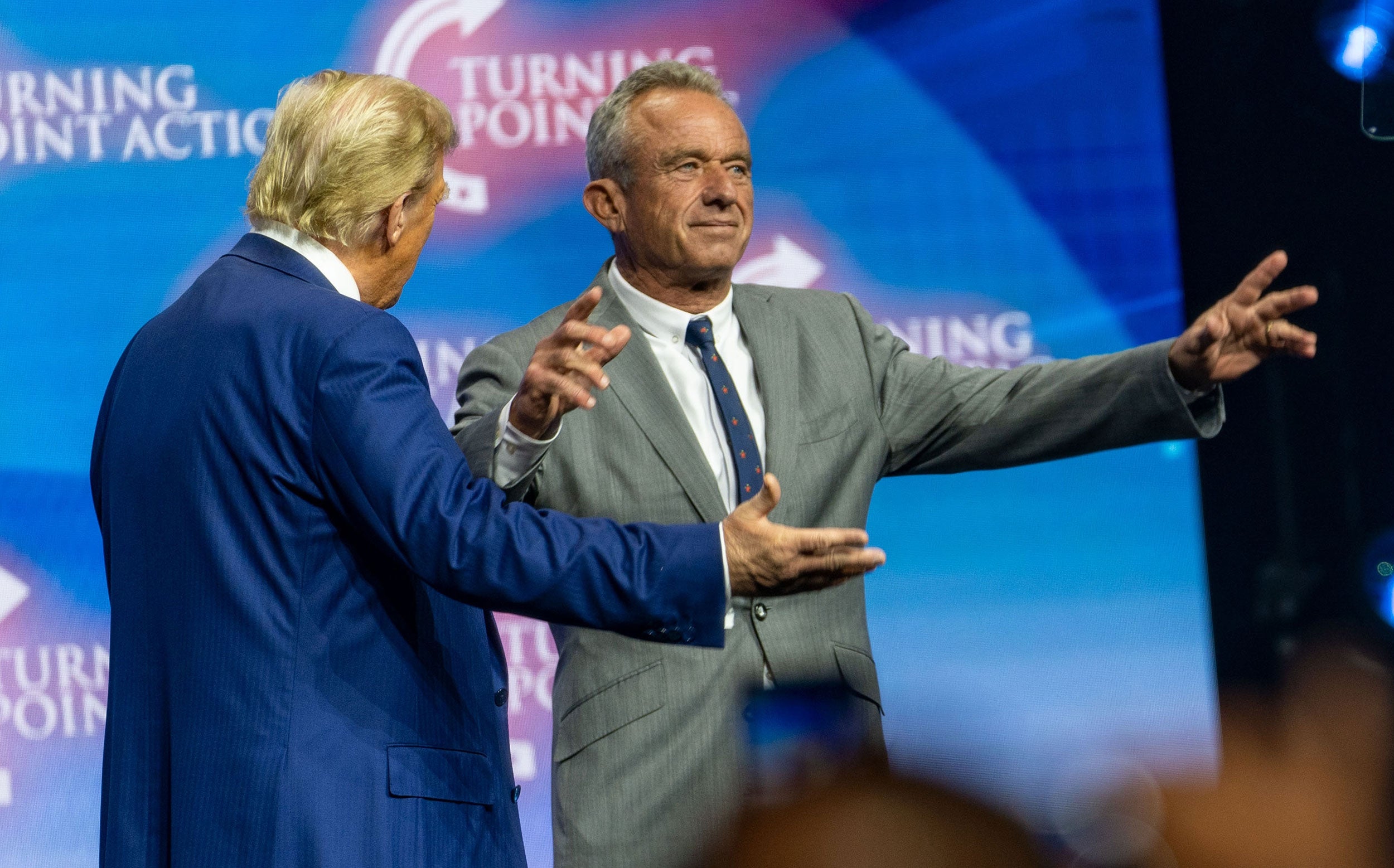
The worry was met with disbelief, because surely actual policy changes were a bigger problem? Sure, they are. But this was my fear. The MAHA lies and propaganda are now mainstream, and they’ve become embedded as a platform for one of our major political parties. Political partisans will now jump on that band wagon not because they believe the lies, but because their party tells them to.
Florida didn’t uncover a crisis. It confirmed what federal regulators already know: Modern agriculture uses regulated tools, residues are monitored, and the food supply remains safe by every established scientific metric. But the real danger isn’t parts per billion of glyphosate, it’s elevating a fringe group to mainstream American politics. The effects will likely last much longer than DeSantis’ next political campaign.
Amanda Zaluckyj blogs under the name The Farmer’s Daughter USA. Her goal is to promote farmers and tackle the misinformation swirling around the U.S. food industry.