






When you buy new cropland, you’re not just buying the soil, you’re also investing in the years of fertilizer, inputs, and stewardship the previous owner put into it. However, are you paying for those inputs twice?
Below ground, there may be residual nutrients previously applied and not yet used by the crops. Being able to access these buried deductions is where IRS Section 180 comes into play. Section 180, was originally put into place to allow taxpayers who farm to immediately deduct expenditures for inputs including fertilizer, lime, and soil conditioners, rather than capitalizing them. With that same thought process, experts say farmers can extract excess soil nutrients from newly purchased property and expense them.
Buying land is one of a farmer’s biggest expenses. Learning how the deduction could help recoup that cost more quickly was a game-changing revelation for one Texas farmer familiar with Section 180, but who spoke with AGDAILY on condition of anonymity.
“When I talked to my accountant and figured out, I had a large tax bill, I started looking at all kinds of ways to reduce the amount I’d need to pay the government,” he said. “Hearing about the Section 180 deduction and understanding I could use something I had already paid for without having to pay for it again, was my ‘aha’ moment,” he said.

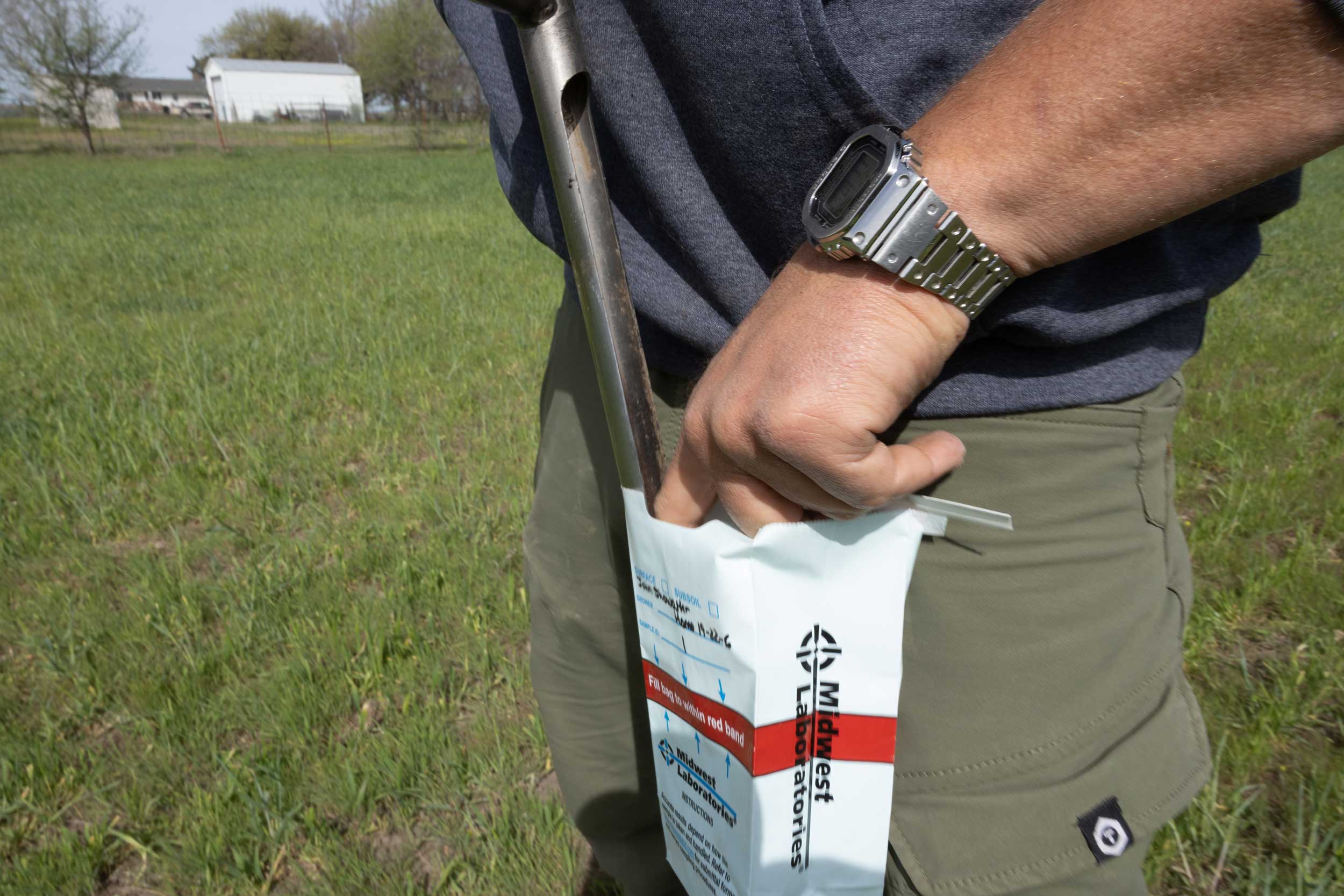
The farmer said the key was working with a reputable company to do the soil sampling, data analysis, and reporting.
“That gives me great confidence from the start before I even go to the accountant,” he said. “Once I take the information to my accountant, it’s easy for us to then decide how to get the best benefit out of the Section 180 deduction.”
Assemble your expert team
If you’re considering selling cropland, documenting residual nutrients and above-ground structures can help increase the land’s value and marketability. Working with agronomists, accountants, and real-estate agents can help you navigate the somewhat tricky aspects of Section 180.
- Agronomists are key to assessing your land’s soil fertility levels, ensuring you capture the full value of the residual nutrients for the best yields possible and tax benefits. Their reports can be used to make farm management decisions beyond potential tax deductions.
- Accountants bring their knowledge of changing tax laws to the table. They help clients who recently purchased or inherited land successfully navigate Section 180, potentially turning those excess nutrients into deductions, and ultimately decreasing their tax liabilities.
- Real-estate agents have another point of view. By analyzing how soil fertility levels affect land value and sales, they can use that information to improve the marketability and value of the land for clients.
“Many farmers and landowners are not aware there is an actual soil fertility tax deduction available to them,” Kendall Koehn with Heartland Soil Services based in Halstead, Kansas.
Are you eligible?
Crop Quest Agronomic Services, based in Dodge City, Kansas, follows three important criteria to determine eligibility for their clients.
- Beneficial ownership: You purchased or inherited the land.
- Soil testing: The land must be grid sampled to assess soil fertility.
- Fertilizer use: Residual fertilizer must be deemed “exhausted” (used by the crop).
Keaton Dugan, Senior Manager at Pinon, a global advisory and accounting firm focused on serving the agriculture industry, offers tax preparation, and other consulting services to clients. For the past 10 years he’s helped clients navigate Section 180.
“Let’s say you purchased a new piece of farmland, and you paid a premium for that property. That’s where Section 180 comes into play,” said Dugan. “You paid a premium for that property because of the nutrients in the soil, because it’s been properly rotated, and properly cared for. What Section 180 allows, and what it was originally put in place for, is for when farmers apply fertilizer, for instance, to a piece of property. At the time, they aren’t required to go to their CPA or to their accountant and tell them, ‘That phosphorus I applied is going to last four years. Can you depreciate that over four or five years?’ ”
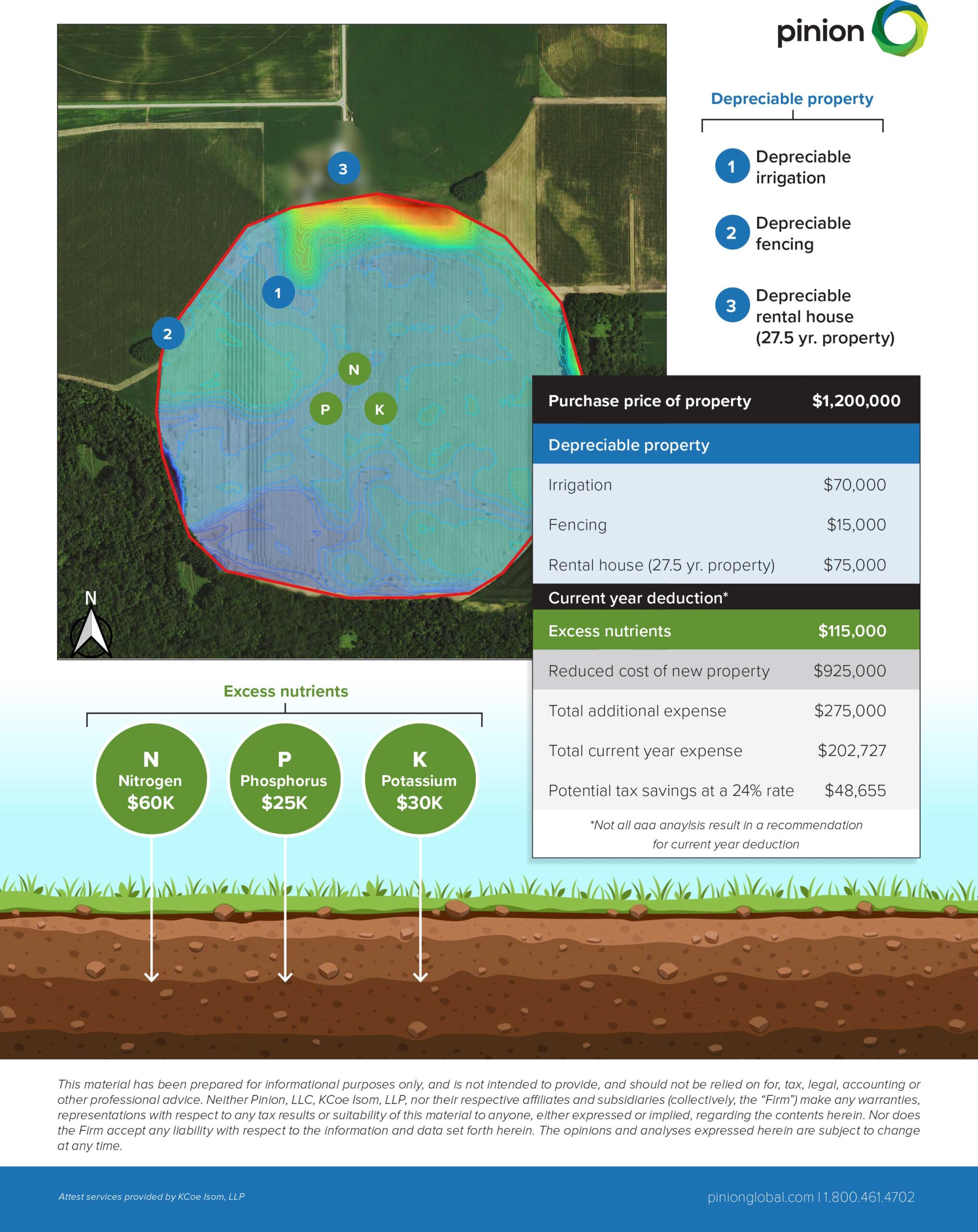

He said Section 180 allows farmers to expense the value of the excess soil nutrients determined by your soil test results, all in one year, on their tax return.
“It’s a bit more of a complex area you step in, but it’s an area worth exploring. As of right now, the IRS has given very little guidance on it,” Dugan said.
Dugan also emphasized the importance of capitalizing existing structures and assets such as fences, wells, tiling, terracing, and irrigation equipment. “These are necessary to take full advantage of the deductions available to new land purchases,” he said.
Collecting the data
Pinion requires clients to work with third-party independent agronomists and soil testing labs to establish soil nutrient levels on their land and to complete IRS Schedule F. Timing of the soil sampling is important.
“You need to be able to sample the soil after or around the time of land purchase. That’s where farmers can hire someone like Heartland Soil Services, to pull the soil samples and get them tested,” Dugan said. “That’s not our only requirement. We also ask clients to complete a Schedule F to show they’re an active farmer in the eyes of the IRS.”
Schedule F is important, he said, because it shows the IRS, the land is actively involved in agriculture. If you purchased land, and you rent it to your neighbor down the street for them to farm, he noted you don’t qualify for the deduction, however, a crop share arrangement would qualify.

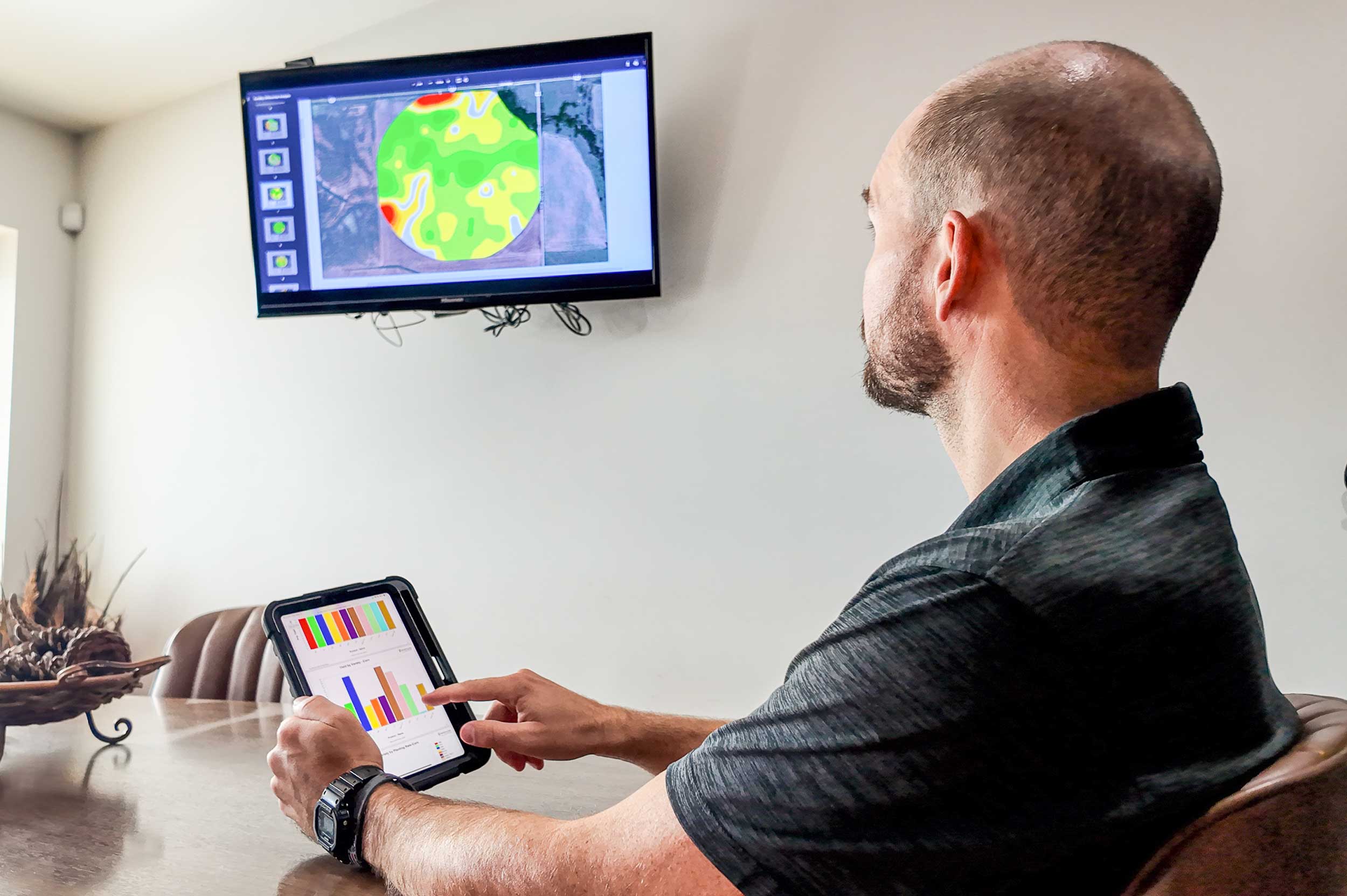
Nathan Woydziak, precision ag manager with Crop Quest, said their agronomists take soil samples based on a standard 2.5-acre grid size.
“Once the samples are pulled, it typically takes about a week to get the lab results, and another week to process the results, and deliver a finished fertility study to the client,” Woydziak said.
One Crop Quest client said they normally might only have a composite sample pulled, not sample at all, or use a blanket rate of nutrients based on crop removal. “Now we have a complete picture of what’s available and how to manage for what’s needed,” he said.
When determining eligibility of grassland, Woydziak suggests working with a tax professional.
“We can pull the samples and run the analysis on cropland and grassland. But we encourage you to visit with your accountant, before moving forward,” Woydziak said. “Grassland is a gray area. Depending on the accountant, you may get differing opinions on whether the tax deduction should be allowed. We’ve been doing these fertility studies since 2020, and the process keeps evolving. It’s good to work with a tax professional who keeps up with those changes.”
More soil testing benefits
“The closer to the time of acquisition the grid samples can be taken, the clearer and simpler the fertility study results become,” Woydziak said. “While Crop Quest can use a fertility ledger to calculate historic fertility levels, it’s simpler to do it at the time of the land acquisition.”
Heartland Soil Services also pulls soil samples for customers, then sends them to a soil testing laboratory. Once the results are returned, their staff generates a detailed report for the client.
“It’s all prepared and put into a folder you can carry into your tax professional. They can review the data and then calculate the potential tax deduction for you,” Kohen said.
Woydziak added the benefits of soil sampling and testing go beyond determining the tax deduction eligibility.
“Our reports provide insights with agronomic context, and a straightforward summary tailored for your accountant,” Woydziak said. “With the right information, accountants can confidently apply the Section 180 deduction. From an agronomic standpoint, Crop Quest agronomists can use the grid sample results to also make variable rate recommendations on cropland.”
If you recently purchased or inherited cropland, or if you’re thinking about selling cropland, visit with your CPA or accountant and ask about Section 180 to see if it applies to your individual situation.
Eric Hodson is a freelance writer and CEO of the communications firm Green Light LLC. He grew up on a family farm in Kansas and has provided public relations and editorial services to agricultural companies of all sizes across the U.S. and Canada for more than 30 years.