




DAILY Bites
-
The U.S.–Taiwan reciprocal trade agreement aims to eliminate tariffs on U.S. dairy products and reduce non-tariff barriers that can delay or block market access.
-
Dairy groups say the deal boosts U.S. competitiveness in Taiwan, a high-value market and the third-largest destination for U.S. fluid milk exports.
-
The agreement includes commitments on science- and risk-based SPS measures, import licensing, technical regulations/conformity assessment, and protections for “common names.
DAILY Discussion
A newly signed U.S.–Taiwan reciprocal trade agreement is being hailed by dairy and agricultural trade groups as a major step forward for U.S. exporters, with provisions aimed at eliminating tariffs on U.S. dairy products and heading off non-tariff barriers that can slow or block market access.
The National Milk Producers Federation, the U.S. Dairy Export Council, and the Consortium for Common Food Names said the deal positions U.S. dairy suppliers to expand in a market that has steadily grown in importance for U.S. agriculture. Taiwan is the third-largest destination for U.S. fluid milk exports, and the agreement is framed as a meaningful shift for a high-value, growth-oriented market.
“Taiwan is a trusted partner and a high-value market for U.S. dairy,” Krysta Harden, president and CEO of USDEC, said. “This agreement improves our competitiveness compared to other suppliers and provides assurances that nontariff barriers will not hinder the expansion of U.S. dairy exports. USDEC looks forward to continuing work with the Taiwanese government and the domestic industry to increase dairy consumption and grow the United States’ contribution to supplying Taiwan’s fluid milk and other dairy needs.”
For U.S. agriculture, the agreement is designed to do more than lower tariff lines. The text outlines commitments related to non-tariff barriers, including principles around import licensing and the handling of technical regulations, standards, and conformity assessment. In agriculture-specific language, the agreement emphasizes science- and risk-based sanitary and phytosanitary measures and includes provisions intended to reduce unjustified SPS barriers that can undermine reciprocity. The agreement also includes dairy-focused market access language tied to certification pathways for fresh milk and other dairy products.

Industry leaders pointed to ongoing engagement with Taiwanese partners as part of the foundation for the deal. NMPF and USDEC have highlighted advocacy efforts in Taiwan during negotiations and a Memorandum of Understanding with the Dairy Association of Taiwan intended to strengthen market development and information exchange.
“The agreement with Taiwan builds on the incredible momentum we’ve seen from the Administration in securing new trade agreements around the world,” Gregg Doud, president and CEO of NMPF, said. “Each deal to reduce barriers and expand market access strengthens American dairy farms and the communities they support.”
CCFN also emphasized commitments aimed at protecting “common names,” arguing the agreement helps prevent other countries from using intellectual property tools to restrict generic product terms and limit export opportunities.
“Taiwan is an important market for the United States, and the commitments to protect common names included in this agreement preempt third countries like the European Union from abusing intellectual property tools to monopolize generic terms and take away U.S. export opportunities,” Jaime Castaneda, executive director of CCFN, said. “We cannot thank Ambassador Greer, Ambassador Callahan and the entire negotiating team enough for prioritizing this issue and ensuring our exporters can continue using the terms known by consumers around the world.”
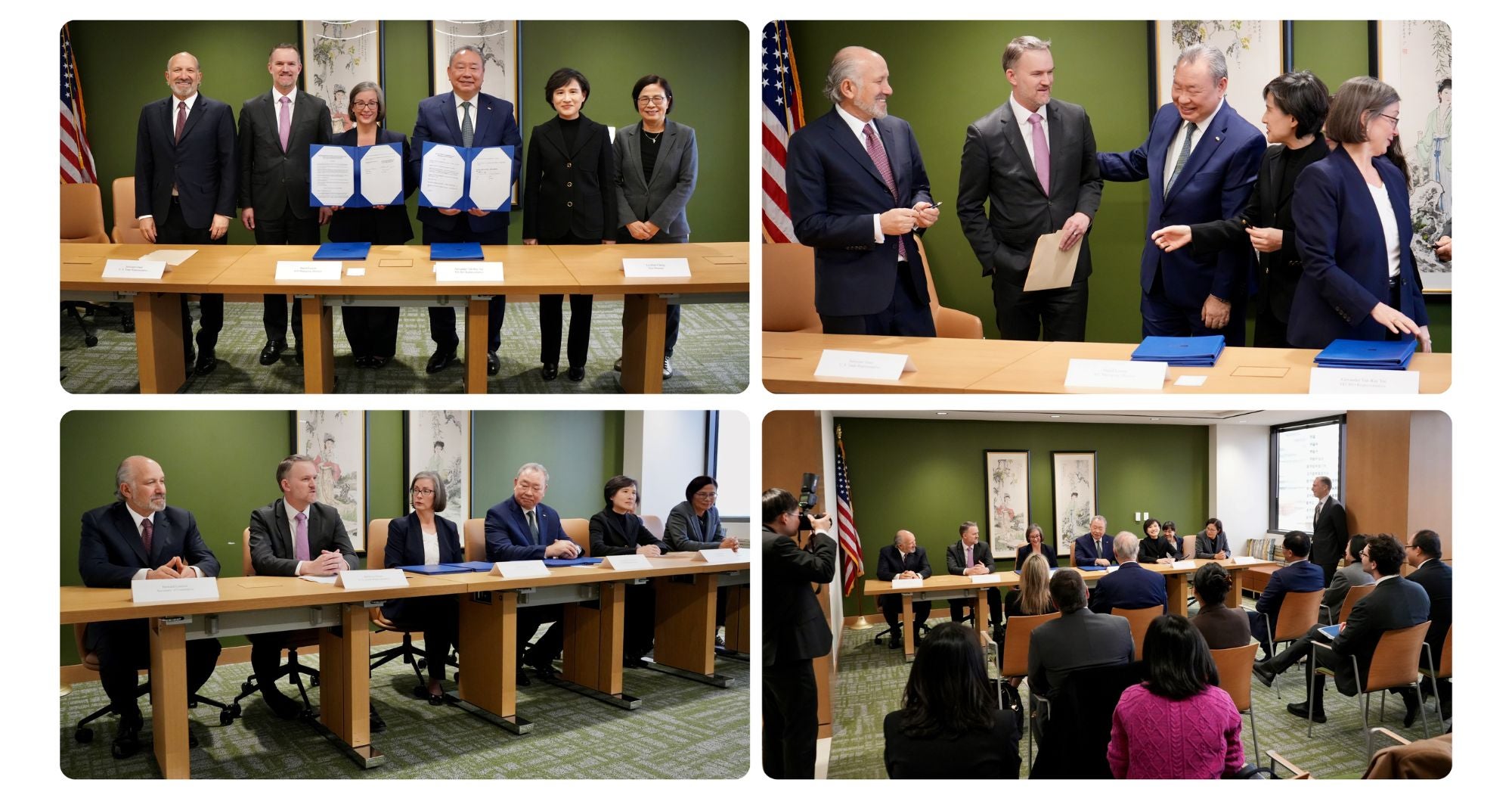
According to the announcement accompanying the signing, Ambassador Jamieson Greer attended the signing of an Agreement on Reciprocal Trade between the United States of America and Taiwan under the auspices of the American Institute in Taiwan and the Taipei Economic and Cultural Representative Office in the United States. Taiwan’s Vice Premier Li-chiun Cheng and Minister without Portfolio Jen-ni Yang also attended.
“President Trump’s leadership in the Asia-Pacific region continues to generate prosperous trade ties for the United States with important partners across Asia, while further advancing the economic and national security interests of the American people,” said Ambassador Greer. “The Agreement on Reciprocal Trade with Taiwan will eliminate tariff and non-tariff barriers facing U.S. exports to Taiwan, furthering opportunities for American farmers, ranchers, fishermen, workers, small businesses, and manufacturers. This Agreement also builds on our longstanding economic and trade relationship with Taiwan and will significantly enhance the resilience of our supply chains, particularly in high-technology sectors. I want to thank my counterparts from Taiwan for their strong commitment to achieving fair and balanced trade with the United States.”
NMPF, USDEC, and CCFN said they look forward to working closely with U.S. and Taiwanese officials to support swift implementation of the agreement and ensure the benefits reach dairy producers, exporters, and consumers on both sides of the Pacific.