



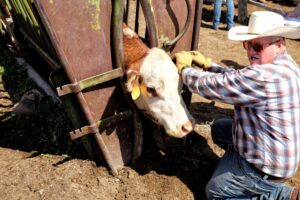


“I would like to say, to begin with, that you’re learning about a 92-year-old undiagnosed attention-deficit hyperactivity redneck rancher with a sense of humor. And we can go from there,” explained Delbert Trew of Alanreed, Texas.
Trew was born June 19, 1933, on his family farm in Perryton, in the middle of both the Dust Bowl and the Great Depression. That year alone, more than 100 dust storms tore across the Perryton area, with that June being among the worst months ever recorded.
Trew, a true Texas agriculturalist, has spent his life surrounded by the brutal realities and the rich heritage of farm and ranch life. His early involvement in agriculture began around 1938, during the early part of World War II, when his father operated a large dryland operation in Ochiltree County.
“By the end of the war years, we were farming over 3,000 acres,” Trew said. “So I never got a chance to be a little boy growing up. We were short of help because all our employees and the other young men in the area were enlisted in the wars.”
That early responsibility shaped him for life. He learned how to use every tool, run every machine, care for cattle, repair equipment, and keep an operation moving even when labor was scarce.
Agriculture wasn’t just his upbringing. Agriculture became his identity.

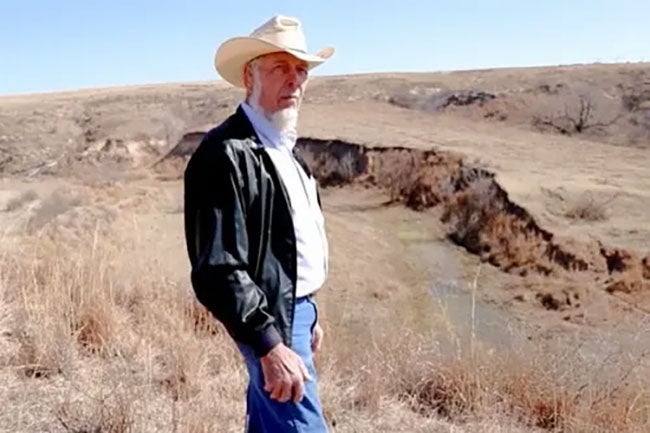
Today, Trew carries the look of a man who has been shaped by decades of honest, hard, outdoor work. His appearance rarely changes, with a long white neck beard, steady gazes, and a special cowboy hat that seldom leaves his head — unless he steps into the house. Even with age etched into his features, there is nothing “retired” about him.
“I look forward to waking up every morning and starting the day,” Delbert said. His appearance conveys a person who continues to live with purpose and a deep connection to the industry he has been part of his entire life.
He still spends his days with a to-do list, actively working on the eight sections of The Trew Ranch, doing everything he possibly can with his energy: driving tractors, cutting up brush or trees, and repairing fences. Although Trew no longer runs his own cattle operation — he instead leases the ranch to a few other Texas ranchers — he still takes pride in the land, ensuring his property is in the best condition possible for anyone’s cattle.
Ranching, Trew believes, is the foundation of the Texas Panhandle.
“Cities may grow, towns can shrink, and industries may shift, but ranching will remain the true heart of the region, as it has since long before the first paved road reached the area,’’ he observed.
Trew has watched the land values climb from 50 cents an acre during the former land lease periods to several thousand dollars per acre today. He has also seen windmills give way to solar pumps and rusted wood posts transform into engineered T-posts with hot-wire systems.
Some of the most significant agricultural changes he witnessed came after 1938, when rain finally ended nearly a decade of Dust Bowl drought. With all the improved moisture throughout the 1940s, his father helped pioneer winter wheat grazing. This method is now a cornerstone of Texas cattle production.
“We once ran nearly a thousand head of cattle on wheat pasture from November to March,” Trew said.

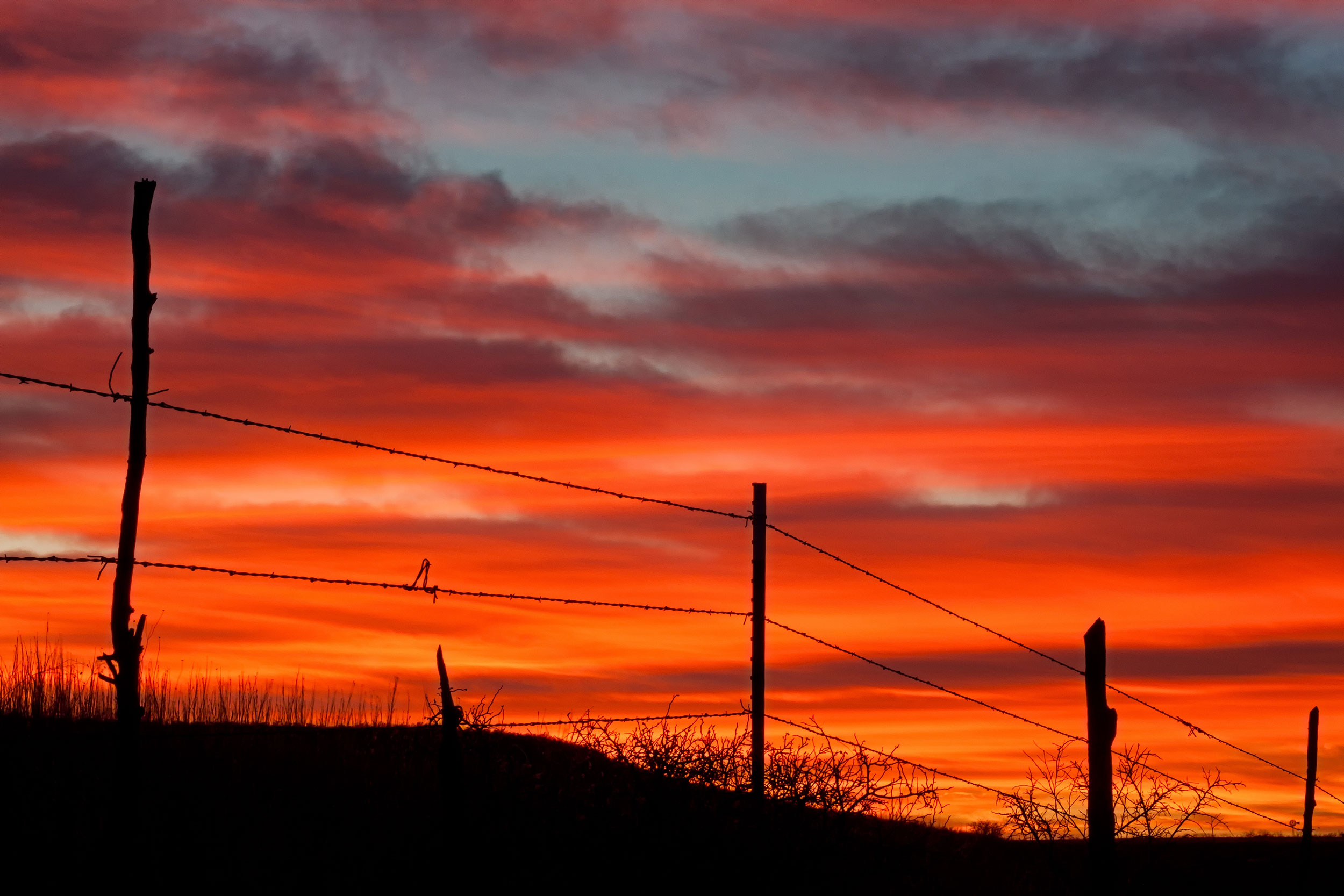
That transformation made the Texas Panhandle a major player in the cattle industry, providing feed and winter grazing for decades to come.
The constant challenges agriculture presented led Trew to develop lifelong skills in land management and conservation. For over 45 years, he has built more than 500 water-harvesting structures across two ranches.
He believes the Panhandle is entering a warming, drier climate cycle and that conservation is essential to support the next generation of producers.
“I don’t let a drop of water escape if I can help it,” he said.
Getting a handle on history
But agriculture also pushed him into one of the most unique chapters of his life: his involvement in the historical aspects of this industry, such as barbed wire history, agricultural tool history, and preservation of the Panhandle history.
What many people don’t realize is that barbed wire once came in hundreds of designs. After the Civil War, blacksmiths and returning soldiers believed they could “build a better mousetrap,” so they began inventing and patenting their own versions. Every ranch had a blacksmith shop, and nearly every man could forge his own tools, leading to more than 800 patented barbed-wire patterns, most handmade, one piece at a time.
Early wire was extremely sharp and often injured livestock and workers, leading some religious groups to call it “the Devil’s Rope.” Over time, manufacturers made the barbs less severe and added a rotating design so they would turn on the wire rather than cut. As mechanization improved and wires could finally be mass-produced, barbed wire became safer, more uniform, and essential to ranching across the United States.
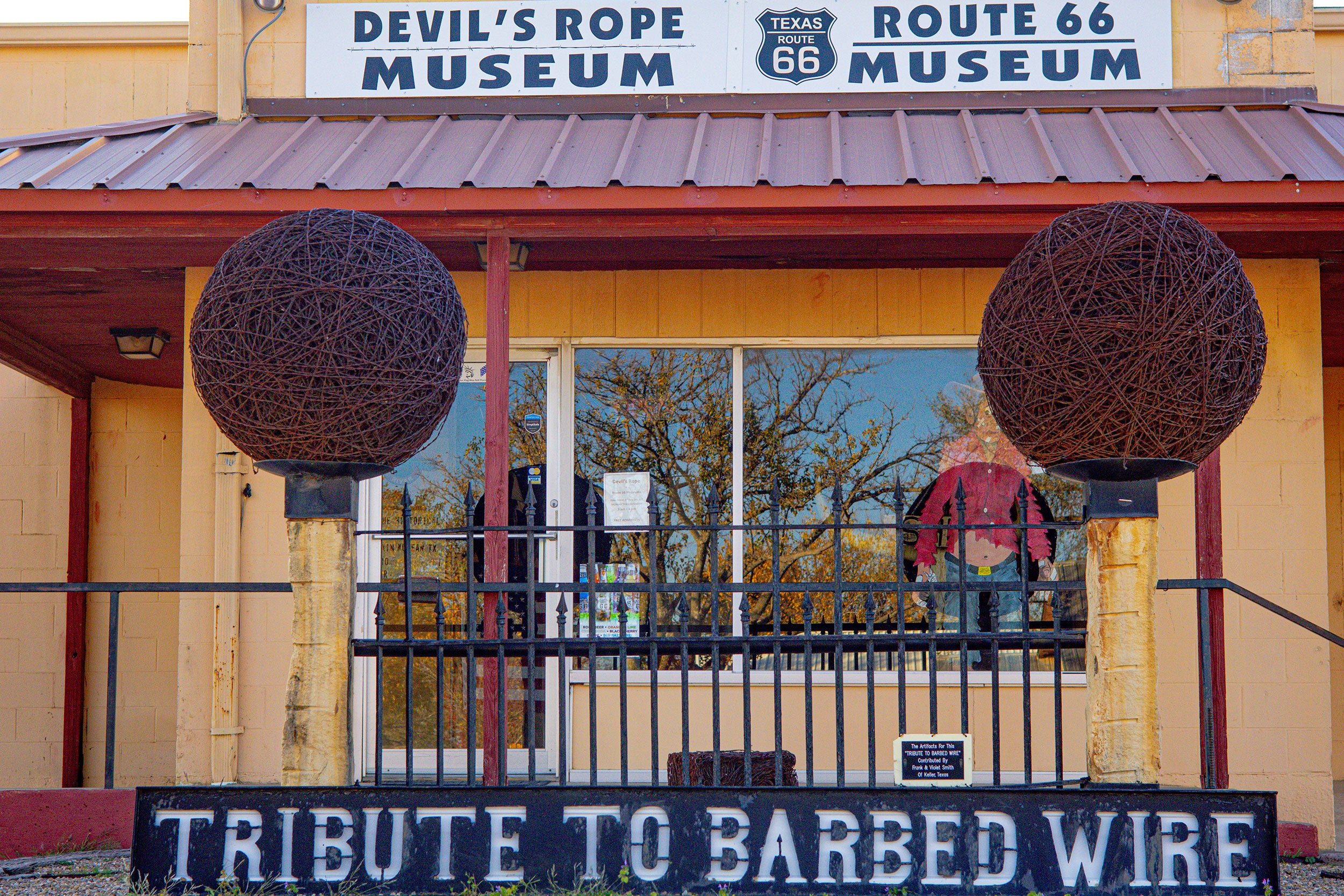
That history, which Trew loves to share with others, eventually led to the creation of the Devil’s Rope & Texas Historic Route 66 Museum in McLean. Trew, alongside his wife, Ruth, joined a unique club of dedicated Barbed Wire Collectors who were searching for a permanent home to display rare and historic fencing artifacts. The City of McLean owned the ideal vacant building. It was a former women’s brassiere factory for Sears Department Stores, known for producing nearly 5,000 bras a day before its closure in the late 1970s. (This factory gave way to McLean being nicknamed “The Uplift Town!”)
An agreement between the collectors and the city to lease the building was reached, a nonprofit was formed, and hard work began. The Trews worked side by side with collectors to convert the building into a museum, and Delbert Trew’s fingerprints are on nearly every part of the displays and all the walls.
“People would drive up with a pickup full of stuff and say, ‘I want you to have this,’” the couple recalled.
The museum is also significant because McLean was the final community bypassed along Old Highway 66 when the final stage of Interstate 40 was completed, rerouting all traffic away from the busy town overnight. U.S. Highway 66 was officially decommissioned by the federal government in June of 1985, paving the way for the name Route 66.
“On the Day I-40 opened, McLean had more than 48 thriving businesses,” Trew said. “One year later, we only had 16 left, and most of those were also hanging by a thread.”
Locals, including the Trews, saw two options: watch their town fade away, or fight to preserve its history, businesses, and tourism. They chose the latter.
The year the museum opened, the Old Route 66 Association of Texas was born, aiming to preserve, promote, and protect Route 66 through Texas. The organization partners with businesses and local communities to honor the former highway’s history, restore its landmarks, encourage tourism, and inspire a deeper understanding of its role in Texas and American culture.

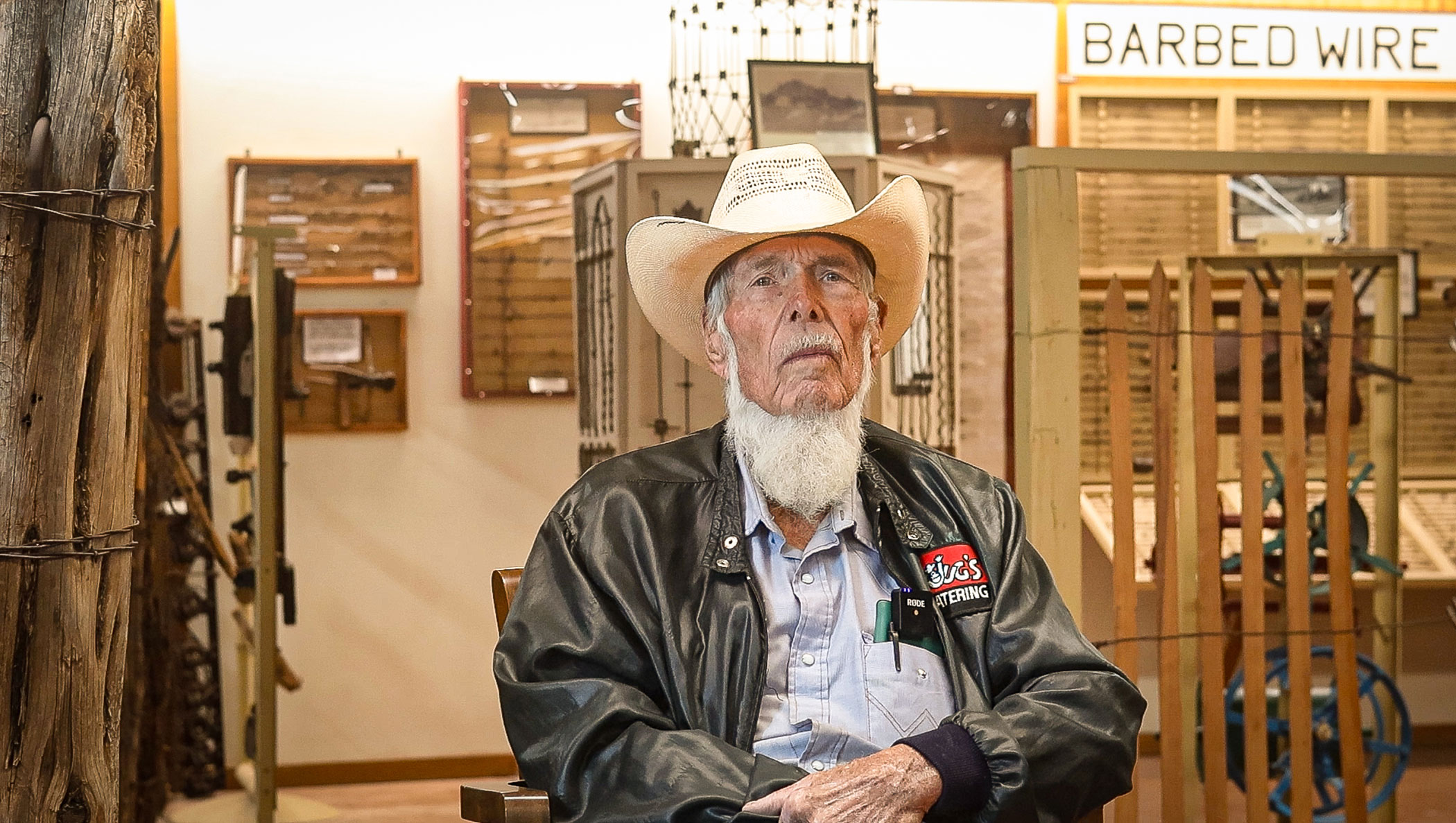
Delbert and Ruth Trew’s leadership were instrumental along the way.
During this time, the Devil’s Rope Museum became a quirky but natural roadside attraction stop for travelers. Between March and October 2025, the museum recorded over 5,000 visitors from all 50 states and over 85 countries.
“It’s very simple. Everybody sits around punching buttons and swiping screens. And next thing you know, you’re here in McLean,” Trew said. “You can be in a cave in Indonesia and punch up Devil’s Rope Museum and get here.”
Artistry of the West
Yet even with all this involvement, Trew also found time to build a legacy through music and writing. Coming from a family of old-time fiddle players, he spent over 30 years performing classic Western swing on saxophone and bass at various venues. He then spent 13 years writing historical, agricultural, and fictional articles for the Amarillo Globe-News. Many of his columns chronicled local history, ranching life, the Panhandle’s early days, and the countless characters who have shaped rural Texas culture.
His writings were eventually turned into several published books.
But Trew’s life has not been without hardship. He lost his first wife and daughter in a car crash in 1970. His current wife, Ruth, lost her first husband in the Vietnam War. Together, they rebuilt their lives, worked hard together, and created many family traditions. Their favorite is the annual family reunions, which regularly bring over 70 relatives to The Trew Ranch.
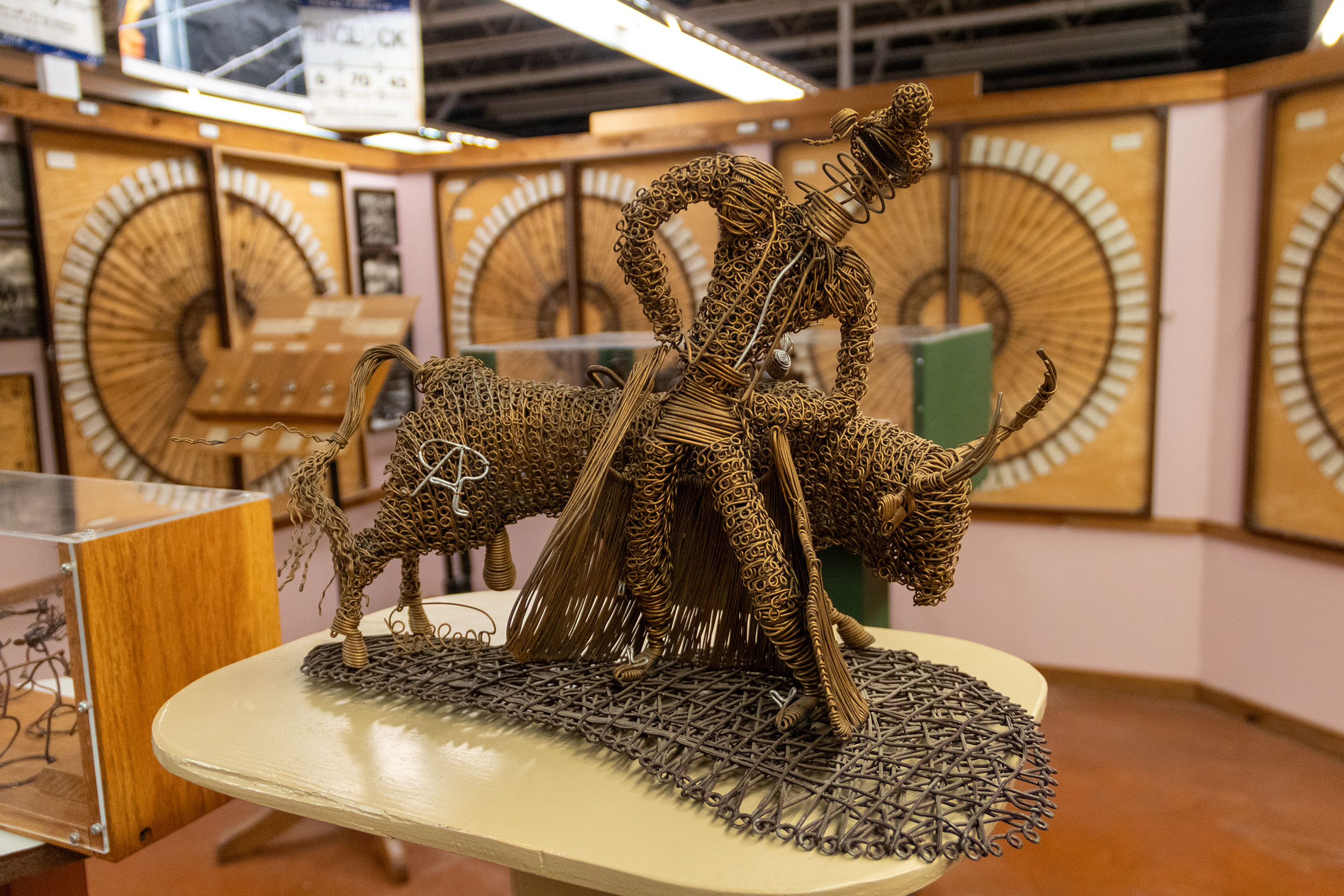
When asked what he hopes visitors remember about the museum and McLean, he answered: “I hope they walk out saying, ‘Well, now that was fun. I enjoyed that.’”
Throughout his life, friends and others in the community see a man who has spent a life driven by agriculture and the rural spirit of the Texas Panhandle. It’s hard to capture Trew’s essence in one word, but folks refer to him as amazing, a wizard, historic, knowledgeable, a thinker, renaissance, resourceful, resilient, interesting, cool, accomplished, and legendary.
He is a personality as big and long-lasting as the Panhandle itself, one that is “big, open, honest,” he said. “You can look across this great land and still see what it was like 150 years ago.”
Brady A. Wilson, a New Waverly, Texas, native studying Agricultural Media & Communication at West Texas A&M University, was born and raised in the agriculture industry and now blends his deep ag passion with interests like Route 66, tourism, and historic preservation to share stories that celebrate the people, places, and heritage of rural America.