

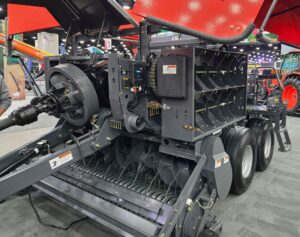



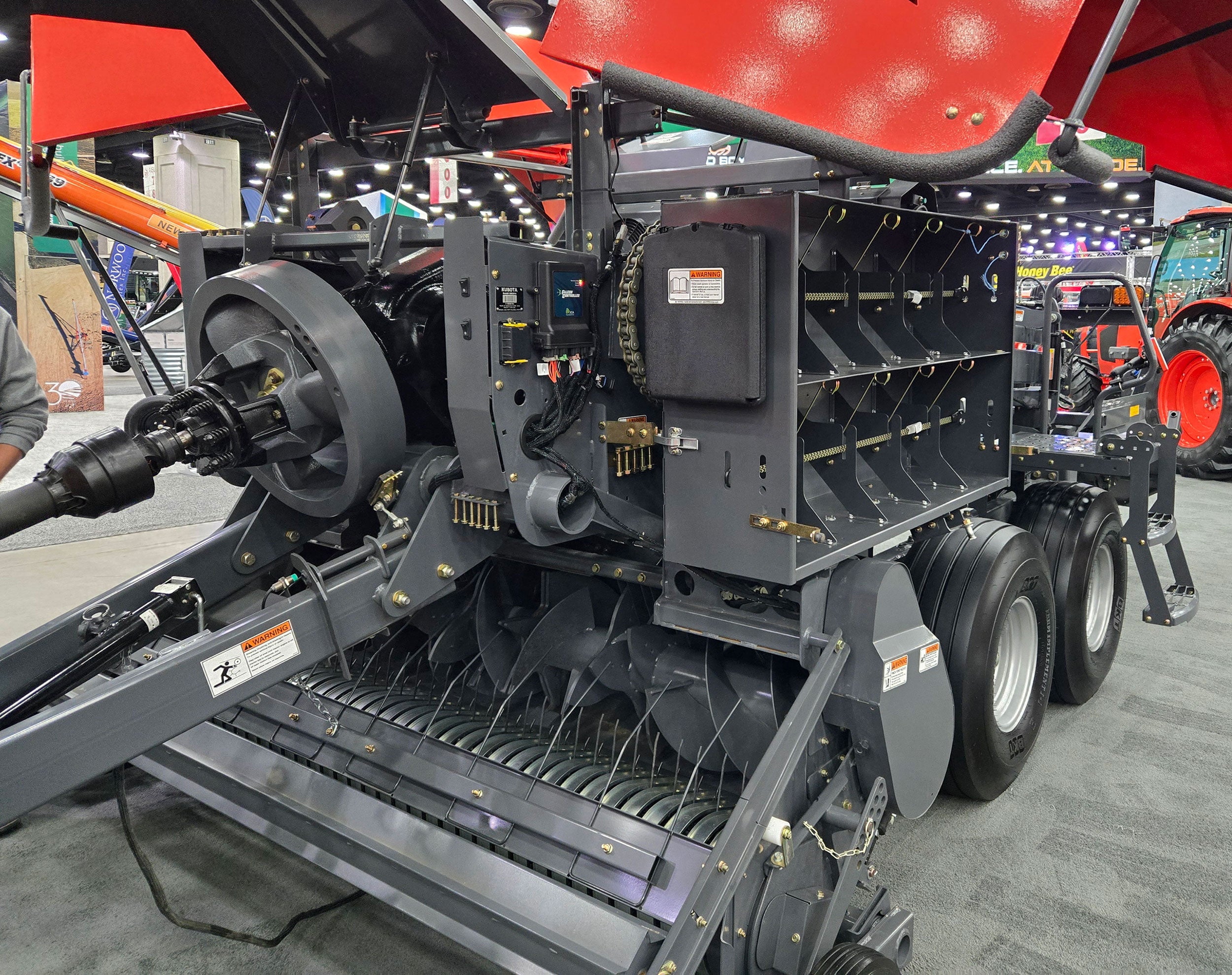
LOUISVILLE, Kentucky — On the floor of the 2026 National Farm Machinery Show, Kubota Tractor Corp. unveiled two new high-capacity small square balers in the SSB Series — the SSB2014 and SSB2012 models — which feature a patented dual-chamber design, setting these apart from traditional single-chamber balers.
The lineup is nearly a decade in the making and offers two bale size options — the SSB2014 produces standard 14-by-18-inch bales, while the SSB2012 creates smaller 12.25-by-18-inch bales. This flexibility is particularly valuable for operations using bundling equipment, as the smaller 12.25-inch bales allow producers to fit three additional bales into each bundle.
Each side of the new balers can provide 100 strokes a minute, which with the dual-chamber design means roughly 200 flakes of hay are being pressed every 60 sections. These machines are designed for commercial producers and custom hay operators who are doing 50,000 or 100,000 bales a year, helping them to cut down on the need to use multiple single-chamber balers.
Essentially, Kubota’s new offering can cut the field time in half, with tying per bale happening in 0.3 seconds.

Baling hasn’t changed much since the 1990s, and these machines are the result of three main pillars Kubota was trying to address from producers, said Cort Morris, Kubota product manager for hay tools.
- Labor, both in terms of cost and reliability
- Productivity, particularly the quality of the hay and the speed at which it is baled
- Automation, which hasn’t always been a focus in the baling sector
These new machines stand out.
As the incoming crop enters the machine, an intake rotor separates the windrow into two separate stuffer chutes, each feeding alternating plungers that form bales in two separate bale chambers with independent knotter systems. By producing two bales simultaneously, not only are producers effectively cut field time in half compared to conventional balers, it requires only one operator and one tractor.
“The biggest factor in where everything is is what does that bale look like out the back and what does it feel like to the customer at the end of the day who’s picking it up,” Morris said at the trade show. “Technology really comes into play. Being able to see that in the tractor cab on the fly and make small adjustments, whether it’s your speed or if you end up in a part of your field that’s a little bit lower in crop. … You are able to match your field requirements at that time to really home in on that ideal package.”

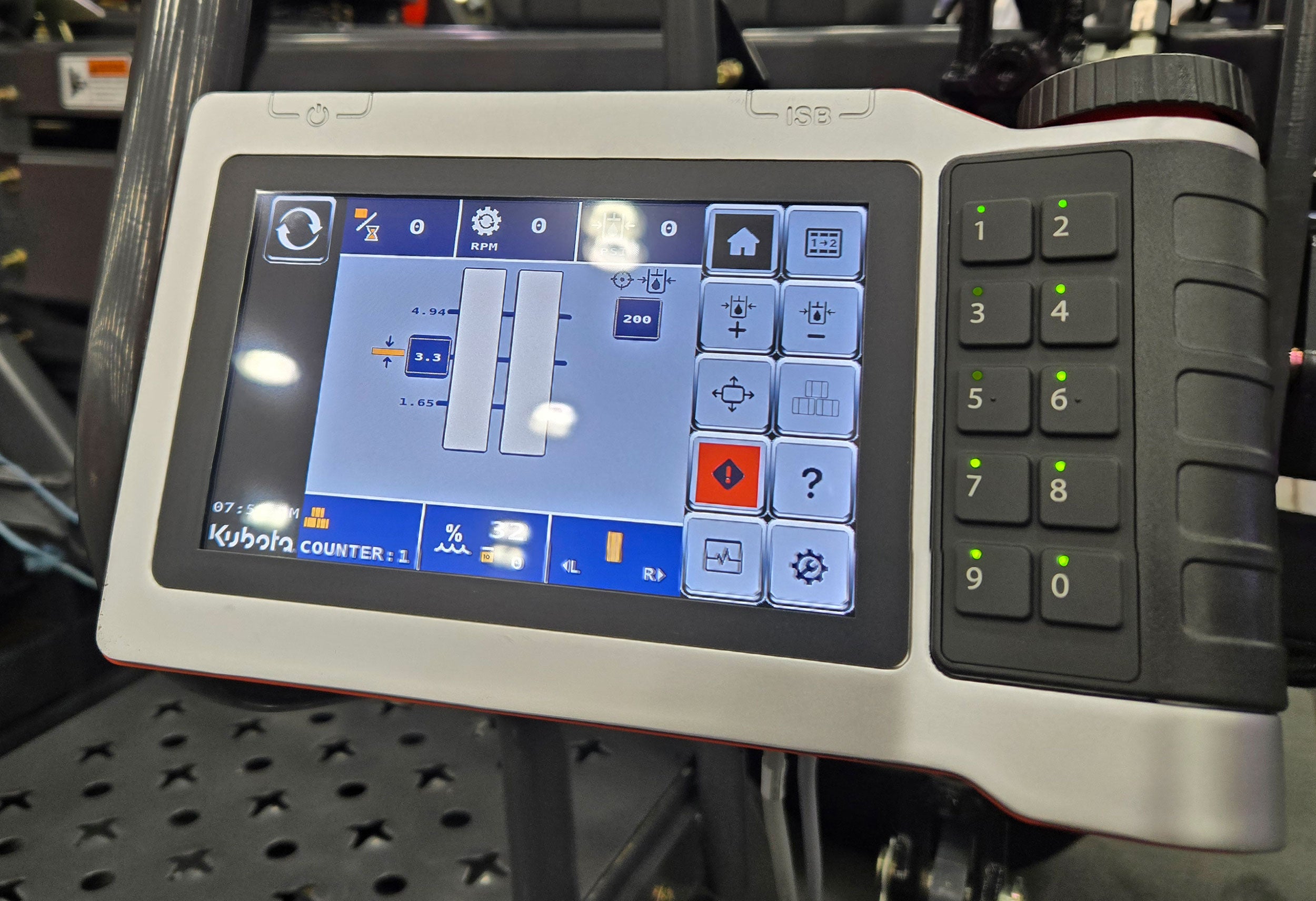
The Kubota small square baler series comes standard with full ISOBUS compatibility, allowing direct integration with any ISOBUS-compatible tractor through a simple plug-and-play connection. It can show feed bars, and, on the Kubota monitor, has tiled sections to display PSI, flake count, and much more.
The SSB2014 and SSB2012 are packed with patented technology, and that includes the ramp at the rear of the baler — “one of the patents we’re most proud of is,” Morris said. The ramp is designed to align the dual chambers into a single row of bales. This streamlined output reduces subsequent raking and collection work, further improving operational efficiency. It can also be set up to use a flat ramp, a quarter-turn ramp, or a powered ramp.
There is a metal finger on the ramp that allows one bale to drop at a time, preventing the machine from bottlenecking.

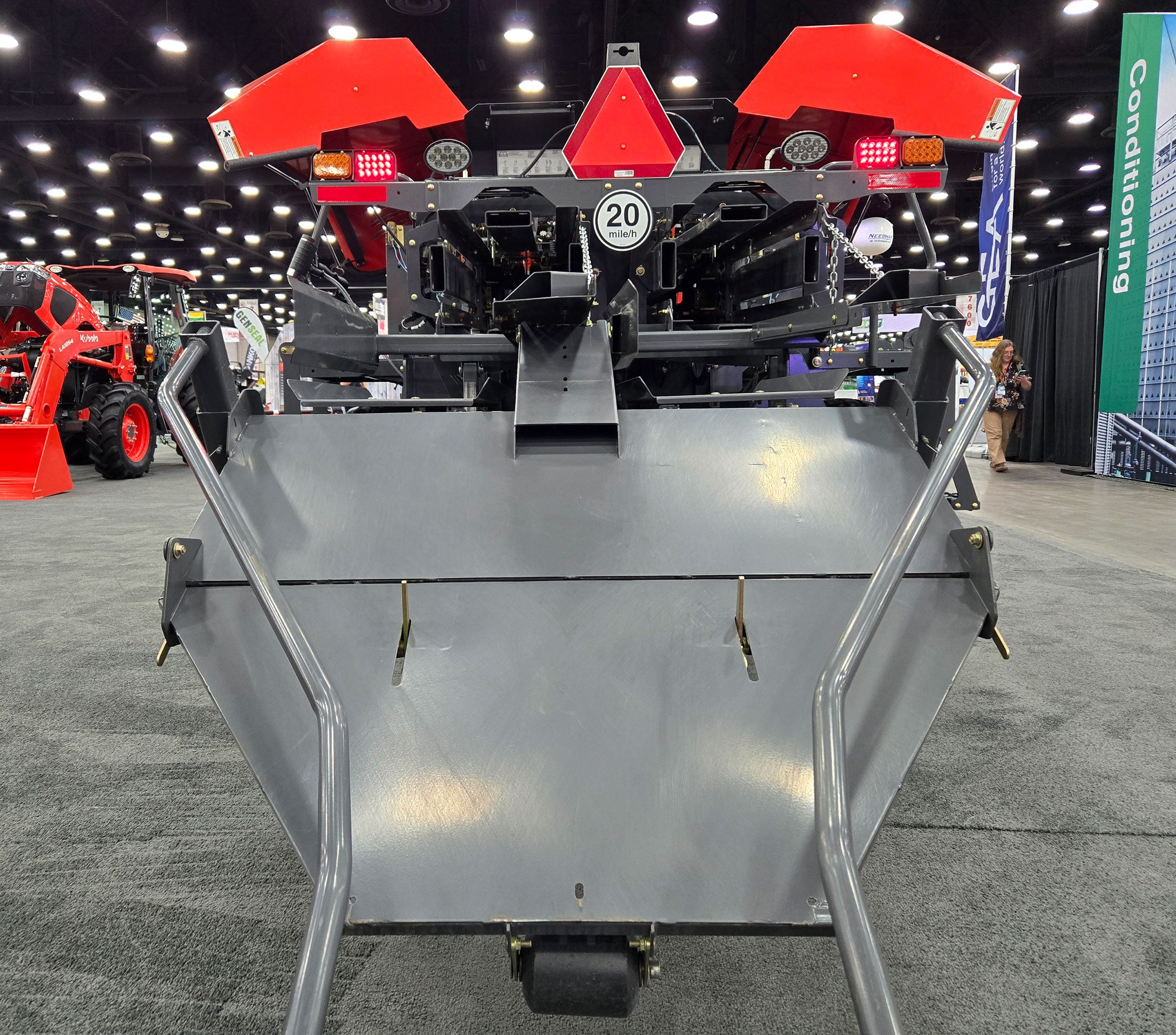
”Even though we’re producing two bales at one time, we’re still leaving them in one row out the back of the baler,” Morris noted. “So we’re not having to now make a second pass in the field to pick them all up.”
The Kubota SSB Series is compatible with 1000-spline PTO tractors (100+ horsepower minimum, 120 recommended) and will be available at authorized Kubota dealers starting in Spring 2026.