






When is farmer support not exactly what it seems?
Since California’s passage of Prop 12, numerous legal and policy challenges have been initiated, with Congress considering several acts that would directly challenge the future of this measure. Yet in a letter circulating on Capitol Hill, much has been made about the farmers and interest groups that actually support Prop 12 — even though the measure has impacted farmers’ costs, food prices, interstate commerce, and, according to California officials, is “not based in specific peer-reviewed published scientific literature or accepted as standards within the scientific community to reduce human food-borne illness, promote worker safety, the environment, or other human or safety concerns.”
Noting the Prop 12 support from farmers is intended to be a “gotcha” moment for animal-rights activists.
Here’s the kicker though: A new analysis shows that the support often isn’t coming from farmers who would be directly affected by the law.
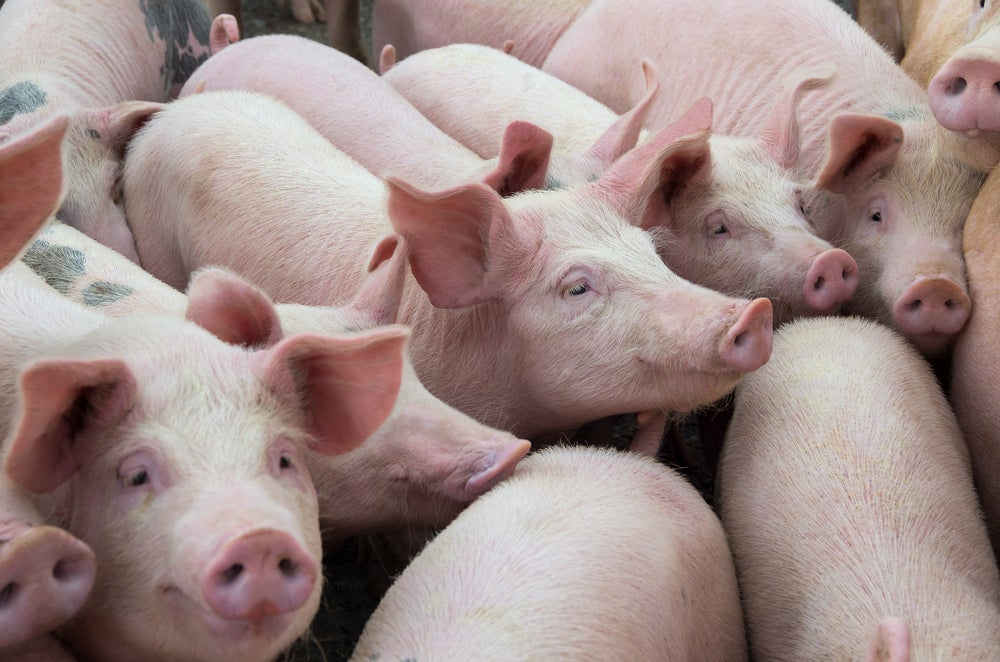
Prop 12 was passed in 2018 and implemented in 2024 to eliminate gestation crates for sows and demands specific space requirements for veal sows and egg-laying hens. These rules don’t just apply to California producers but to anyone selling pork or chicken products in the state. Yet the new analysis shows that many of the farms backing the law are vineyards, beekeepers, mushroom growers, hemp and marijuana operations, flower fields … and even a goat yoga operator.
“This law is crushing farmers under costly regulations, raising food prices nationwide. So it comes as no surprise that activists had to resort to flower farms and vineyards when looking for ‘farmers’ who support Prop 12,” said Jack Hubbard, executive director of Center for the Environment and Welfare, which did the analysis.


The letter was released by dozens of organizations and thousands of individual farms to speak out about the Ending Agricultural Trad Suppression (EATS) Act, which would undermine Prop 12 by preventing states and localities from regulating agricultural products produced in other states. Prop 12’s supporters have a different perspective on the EATS Act though: “Better named the States’ Rights Suppression Act, this legislation would thwart states’ ability to govern. It could wipe out thousands of state laws and create a race-to-the-bottom when it comes to the production and sale of agricultural products,” the letter said.
In addition to the EATS Act, other legislative efforts at the federal level to cut into Prop 12 include the Save Our Bacon Act and the Food Security and Farm Protection Act.
“The most important thing I’ve learned from a lifetime of raising pigs is that it’s important for producers to have full control over the environment in which their pigs are raised,” said Matt Schuiteman, an Iowa Farm Bureau member and pork producer who testified before the lawmakers. “Lacking control to tailor our farm to best serve the animals’ needs is one of the biggest problems of Prop 12.”
In its opposition to Prop 12, the CEW says that data show Californians now regret the passage of Prop 12. In a public poll last year, 60 percent of respondents said they support a legislative fix to the egg and pork restriction, and lawmakers on both sides of the aisle have raised concerns about rising consumer prices, particularly related to eggs.
Prop 12 has been at the center of numerous legal challenges and activism on both sides of the issue. The most notable step happened in 2023, when the U.S. Supreme Court issued a 57-page decision that effectively upheld Prop 12. That case, Iowa Pork Producers Association v. Bonta, attempted to halt Proposition 12 by seeking a preliminary injunction of the law on claims that included Dormant Commerce Clause claims similar to those rejected by the Supreme Court in NPPC v. Ross.
The majority opinion was written by Trump justice nominee Neil Gorsuch. That opinion said that most Supreme Court justices either concluded that Prop 12 does not significantly burden interstate commerce or that federal courts are not suited to resolve the issue.
In line with this, producers have expressed concern for the “patchwork” of laws around the country that could be inspired by Prop 12 and have broad implications in other states.
“Welfare is a complex issue. Every style of housing, including group pens, which are functionally required by Prop 12, come with challenges,” said Pat Hord, a fourth-generation Ohio producer with roughly 47,000 pigs. “All farms have, and will continue to experience, productivity losses under Prop 12.”